In the order you need them
Straight answers on tanks, cycling, and what fish you can actually keep — written for people setting up their very first aquarium.
These guides follow the order you actually need them in: choosing a tank and working out what it really costs, the equipment that matters (filter, heater, light, substrate) and what you can skip, the nitrogen cycle and how to run a fishless cycle properly, then stocking — beginner-friendly fish, easy live plants — and the maintenance routine that keeps it all stable.
Every guide is written by a named human author who keeps tanks, gives you the numbers to test against rather than vague advice, and gets updated when better information turns up. Read more about our editorial standards.
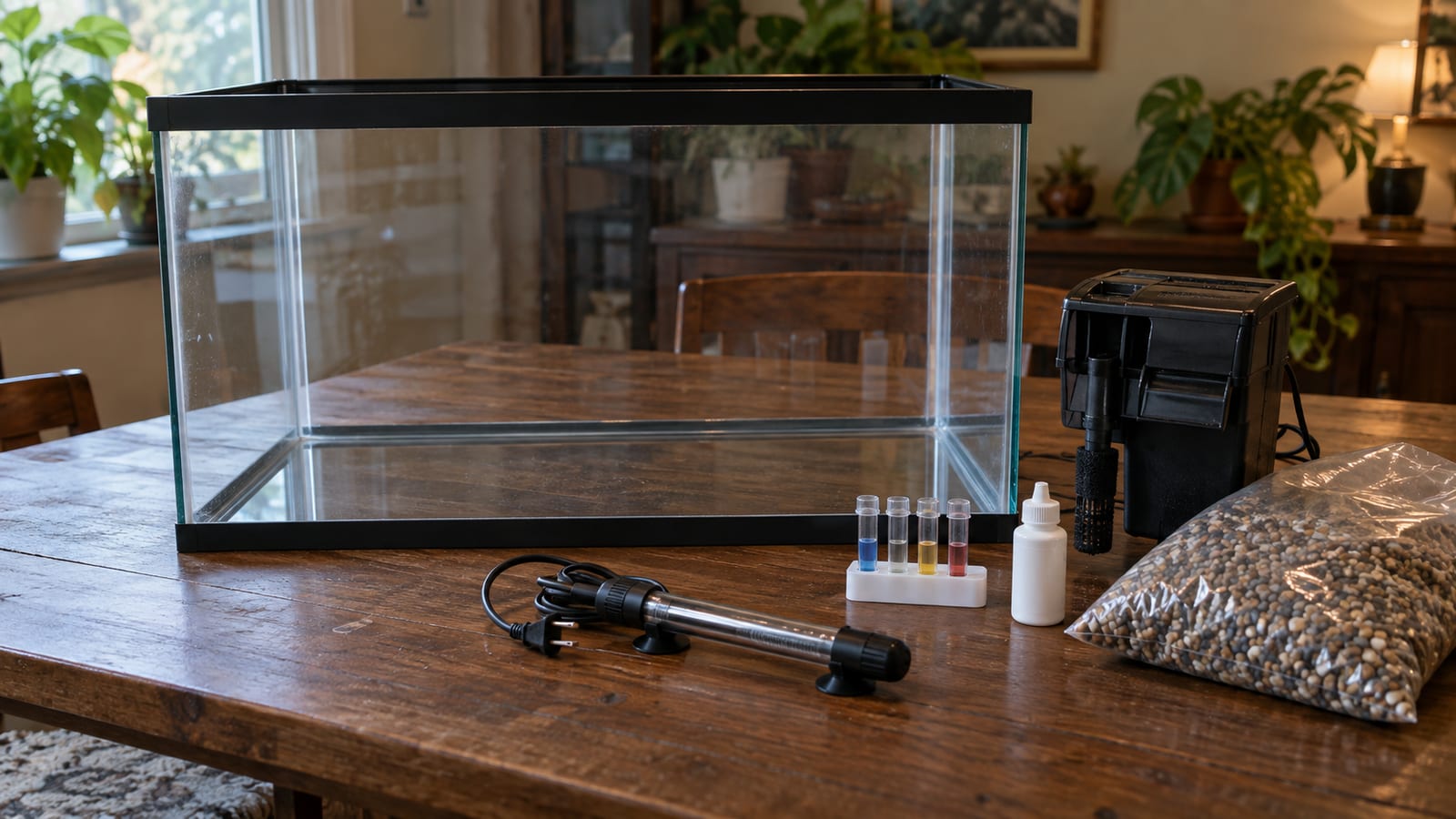
What a 20 gallon fish tank setup costs in 2026, item by item: about $230 on a tight budget, $400–$500 done properly with a stand, and $10 a month to run.
A 20 gallon fish tank costs about $230 to set up on a tight budget and $400 to $500 done properly with a stand, before fish. Fish add $30 to $80, and running it costs roughly $10 a month. The tank itself is the smallest part of the bill.
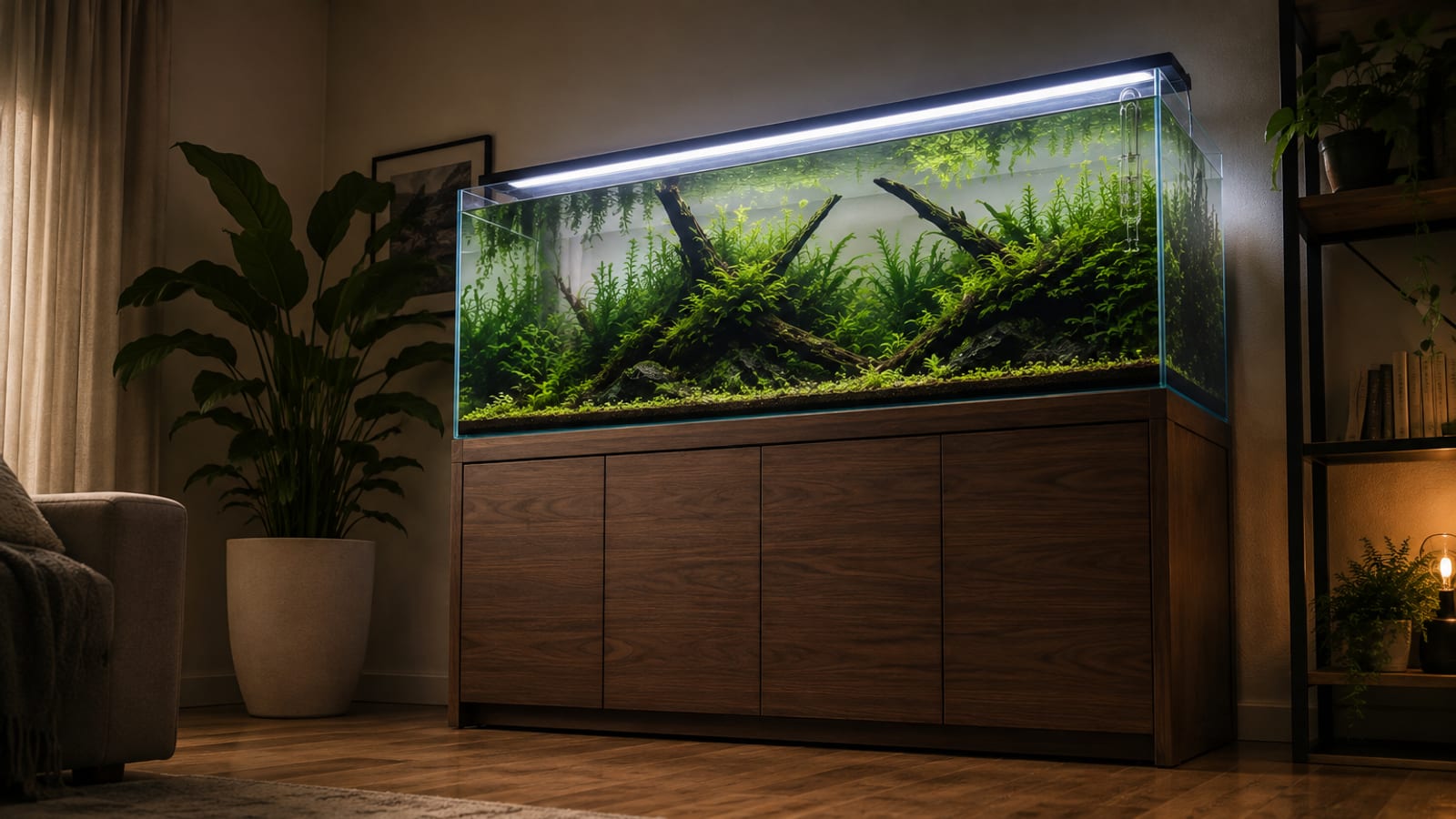
How much does a fish tank weigh? A filled 55 gallon comes to around 625 lb. Full weight table by tank size, plus what your floor can actually take.
A filled 55 gallon fish tank weighs roughly 625 lb — about 460 lb of water, 78 lb of glass and 55 lb of substrate. That is concentrated on roughly four square feet, which is why the floor matters as much as the stand.
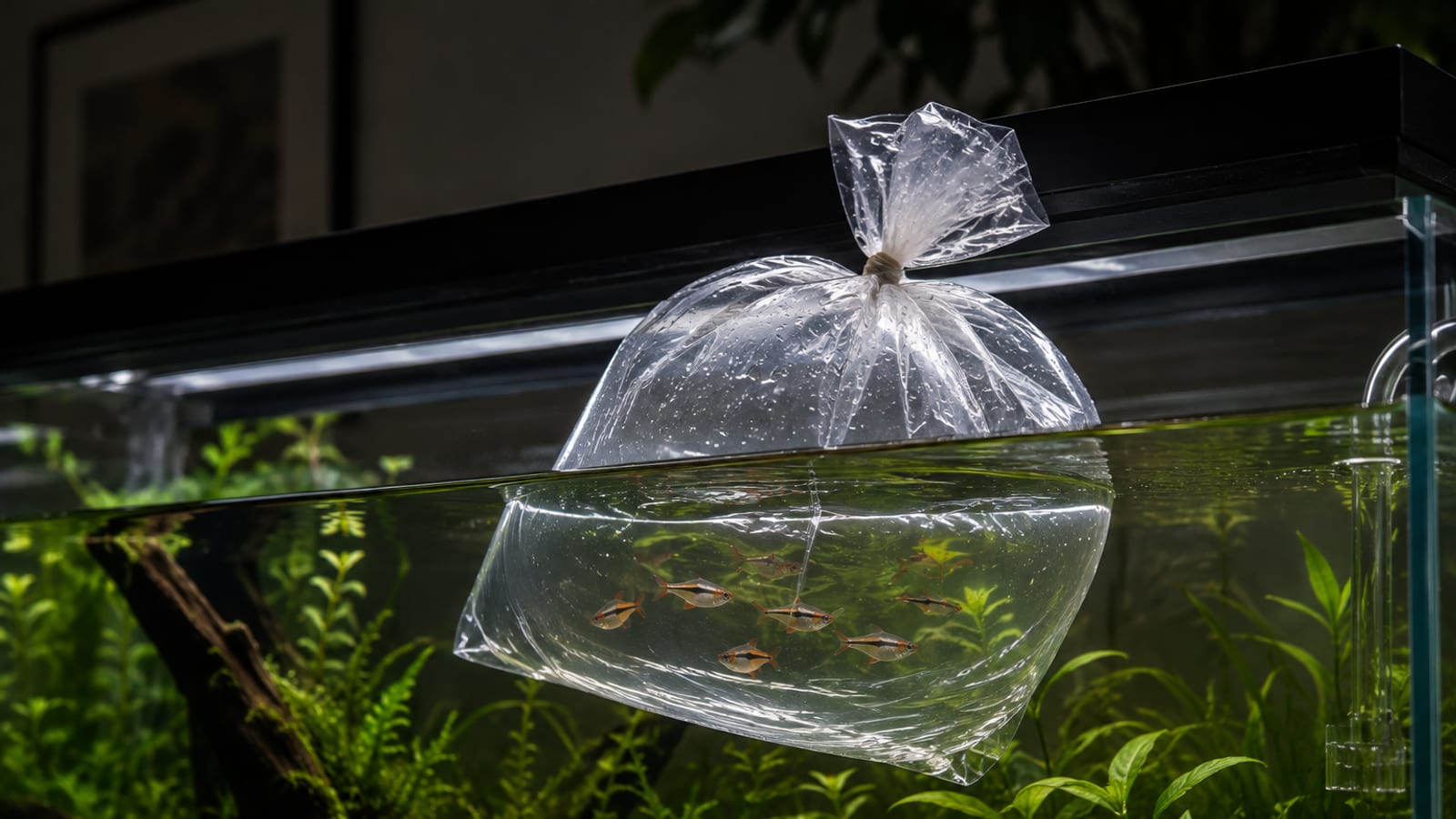
How to acclimate fish to a new tank: float the bag 15 minutes, add tank water every 5 minutes for 20, then net them in. Never pour the bag water in.
Acclimate a new fish by floating the sealed bag for 15 minutes to match temperature, then adding a quarter-cup of tank water every 5 minutes for 20 minutes. Net it in — never pour the bag water into the tank.
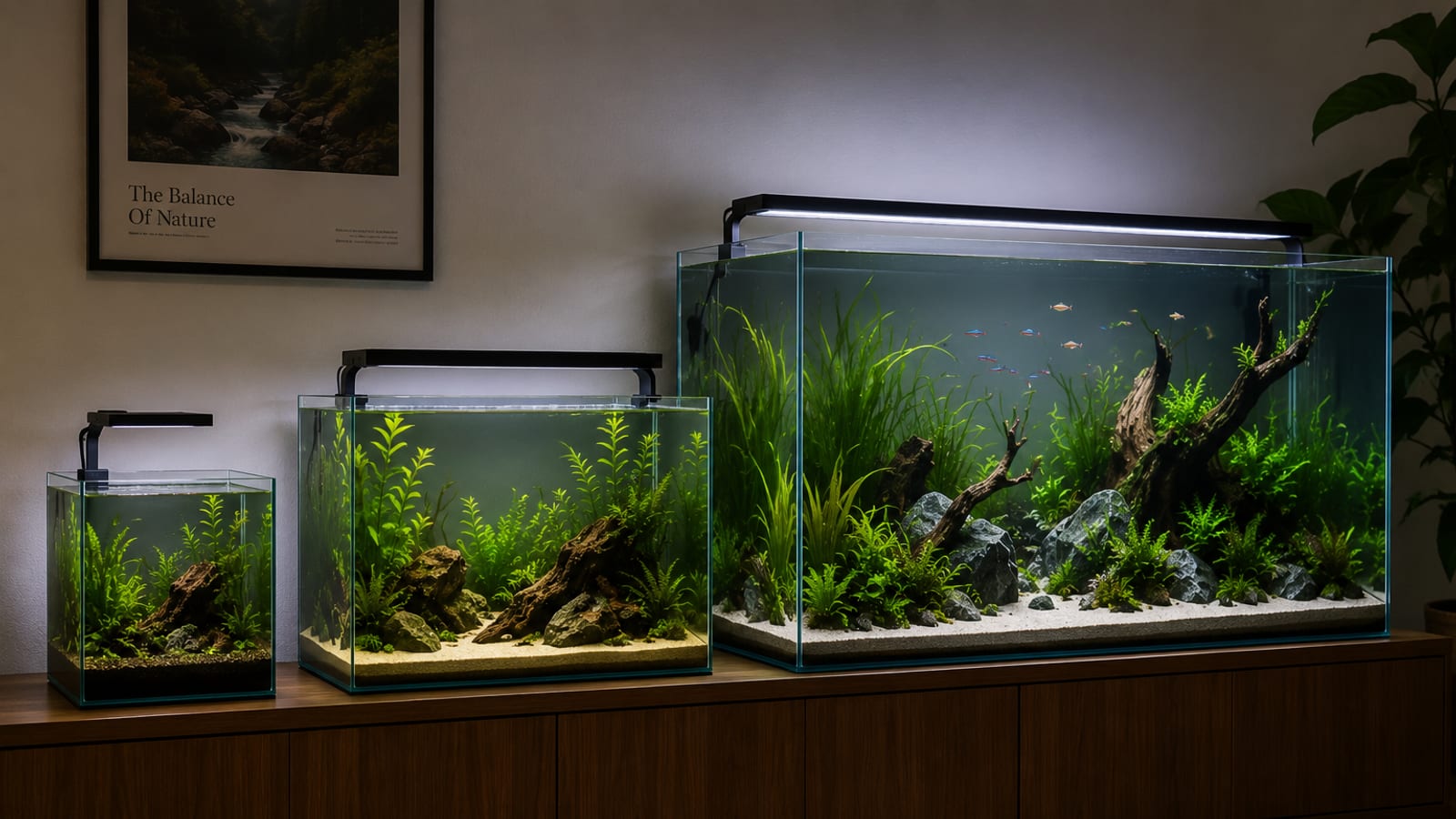
Small tanks are sold as beginner tanks but are the hardest to keep stable. How 5, 10, 20 and 29-gallon tanks compare on stocking, cost and forgiveness.
Buy a 20-gallon long. It is dramatically more forgiving than a 5 or 10, costs perhaps $30 more than the 10, and is the single biggest thing you can do to keep your first fish alive.