
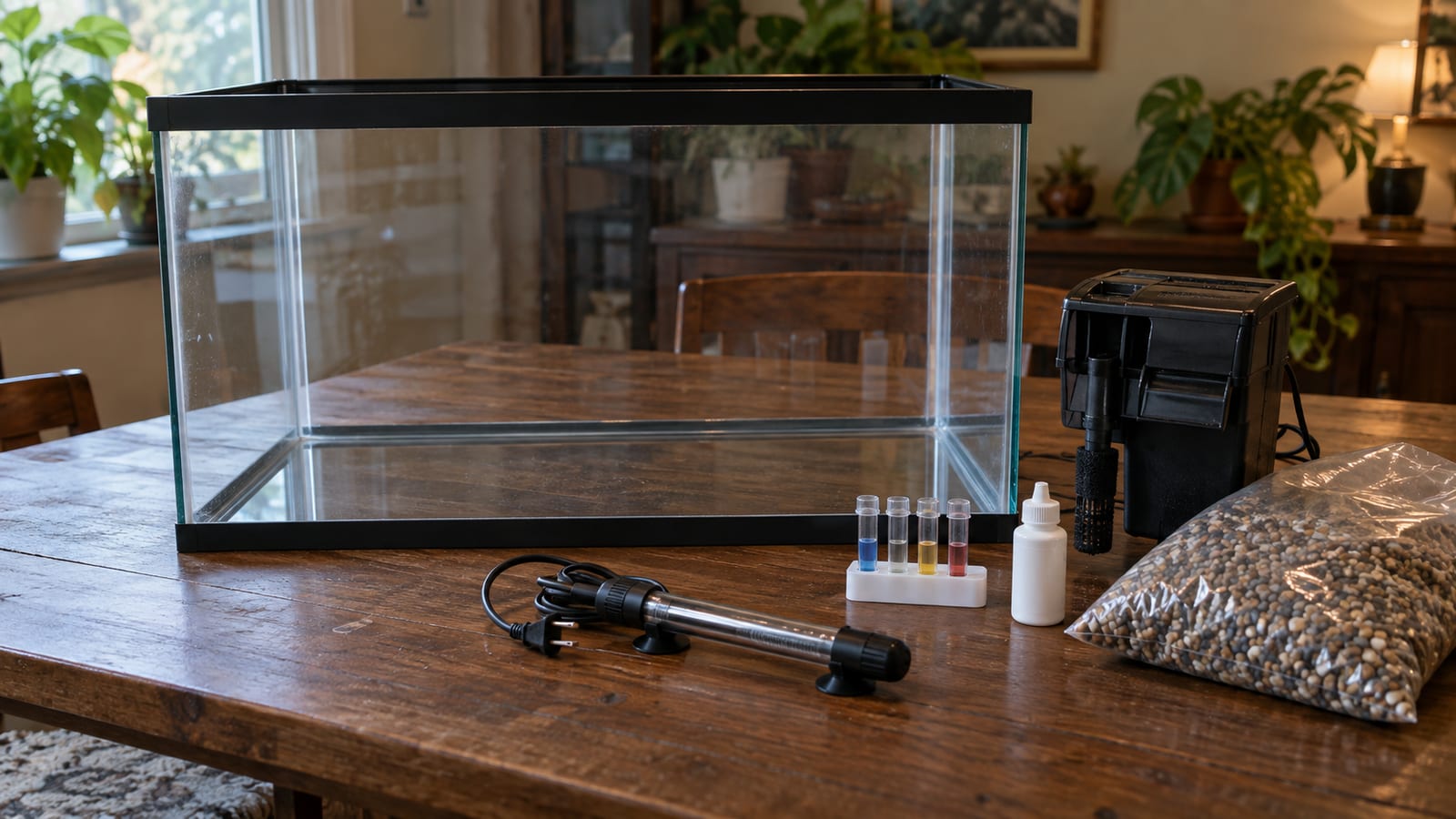
Quick Verdict
A 20 gallon fish tank costs about $230 to set up on a tight budget and $400 to $500 done properly with a stand, before fish. Fish add $30 to $80, and running it costs roughly $10 a month. The tank itself is the smallest part of the bill.
About $230 on a tight budget, and $400 to $500 done properly with a stand — both before fish. Fish add another $30 to $80, and the tank then costs roughly $10 a month to run. Prices were checked on 17 September 2026 against live listings at Petco, PetSmart and Amazon.
The figure that surprises people is how little of that is the tank. A bare 20 gallon is $40 in a chain-store sale and $70 to $100 at full price. Everything that keeps fish alive in it is the other four fifths of the bill.
The itemised list
The table above has every line. Three notes on reading it.
The two columns are different decisions, not different quality. The tight-budget column uses a sponge filter, a basic preset heater, plain gravel and a piece of furniture you already own. All of that works. The second column buys adjustability and convenience: a hang-on-back filter you can fill with your own media, a heater with a dial, a stand built for the load.
Nothing on it is optional in the way shop lists imply. The right-hand column of the table is there because the lists you find taped to a shop shelf stop at tank, filter, heater and gravel. The items they leave out — test kit, conditioner, vacuum, lid — come to around $100, and you will buy every one of them within the first month anyway.
The stand is a weight question. A filled 20 gallon is about 225 lb. Solid wood furniture that is flat and level can take that. Flat-pack shelving and anything with a sagging top cannot, and an uneven surface puts the load onto the glass seams.
The item people cut, and should not
The liquid test kit is $35 to $45 and looks like the obvious saving. It is the only way to know when the tank is safe for fish and the only way to find out why fish are dying later. Skipping it typically costs more than its price in replacement fish within two months.
Kit or separate parts
A 20 gallon kit — tank, lid, light and a filter, sometimes a heater — runs $120 to $200 at regular price. The same parts bought separately come to $160 to $235, so a kit is the cheaper route on the day mainly when it is on sale, which at the big chains is often.
The catch is the filter. Kit filters are usually built around a proprietary cartridge with instructions to replace it monthly. Each replacement costs a few dollars, and more importantly it throws away the bacteria colony that makes the tank safe, which lives in that cartridge. Kit heaters, where included, are often preset to one temperature with no dial.
A kit is a reasonable buy on one condition: treat its filter as a starter. Keep the cartridge far longer than the box says, rinsing it in old tank water, or cut a piece of coarse sponge to sit in its place. If you would rather buy once, buy the parts separately.
Where to save, and where not to
- Save on the tank. Petco and PetSmart discount bare tanks heavily several times a year — half price is common, which puts a 20 gallon at about $40 — and a used tank that passes a 48-hour leak test is as good as a new one.
- Save on the filter. A sponge filter and a small air pump cost about $25 and are what many breeders run by choice. They are quieter on the wallet than on the ear.
- Save on substrate. Plain gravel or sand does everything a beginner tank needs. Specialist plant substrates are for a second tank.
- Save on decor. Fish need cover and broken lines of sight, and a few hardy plants and one piece of wood provide that for $15.
- Do not save on the heater. A failed heater is the one piece of equipment that can kill every fish overnight. Buy it new, from a brand you have heard of.
- Do not save on the test kit or the water conditioner. Together they are about $45 and they are the difference between guessing and knowing.
What it costs to run
Roughly $10 a month, which is less than most people assume.
| Running cost | Per month |
|---|---|
| Electricity — heater, filter, light | $4–$7 |
| Food | $2–$3 |
| Water conditioner | about $1 |
| Replacement sponge or media, averaged | about $1 |
The heater is the largest share, and it only draws power while it is actually heating — in a normally warm room, around a third of the time. A filter runs constantly but uses about as much as a night light. Keeping the tank in a room that stays near 70 °F does more for the bill than any equipment choice; see what temperature a fish tank should be for the target.
The cost that arrives later: fish
Budget $30 to $80, and do not spend it yet.
The tank has to run for four to six weeks with no fish in it while the nitrogen cycle establishes. That delay is the most useful fact in this article for anyone on a budget: the equipment spend and the livestock spend fall in different months. When the time comes, how many fish fit in a 10 gallon tank shows the reasoning for choosing numbers, and the same method scales to a 20.
The cheapest fish tank is the one you only stock once. Nearly every dollar wasted in this hobby is spent replacing fish that went into an uncycled tank.
Is a smaller tank the cheaper option?
Slightly, and it is rarely worth it. Dropping to a 10 gallon saves $40 to $70 in total, because the fixed costs — test kit, conditioner, thermometer, vacuum, bucket — are identical at every size. What you give up is water volume, and volume is what absorbs mistakes: the same overfeeding that nudges the readings in a 20 gallon can crash a 10. The full argument is in what size tank a beginner should get.
The one thing worth taking from this
Price the whole list before you buy the tank. The glass box is about a fifth of the cost, the items the shop list leaves out cost more than the tank does, and the one purchase that protects all the rest is the $35 test kit.
Detailed Comparison
| Item | Tight budget | Done properly | Can you skip it? |
|---|---|---|---|
| Tank, 20 gallon glass | $40 (chain-store sale price) | $70–$100 (regular price) | No — but buy it in a sale, or used |
| Lid and light | $50 (basic LED hood) | $55–$75 | No. Fish jump, and water evaporates |
| Filter | $25 (sponge filter and air pump) | $35–$60 (hang-on-back) | No |
| Heater, 75–100 W | $20 (preset) | $25–$35 (adjustable) | Only for coldwater fish |
| Thermometer | $4 | $8–$12 | No |
| Substrate, about 20 lb | $20 | $25–$40 | Technically, but almost nobody should |
| Liquid test kit | $35 | $35–$45 | No. This is the one people cut and regret |
| Water conditioner | $7 | $7–$9 | No — tap water chlorine kills fish and bacteria |
| Gravel vacuum and bucket | $12 | $20–$25 | No |
| Decor and plants | $15 | $30–$60 | Partly — fish need cover, not ornaments |
| Stand | $0 (existing sturdy furniture) | $40–$120 | Only if the furniture is flat, level and rated for 225 lb |
| Total before fish | About $230 | $350–$580; most people land at $400–$500 |
Frequently Asked Questions
🔗 Related Resources
More Reviews:
Related Articles
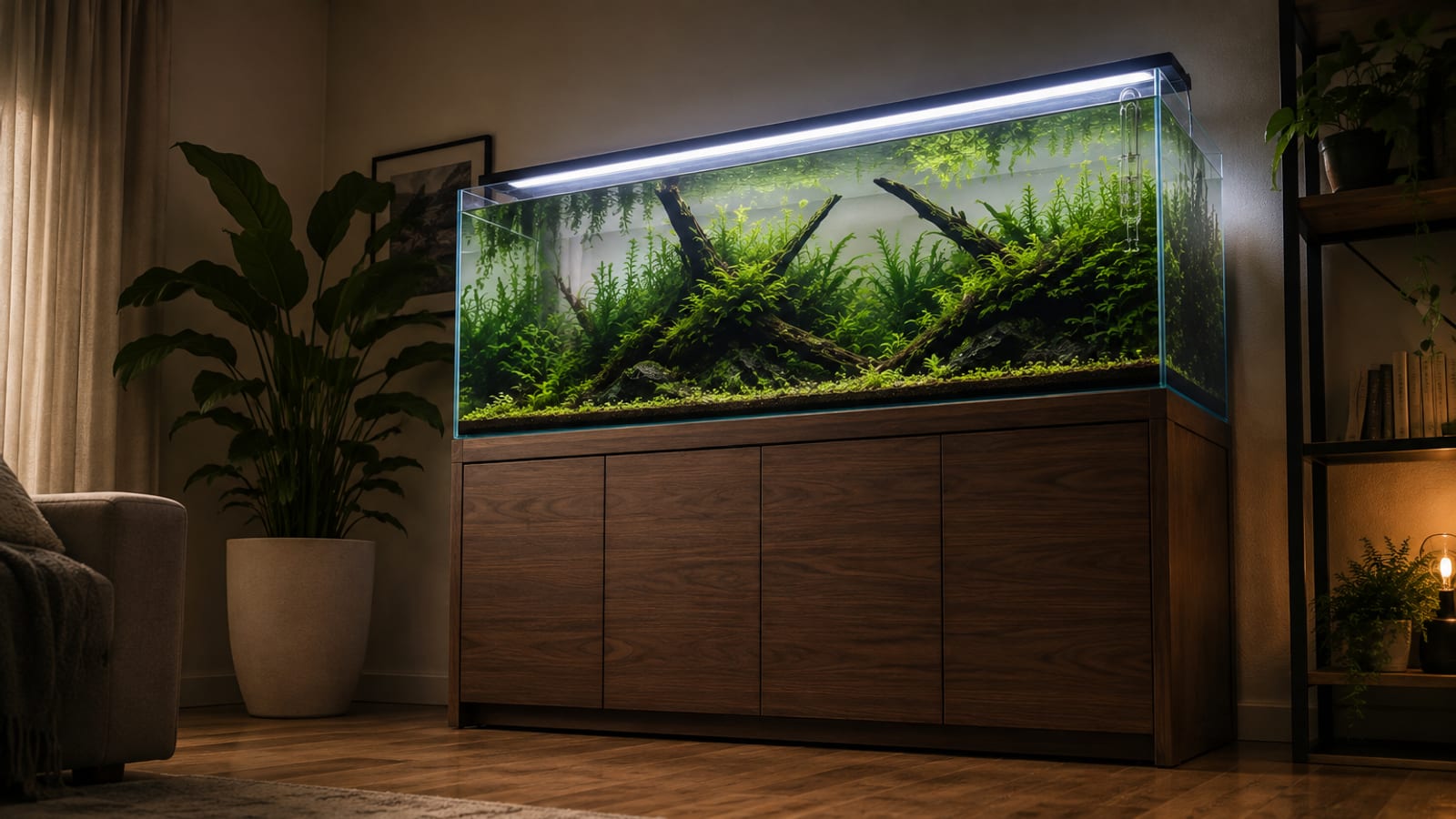
How Much Does a Fish Tank Weigh? Every Size, Filled
How much does a fish tank weigh? A filled 55 gallon comes to around 625 lb. Full weight table by tank size, plus what your floor can actually take.
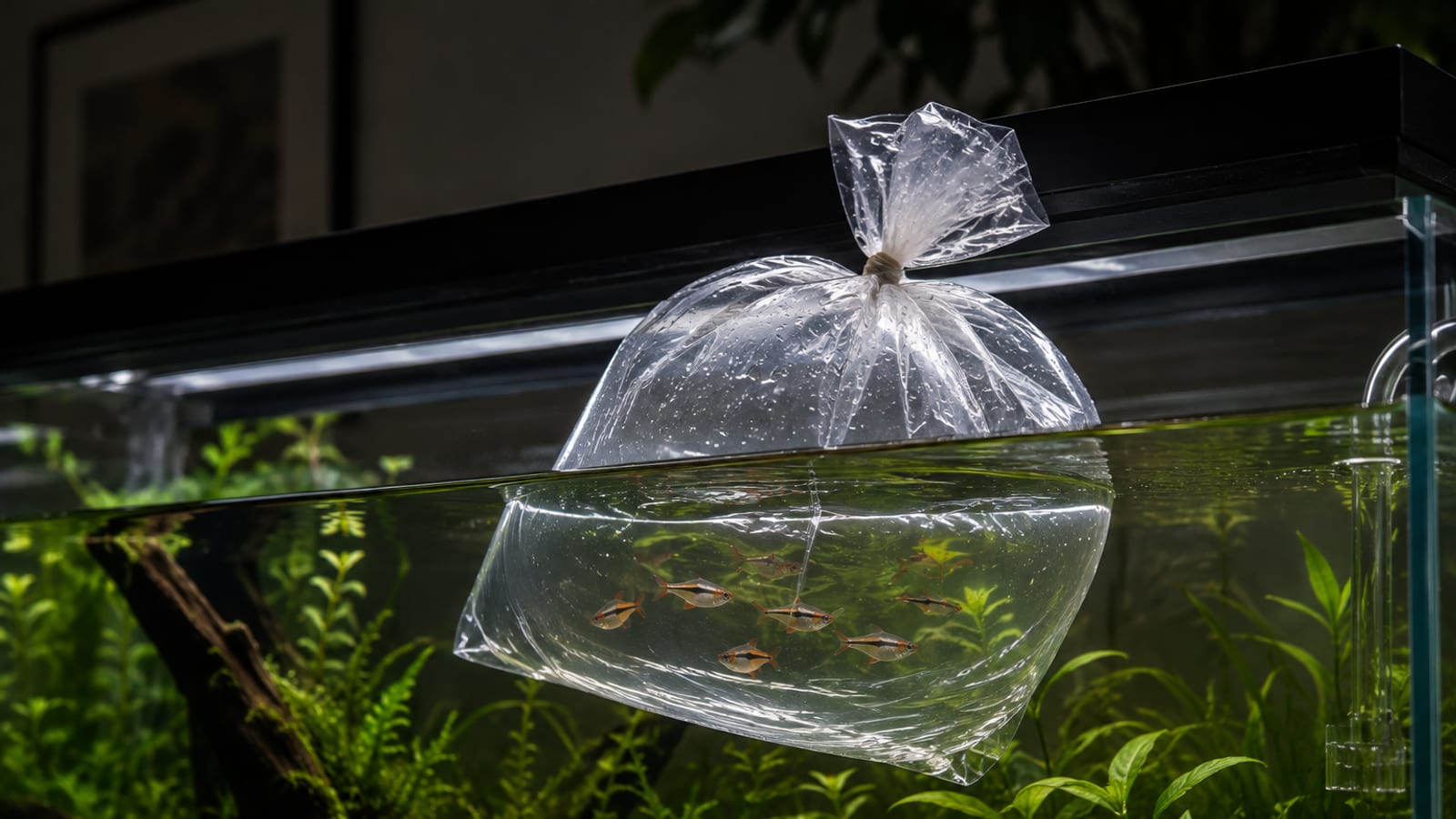
How to Acclimate Fish to a New Tank (Freshwater)
How to acclimate fish to a new tank: float the bag 15 minutes, add tank water every 5 minutes for 20, then net them in. Never pour the bag water in.
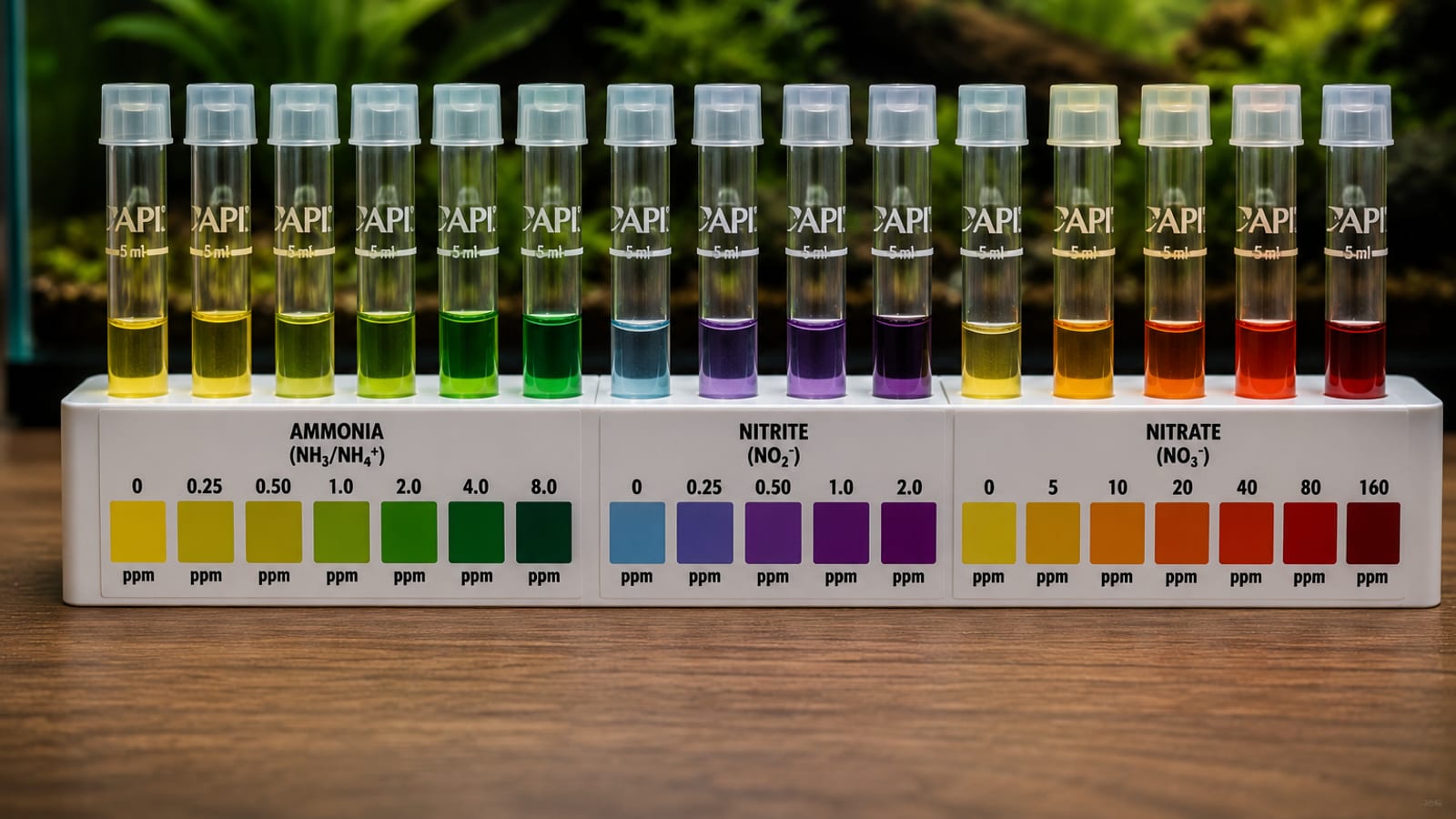
Nitrogen Cycle for Beginners: Why You Wait Weeks for Fish
Ammonia, nitrite and nitrate in plain English — how to run a fishless cycle step by step, and the one test that tells you the tank is ready for fish.