
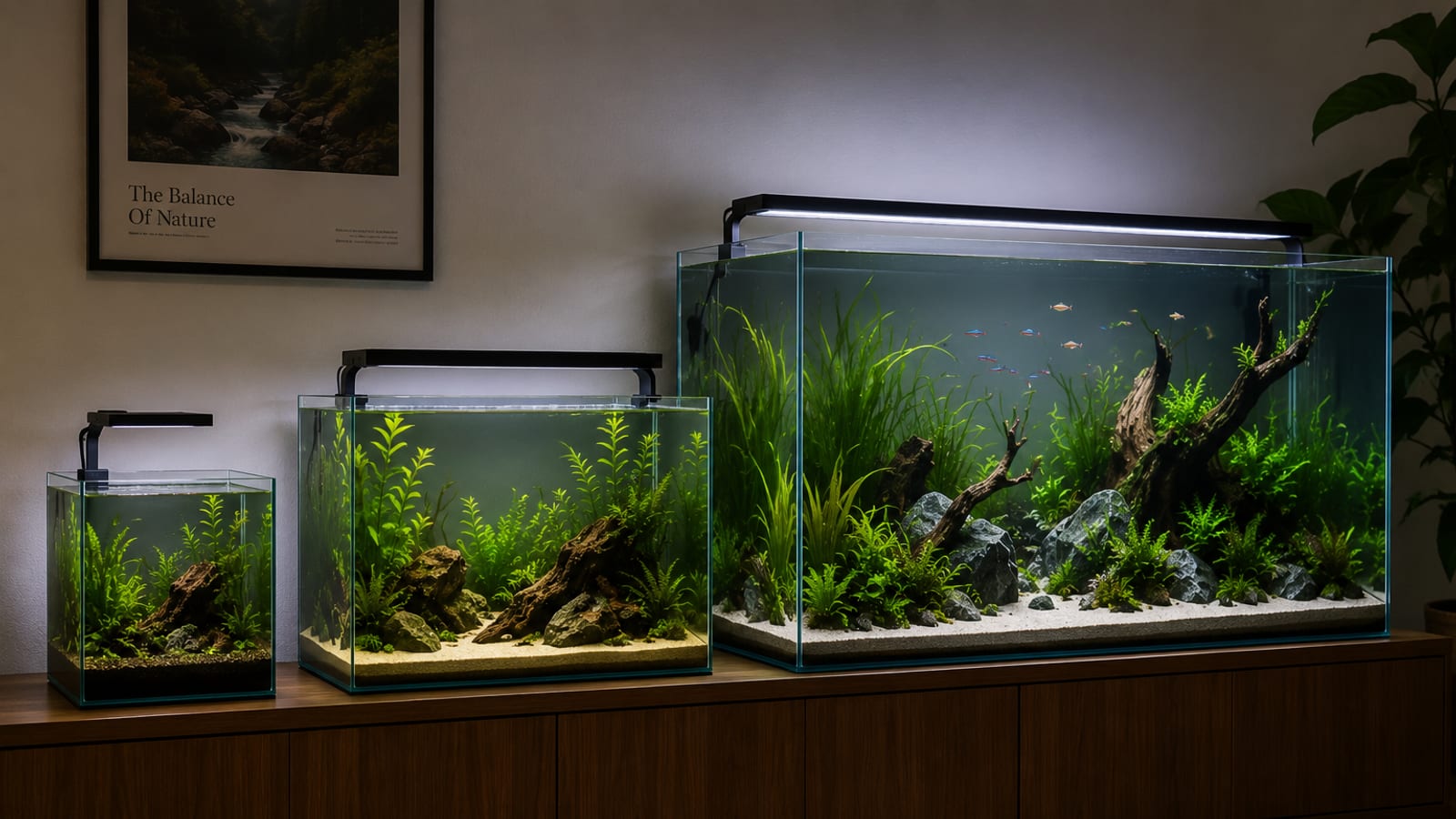
Quick Verdict
Buy a 20-gallon long. It is dramatically more forgiving than a 5 or 10, costs perhaps $30 more than the 10, and is the single biggest thing you can do to keep your first fish alive.
The aquarium trade sells small tanks to beginners, and the logic seems obvious: less water, less money, less to go wrong. It is exactly backwards.
The counterintuitive rule
The smaller the tank, the faster its water chemistry swings, and the less time you have to notice and fix a problem. Small tanks are advanced tanks.
Why volume equals stability
Everything that harms fish is a concentration, not an amount. A fish produces roughly the same ammonia whether it lives in 5 gallons or 20 — but in 5 gallons that ammonia is four times as concentrated.
The same applies to temperature (a small volume cools faster when the heater fails), to pH (less water means less buffering capacity), and to your own mistakes. Overfeed a 20-gallon and you will probably get away with it. Overfeed a 5-gallon and you may not.
Water volume is the cheapest insurance policy in the hobby. You buy it once, and it forgives you every week thereafter.
How the common sizes compare
The table above is the practical version. A few notes on reading it:
5 gallon. One betta, or a shrimp colony. Not a community tank, whatever the box art shows. Viable, but unforgiving.
10 gallon. The classic "starter kit" size and the source of an enormous amount of beginner frustration. It is big enough to tempt you into stocking a community, and too small to support one.
20 gallon long. The recommendation. Wide footprint, good surface area for gas exchange, and enough volume that a single mistake is diluted rather than lethal. It supports a real community — a shoal of ten small fish, a centrepiece, and a cleanup crew.
29 gallon. Same footprint as the 20 long, more height. Better if you want taller fish like angelfish later; slightly more water to change each week.
What it actually costs
- Tank and stand — the stand is often more expensive than the tank
- Filter rated for your tank volume or a little above
- Heater, roughly 3-5 watts per gallon
- Light — a basic LED is fine unless you want demanding plants
- Substrate, around 1 lb per gallon for a 2-inch bed
- Liquid test kit — not strips
- Dechlorinator
- A bucket used only for the aquarium, never for cleaning products
The jump from a 10-gallon setup to a 20-gallon setup is roughly $30-50 across the whole list. It is the best value upgrade available to you, and it is available only once — before you buy.
Where to put it
Level, structurally sound, out of direct sunlight, and near a power outlet. Direct sun drives algae growth harder than any lighting decision you will make. Away from a radiator and away from a door that slams.
A filled 20-gallon is around 225 lb concentrated on a 30 by 12 inch footprint. Check what it is standing on.
The one thing to do next
Do not buy fish. The tank needs to be cycled first — a process of growing bacteria that takes three to six weeks and happens with no fish in the tank at all. It is the step that separates a first tank that works from one that becomes a sad story.
Detailed Comparison
| Tank | Footprint | Realistic stocking | Weekly water change | Forgiveness |
|---|---|---|---|---|
| 5 gallon | 16" x 8" | 1 betta, or a small shrimp colony | 1-1.5 gal | Very low |
| 10 gallon | 20" x 10" | A small shoal of nano fish | 2-3 gal | Low |
| 20 gallon long | 30" x 12" | A proper community: shoal, centrepiece fish, bottom dwellers | 5-6 gal | Good |
| 29 gallon | 30" x 12" | As above, with more vertical swimming room | 7-9 gal | Good |
Frequently Asked Questions
🔗 Related Resources
More Reviews:
Related Articles
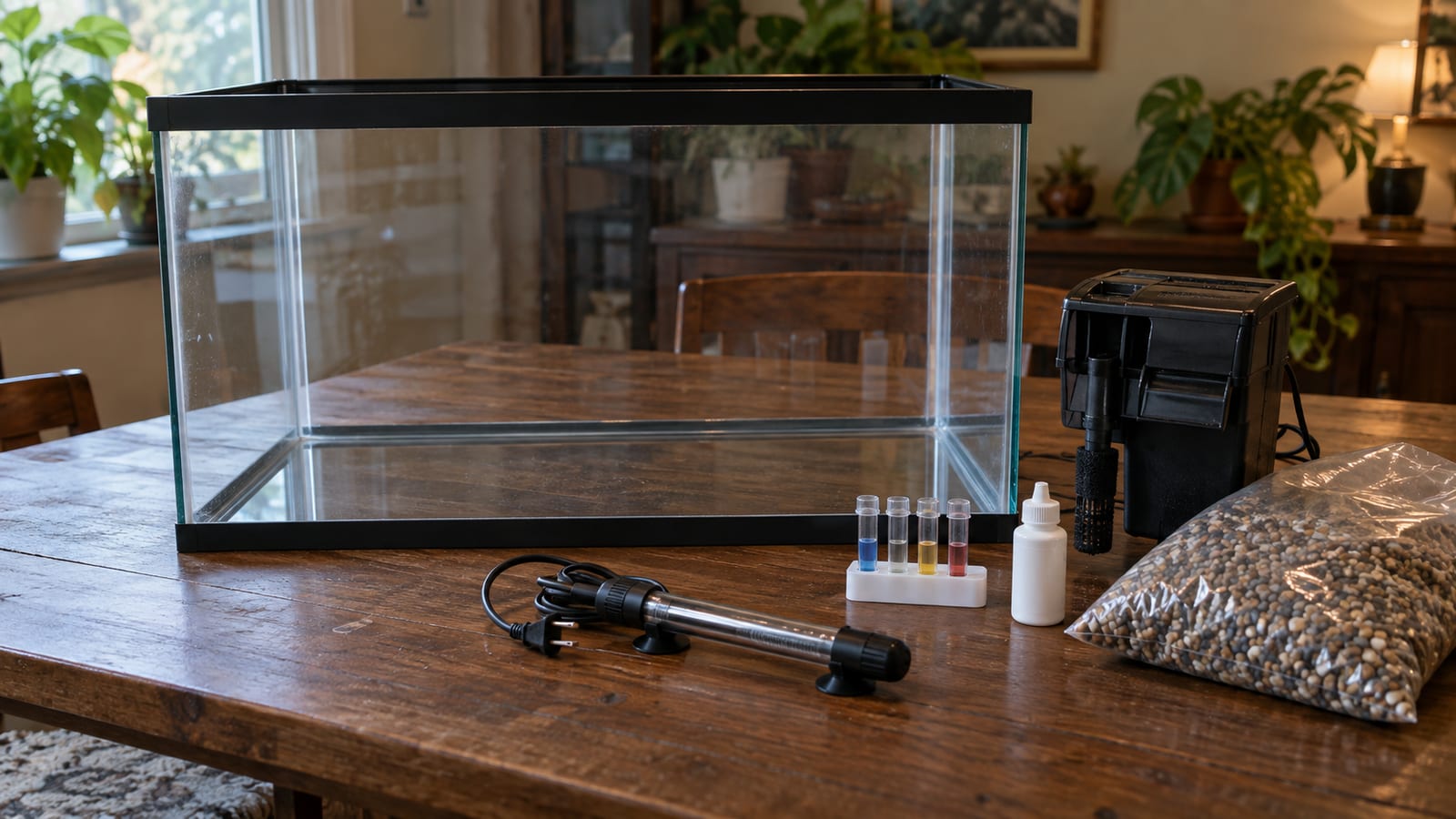
20 Gallon Fish Tank Setup Cost: Every Item, Priced
What a 20 gallon fish tank setup costs in 2026, item by item: about $230 on a tight budget, $400–$500 done properly with a stand, and $10 a month to run.
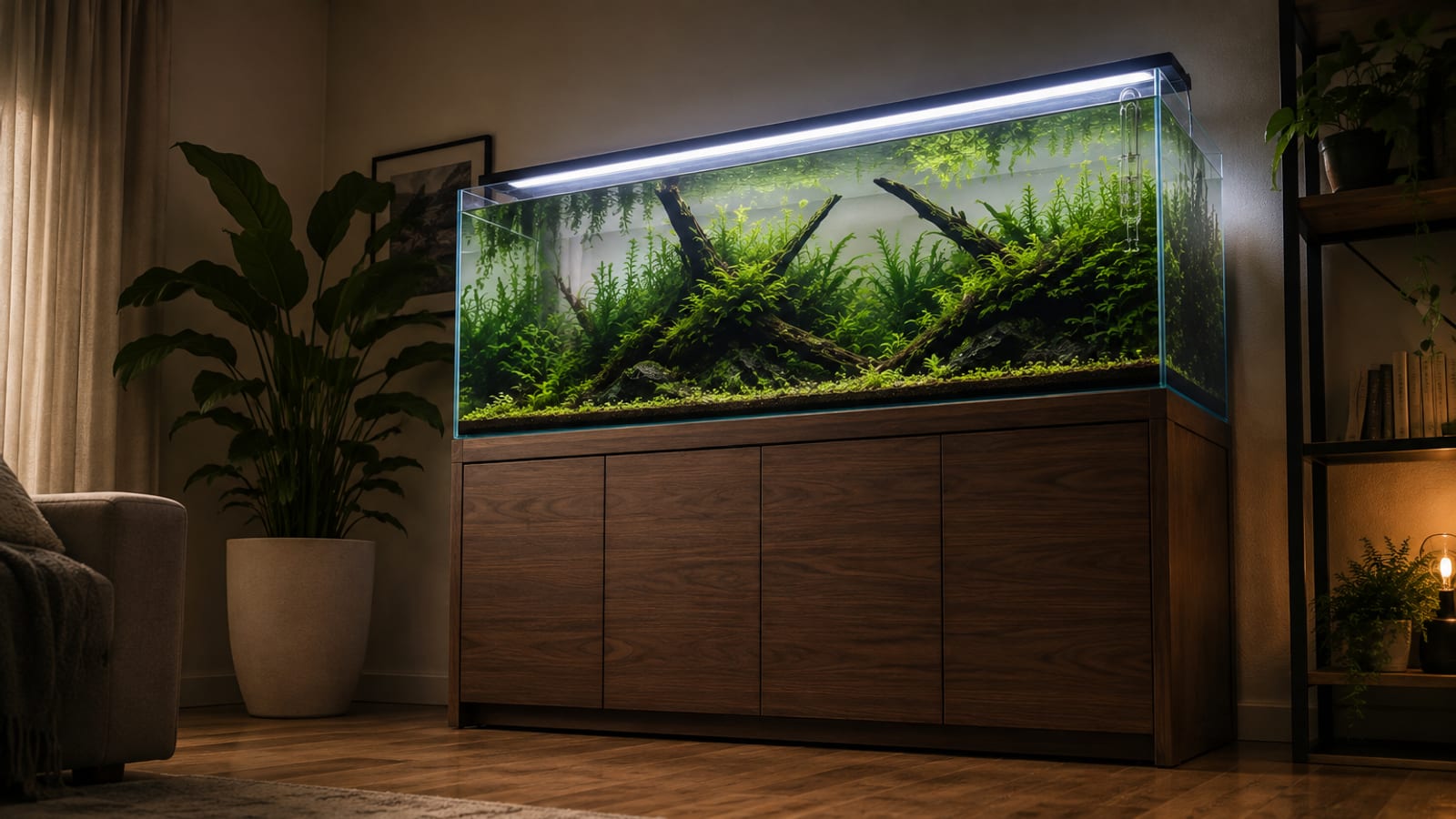
How Much Does a Fish Tank Weigh? Every Size, Filled
How much does a fish tank weigh? A filled 55 gallon comes to around 625 lb. Full weight table by tank size, plus what your floor can actually take.
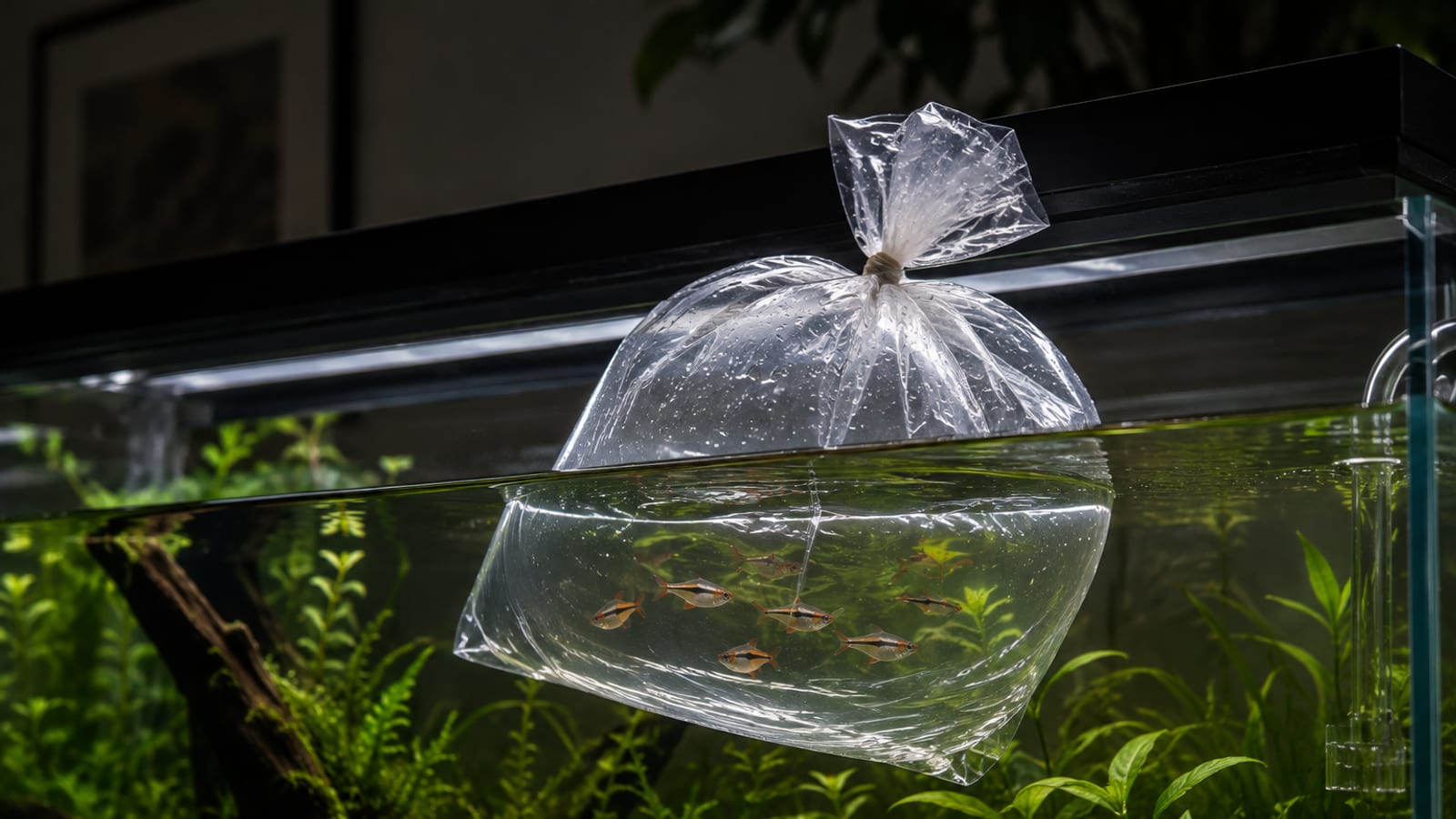
How to Acclimate Fish to a New Tank (Freshwater)
How to acclimate fish to a new tank: float the bag 15 minutes, add tank water every 5 minutes for 20, then net them in. Never pour the bag water in.