
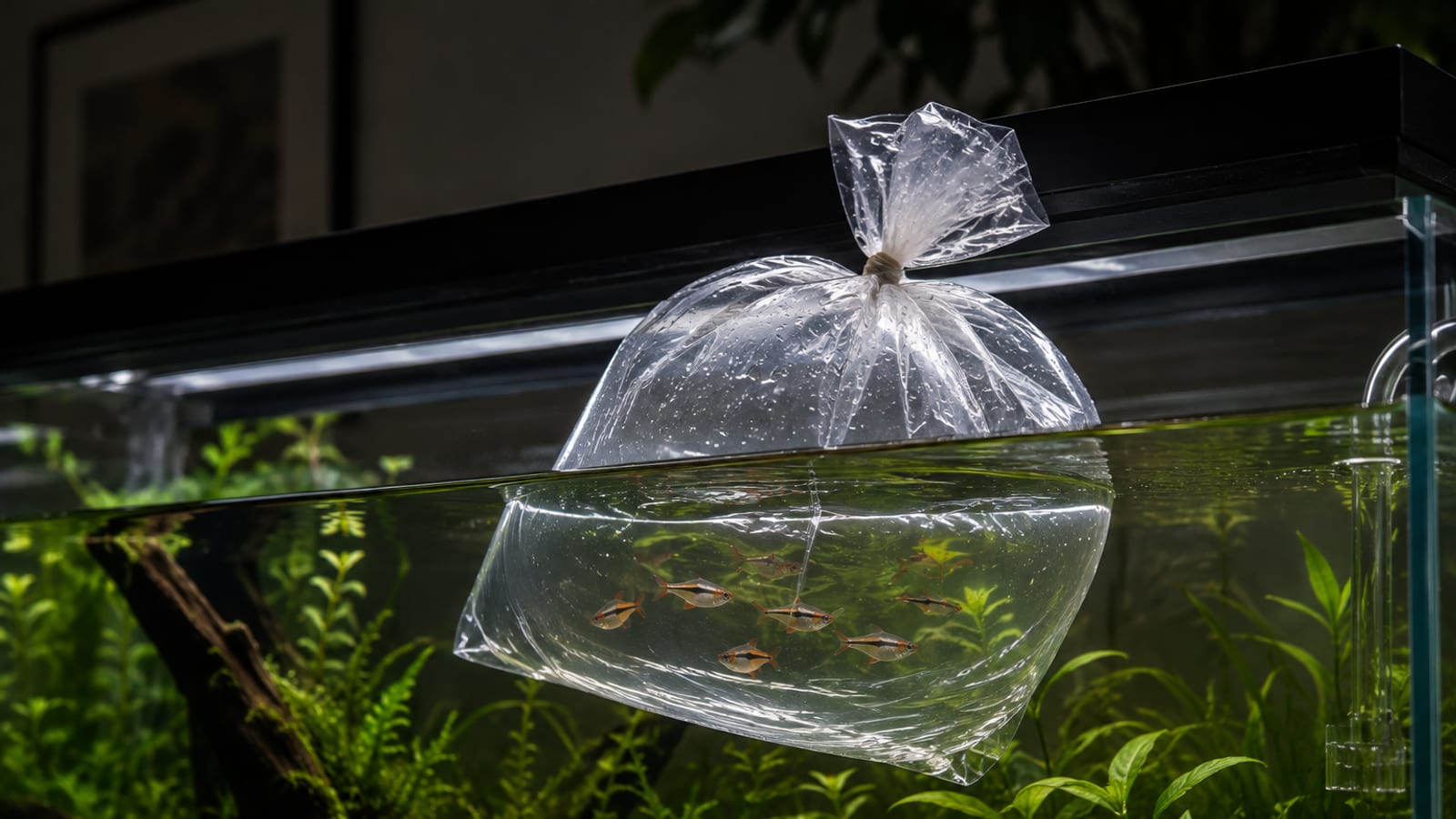
Quick Verdict
Acclimate a new fish by floating the sealed bag for 15 minutes to match temperature, then adding a quarter-cup of tank water every 5 minutes for 20 minutes. Net it in — never pour the bag water into the tank.
Float the sealed bag for 15 minutes. Then add a quarter-cup of tank water to it every 5 minutes for 20 minutes. Then net the fish in and throw the bag water away.
That is the whole procedure for freshwater community fish, and it takes about half an hour. Most of what makes it confusing is that the popular guides are written for reef tanks, where the rules are genuinely different.
Before the fish comes home
None of this works on a tank that is not cycled. Acclimation manages a change of a few hours; an uncycled tank poisons the fish over the following fortnight. If you do not have a filter colony converting ammonia already, the fish should not be in the car.
How to acclimate fish to a new tank, step by step
- Turn the tank lights off and dim the room before you start.
- Float the sealed bag on the surface for 15 minutes. Do not open it yet — this step is only about temperature.
- Open the bag and roll the top edge down a few times so it floats on its own like a collar. The fish needs air exchange.
- Add about a quarter-cup of tank water to the bag. Wait 5 minutes.
- Repeat four times, so the bag roughly doubles in volume over 20 minutes.
- Net the fish out of the bag and into the tank. Never tip the bag in.
- Pour the bag water down the sink.
- Leave the lights off for the rest of the day and do not feed until tomorrow.
What each step is actually for
The steps look fussy until you know which variable each one handles.
Floating handles temperature. Water changes temperature slowly, and a bag floating in the tank equalises within about fifteen minutes. Temperature is the fastest-acting of the shocks — a few degrees of sudden change is enough to matter.
Adding water handles chemistry. pH, hardness and mineral content differ between the shop's water and yours, sometimes considerably. These cannot equalise through plastic, so you dilute instead. Doubling the bag volume over twenty minutes gets the fish most of the way there, and the remainder happens when it enters the tank.
Netting handles everything else. The bag water has ammonia in it from the journey, carries whatever is in the shop's system, and has drifted acidic from CO₂ building up in a sealed bag. There is nothing in it you want.
Bag water is not a gentler version of your tank water. It is a small volume of deteriorating shop water with a stressed fish in it.
The mistake most guides make
Search this question and the top results are largely saltwater guides recommending drip acclimation over two to three hours.
That advice is correct — for reef invertebrates and marine fish, which are genuinely sensitive to shifts in salinity and mineral content. It is not correct for a neon tetra you bought twenty minutes away.
There is a real cost to over-doing it: the fish is in a small, warming, deoxygenating volume of water for the entire process. A three-hour acclimation for a hardy community fish causes more stress than the twenty-minute one it replaced.
Freshwater community fish: 35 minutes, as above. Shrimp and invertebrates: drip acclimate over an hour or more. Genuinely worth it here.
Afterwards
Expect the fish to hide. A new tetra will often sit behind a plant for two or three days before it starts using the open water, and a betta may sulk on the substrate for a day. This is normal.
What is not normal is a fish lying on its side, gasping at the surface, or unable to stay upright. That is shock, and there is very little to do beyond darkness, clean water and time.
Do not feed on day one. Feed lightly on day two. And test ammonia a couple of days later — new fish are a new waste load, and even a cycled tank takes a little while to catch up when the load steps up.
Detailed Comparison
| Step | Time | What you are matching | If you skip it |
|---|---|---|---|
| Lights off, bag floating sealed | 15 min | Temperature | Thermal shock. The most common and most avoidable killer |
| Open bag, roll the top down | — | Oxygen | Bag water is already low on oxygen after transit |
| Add ¼ cup tank water every 5 min | 20 min | pH, hardness, dissolved minerals | pH shock, which kills over hours rather than instantly |
| Net the fish into the tank | — | — | Pouring introduces shop water, ammonia and any pathogen with it |
| Discard the bag water | — | — | Nothing in that bag belongs in your tank |
| Lights off, no food | 12-24 hr | Stress recovery | Uneaten food fouling the water while the fish is too stressed to eat |
Frequently Asked Questions
🔗 Related Resources
More Reviews:
Related Articles
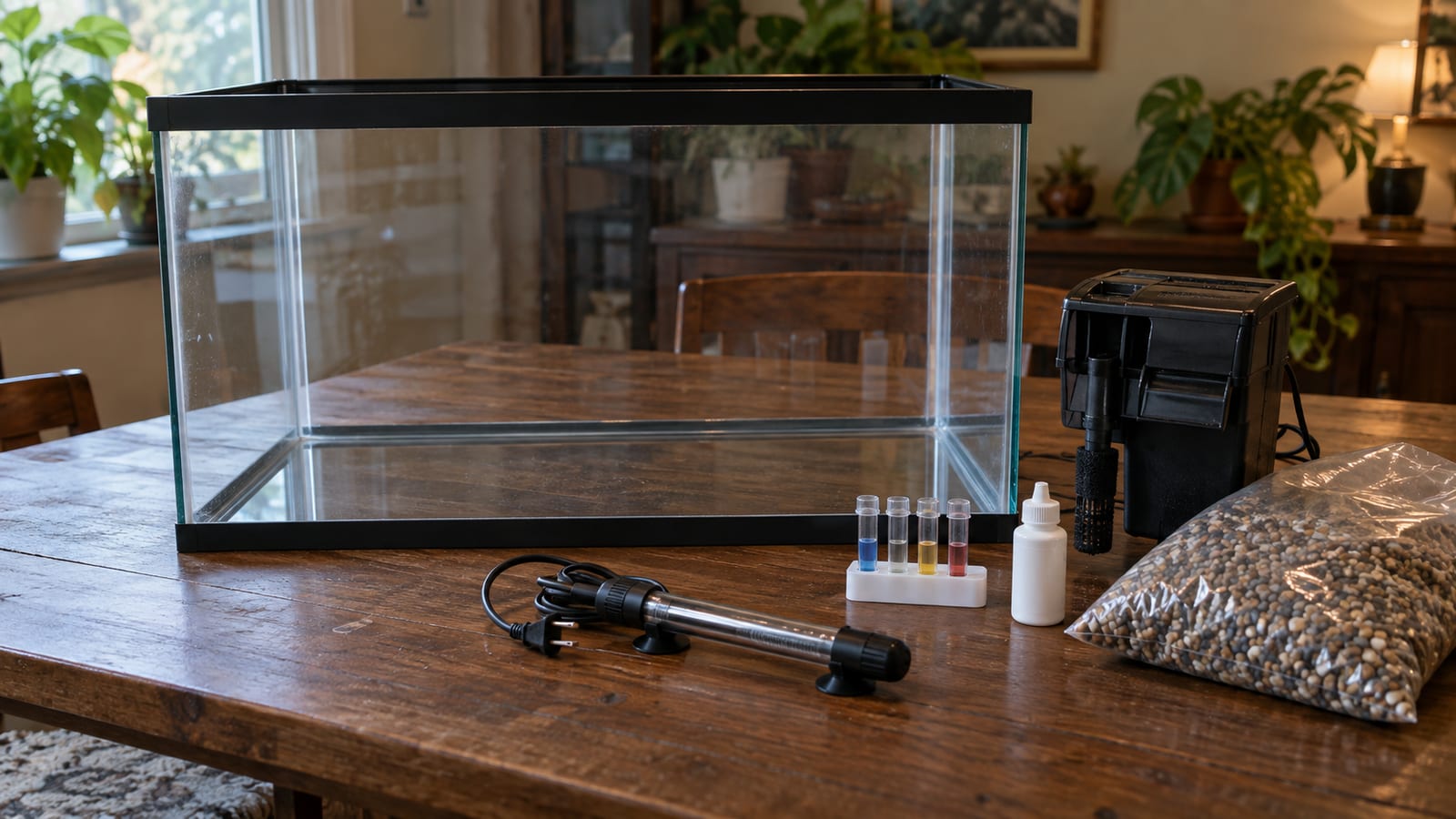
20 Gallon Fish Tank Setup Cost: Every Item, Priced
What a 20 gallon fish tank setup costs in 2026, item by item: about $230 on a tight budget, $400–$500 done properly with a stand, and $10 a month to run.
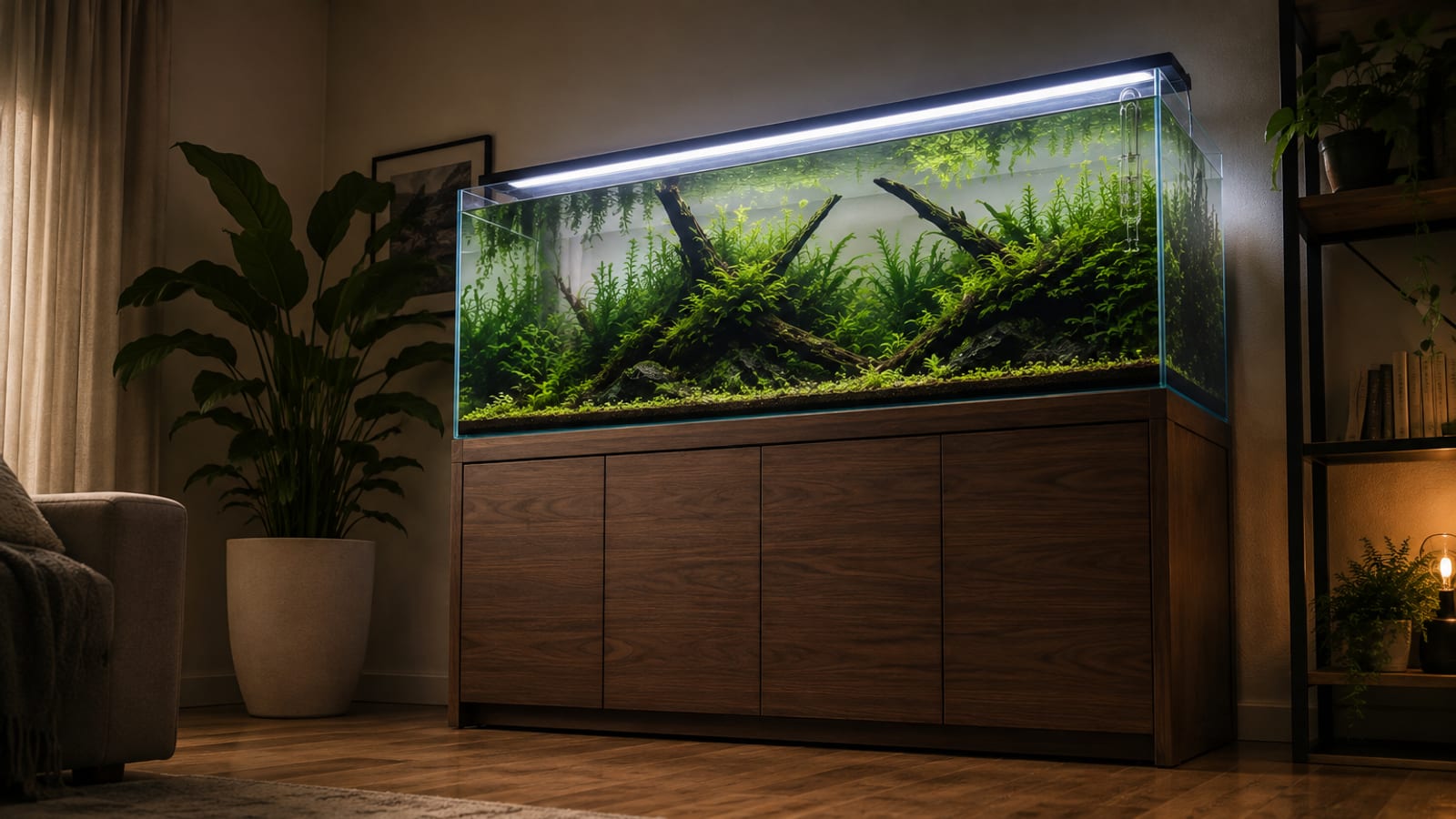
How Much Does a Fish Tank Weigh? Every Size, Filled
How much does a fish tank weigh? A filled 55 gallon comes to around 625 lb. Full weight table by tank size, plus what your floor can actually take.
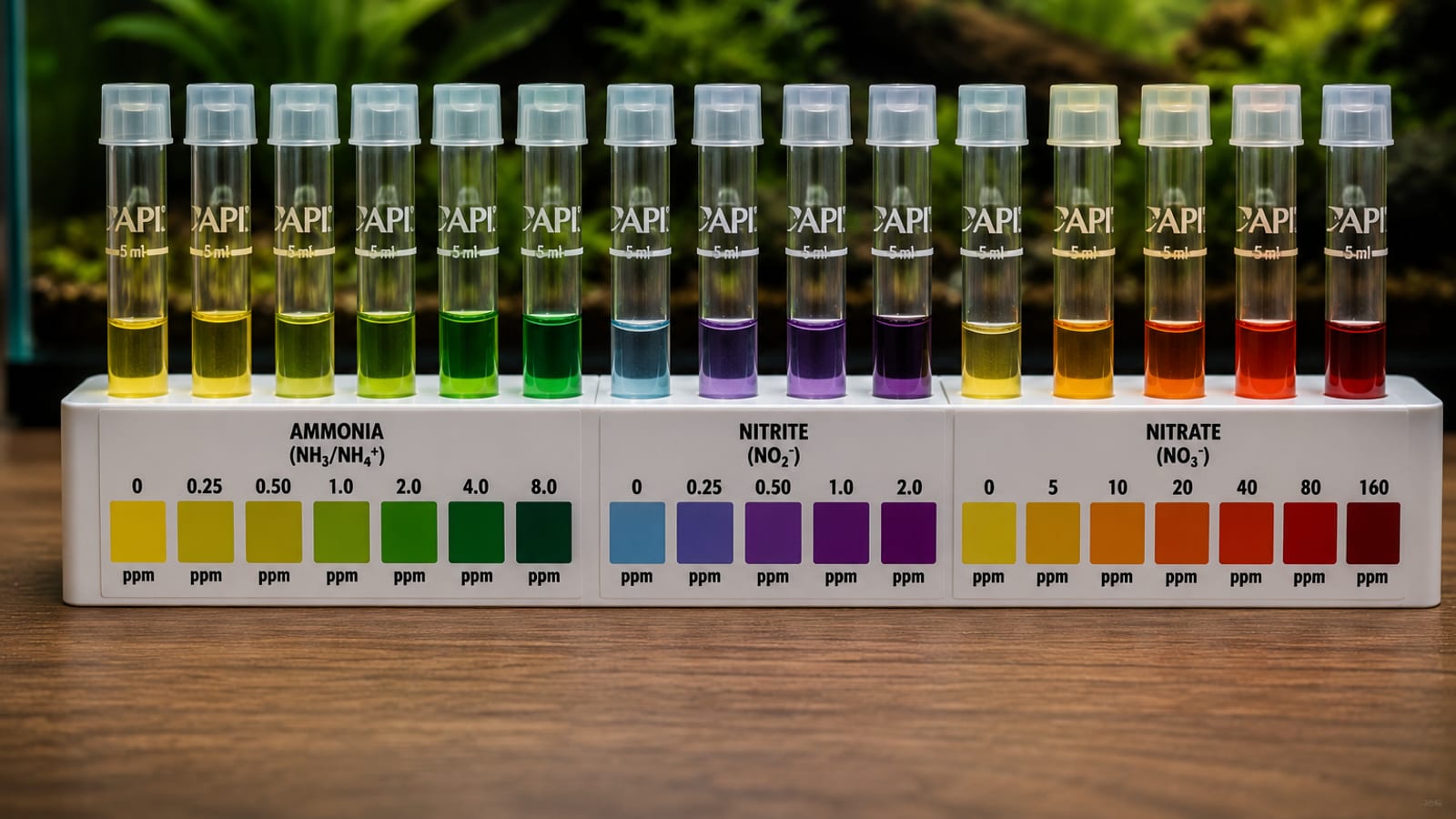
Nitrogen Cycle for Beginners: Why You Wait Weeks for Fish
Ammonia, nitrite and nitrate in plain English — how to run a fishless cycle step by step, and the one test that tells you the tank is ready for fish.