In the order you need them
Straight answers on tanks, cycling, and what fish you can actually keep — written for people setting up their very first aquarium.
These guides follow the order you actually need them in: choosing a tank and working out what it really costs, the equipment that matters (filter, heater, light, substrate) and what you can skip, the nitrogen cycle and how to run a fishless cycle properly, then stocking — beginner-friendly fish, easy live plants — and the maintenance routine that keeps it all stable.
Every guide is written by a named human author who keeps tanks, gives you the numbers to test against rather than vague advice, and gets updated when better information turns up. Read more about our editorial standards.
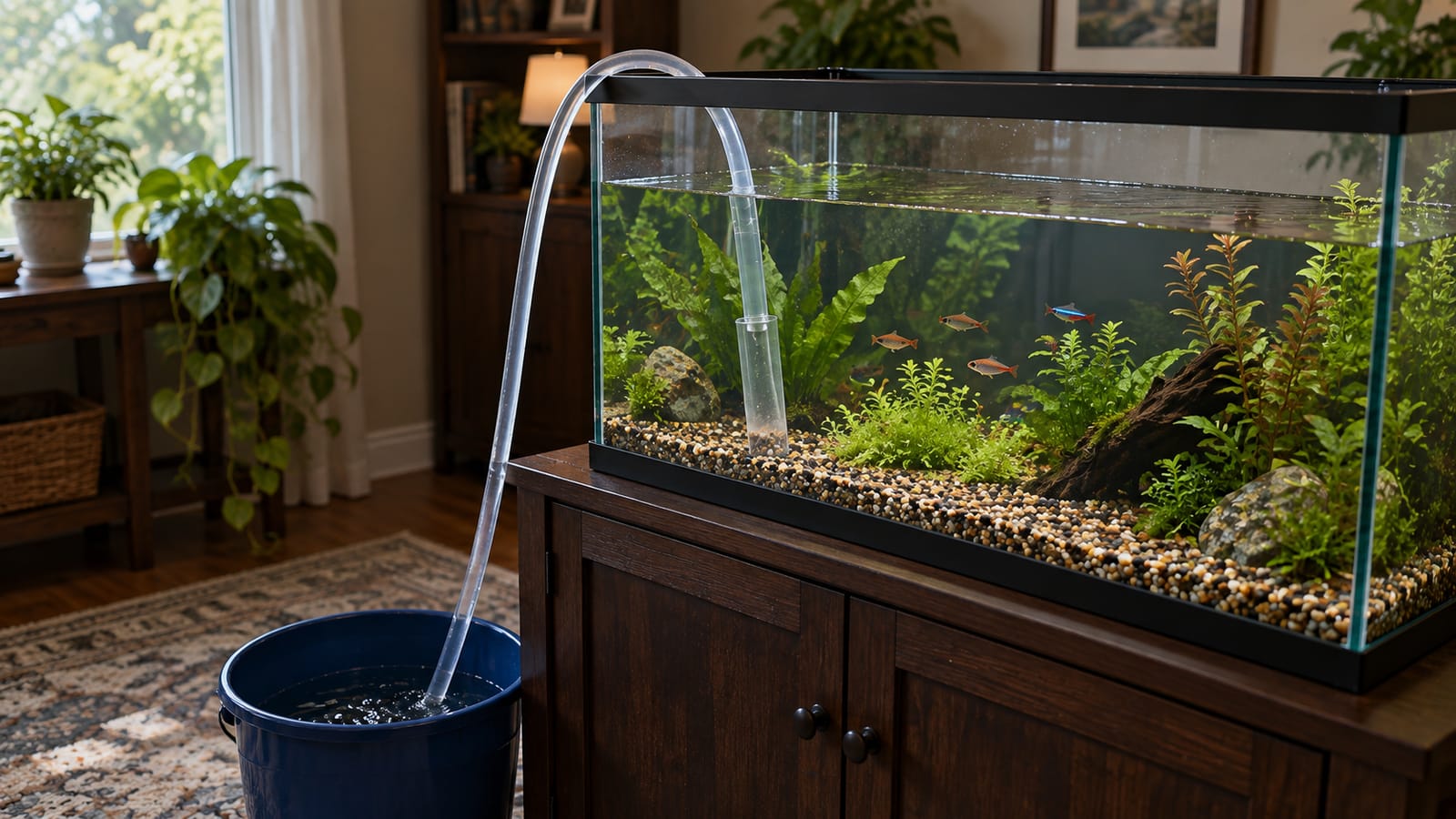
How to change fish tank water: replace 25% once a week, with new water dechlorinated and matched to within 2°F. The steps, and how to set your own schedule.
Change 25% of the water once a week. Siphon the old water out through the gravel, refill with tap water that is dechlorinated and within 2°F of the tank, and leave the fish where they are. Test nitrate before each change to check the schedule is enough.
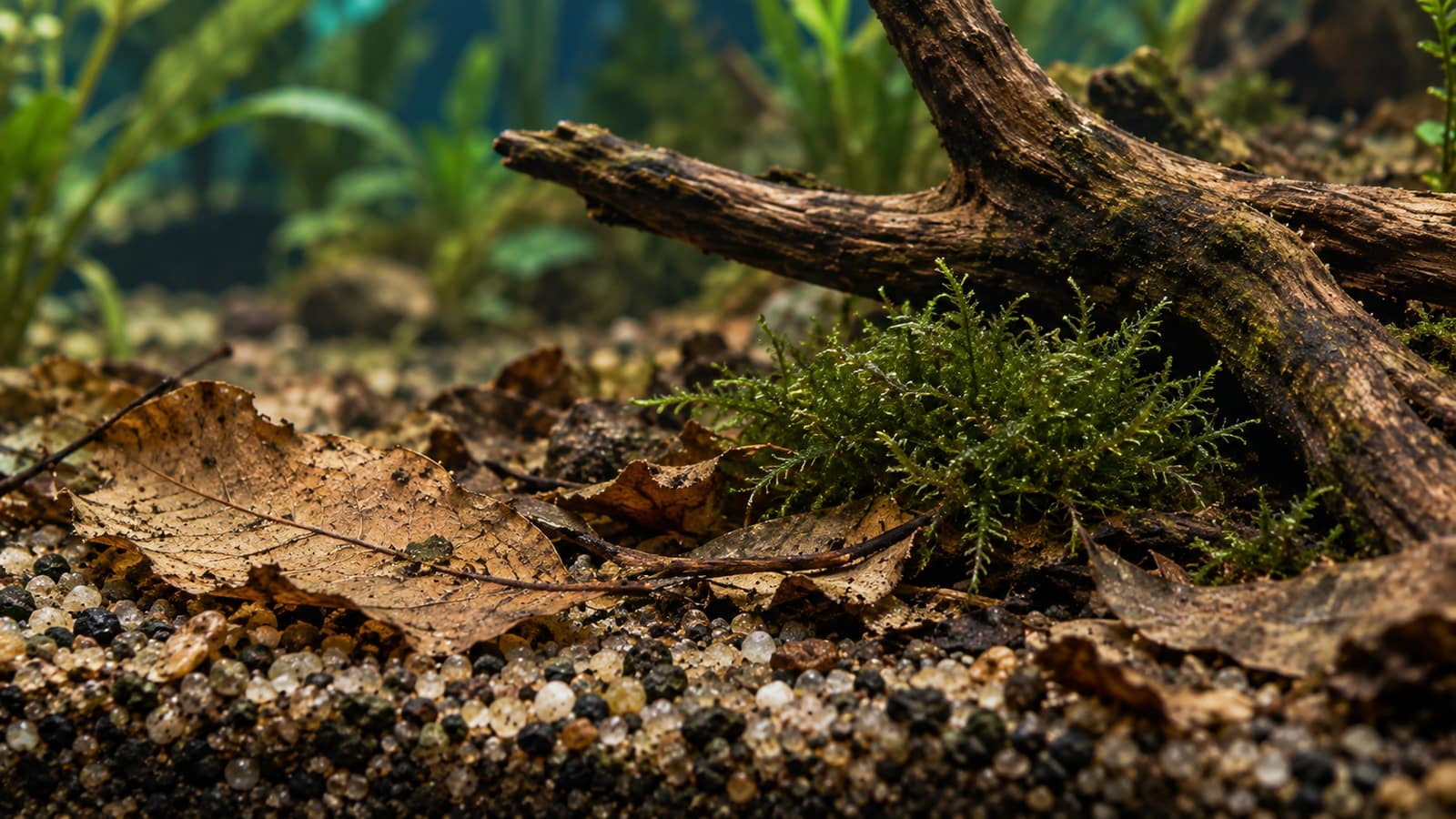
Scuds in an aquarium are tiny curled crustaceans that swim on their side. With fish they are free live food. With only shrimp they are a rival.
Scuds are small freshwater amphipods that arrive on live plants. In a tank with fish they are harmless and most fish eat them. In a shrimp-only tank they outbreed and outcompete the shrimp, and no treatment removes them without risk to the shrimp as well.
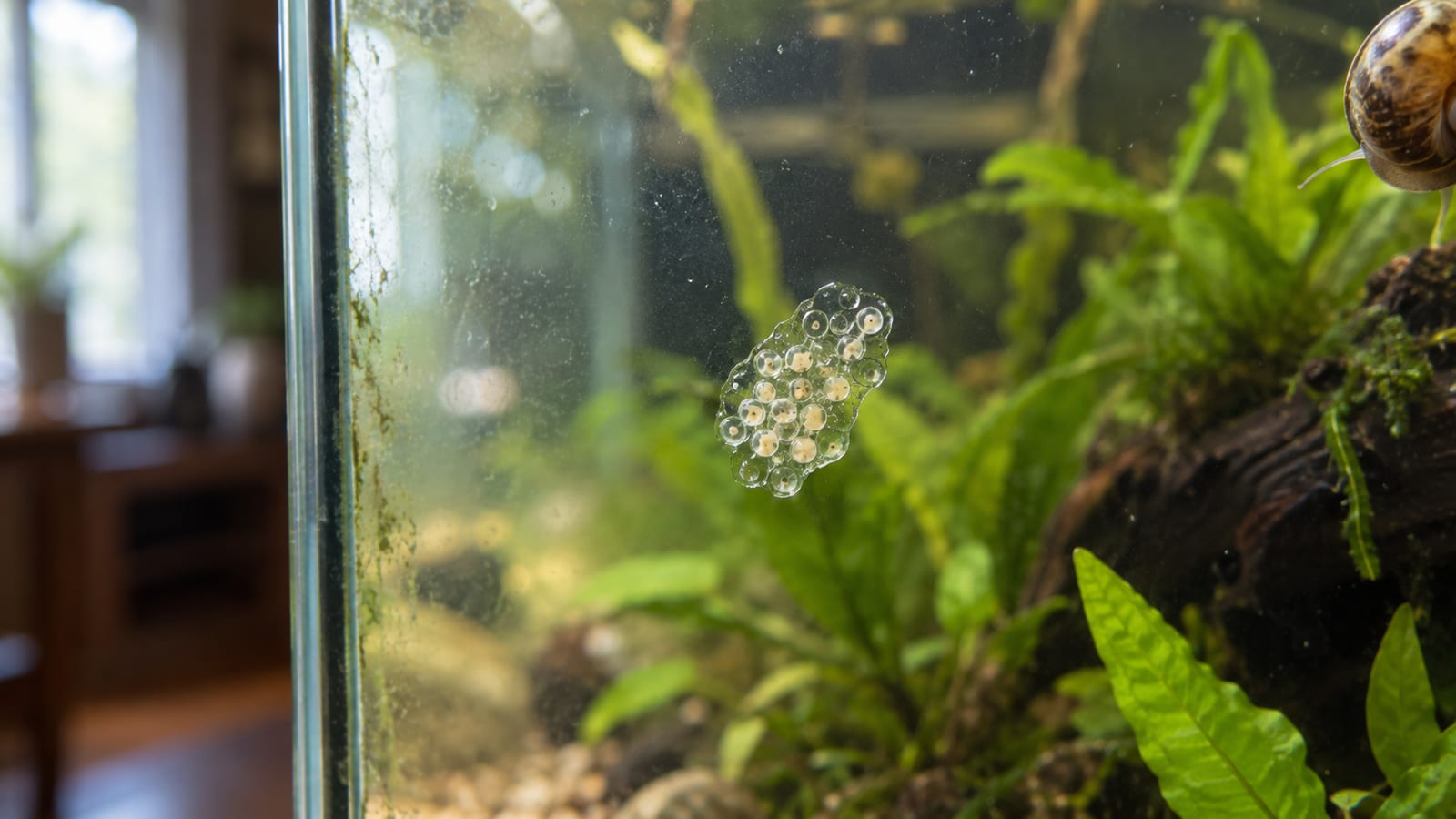
Snail eggs in a fish tank look different for every species. Identify yours in one table — clear jelly, pink clutch or hard white dots — and if they will hatch.
Clear jelly blobs on the glass or plants are pest snail eggs and will hatch in one to three weeks. A pink honeycomb above the waterline is a mystery snail clutch. Hard white dots like sesame seeds are nerite eggs, and those never hatch in freshwater.
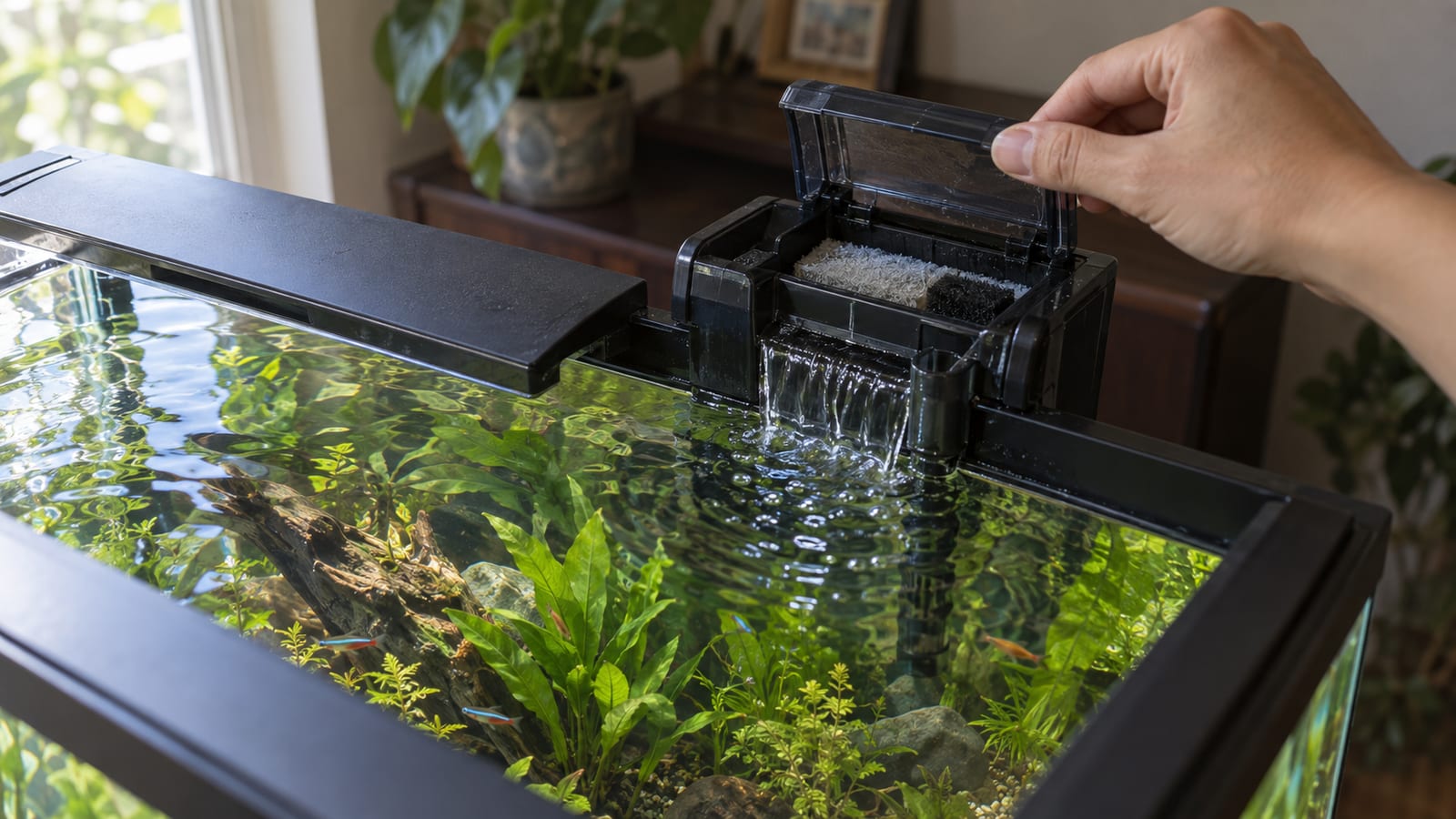
Why does my fish tank smell? A healthy tank smells like damp soil. Rotten eggs, rotting fish and musty swamp each point to one cause — matched in one table.
A healthy fish tank smells faintly of damp soil. A rotting smell means something dead or uneaten food, rotten eggs means an oxygen-starved pocket in the sand or a filter that stopped, and a heavy musty smell is usually cyanobacteria. Find the source before you change any water.
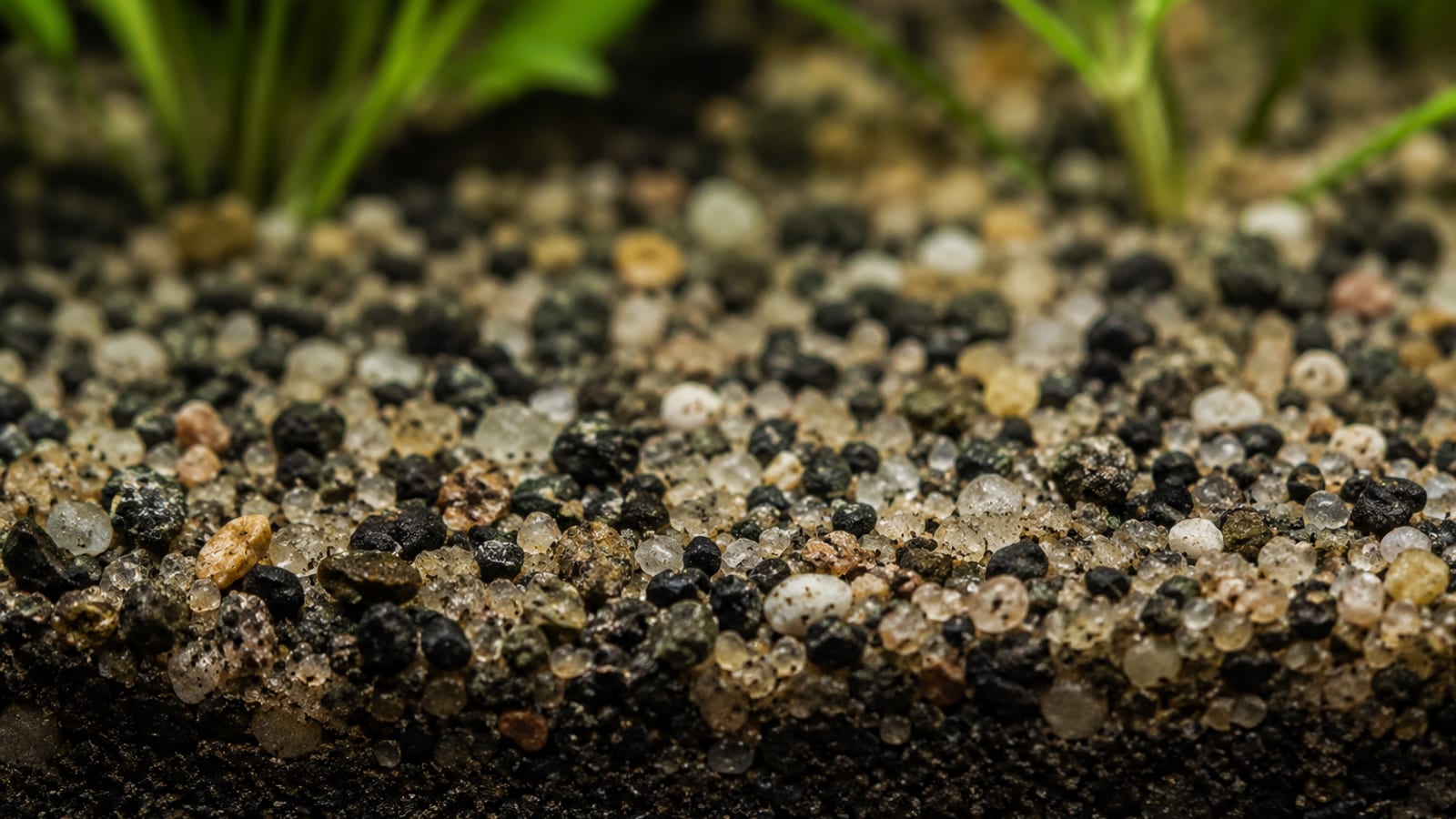
Detritus worms in a fish tank are harmless waste eaters. A sudden bloom means overfeeding — and here is how to tell them apart from planaria, which are not.
Harmless. Thin white worms wriggling in the substrate of a fish tank are detritus worms, not parasites — they eat waste. A sudden bloom means overfeeding, so cut food and vacuum the substrate. Do not medicate.
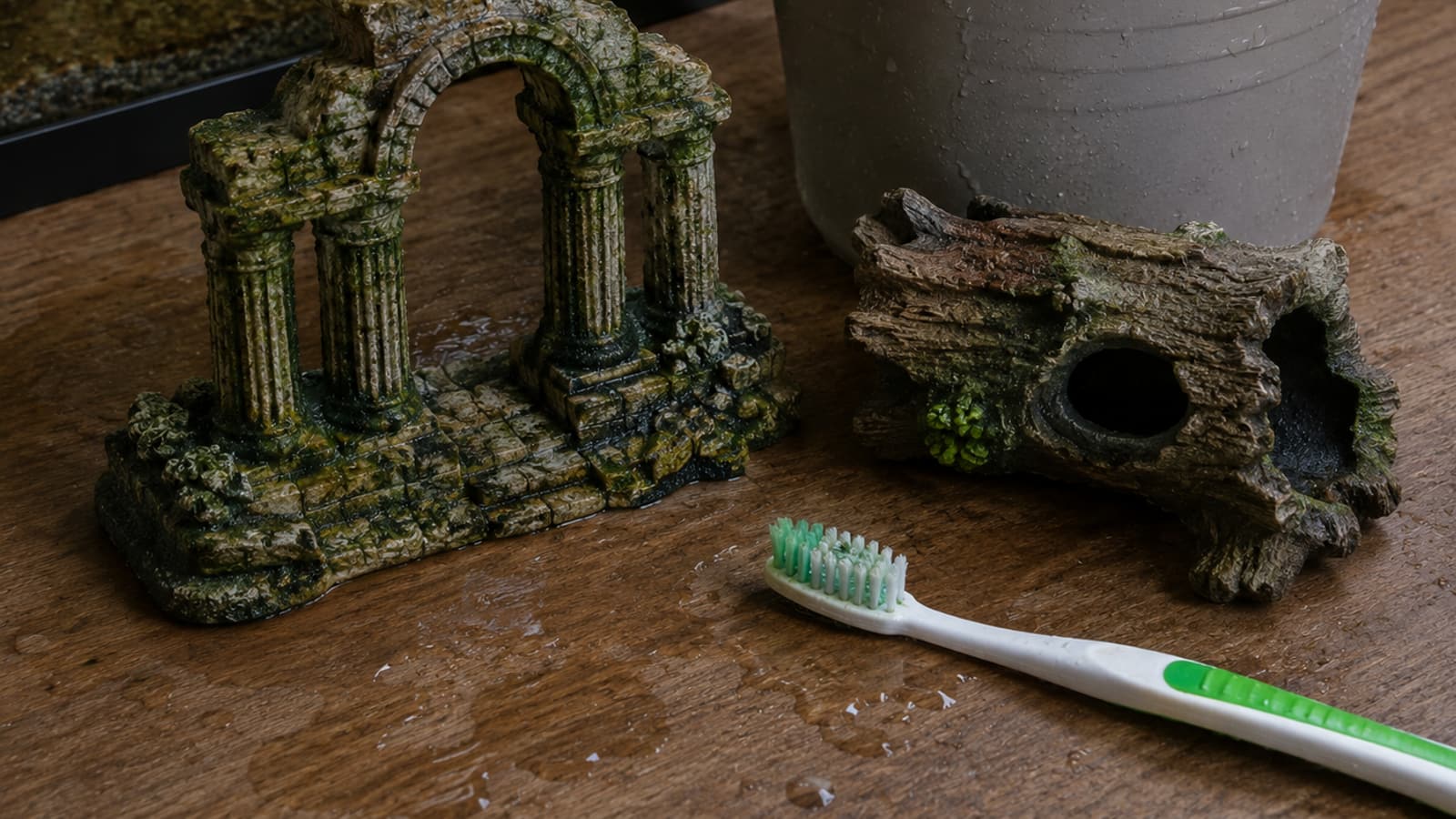
How to clean aquarium decorations: hot water and a toothbrush for most of it, a 1:9 bleach soak for stubborn algae, then rinse and dechlorinate. Never soap.
Clean aquarium decorations by scrubbing them in hot water with a toothbrush kept only for the tank. Never soap. For algae that will not come off, soak 10 minutes in 1 part bleach to 9 parts water, rinse, then dechlorinate before it goes back.