Quick Verdict
Run a fishless cycle with bottled ammonia for three to six weeks. The tank is ready when a dose of 2 ppm ammonia reads 0 ammonia and 0 nitrite within 24 hours — not before.
Recommended
What to buy before you start cycling
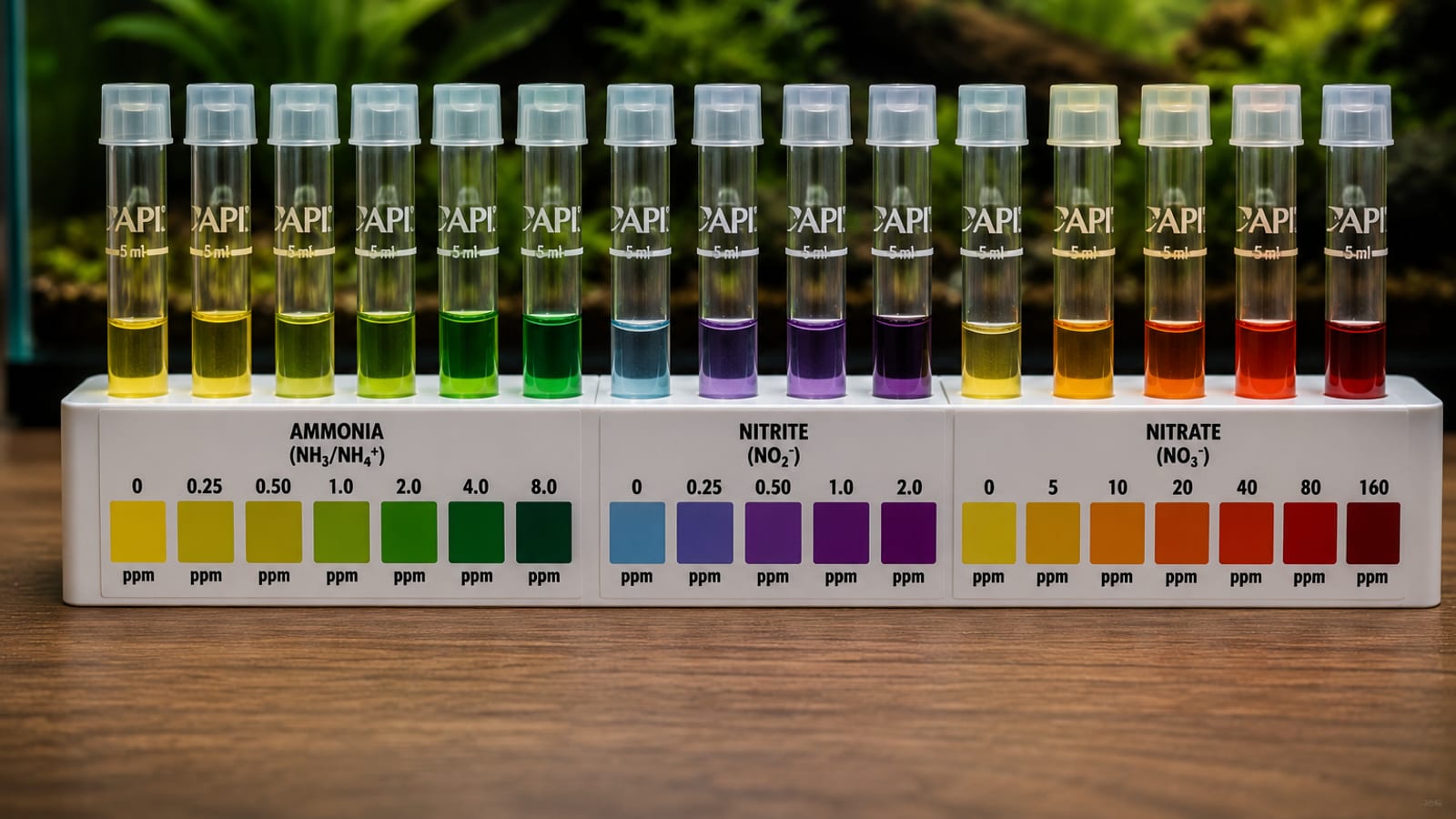
API Freshwater Master Test Kit
The only kit worth buying while cycling. Test strips are not precise enough to read a nitrite spike, and nitrite is the number that matters most.
- ✓Liquid tests, far more accurate than strips
- ✓Roughly 800 tests per kit, so cost per test is negligible
If you take one thing from this site, take this: an aquarium is a filter that happens to hold fish. The glass box is trivial. The part that keeps fish alive is an invisible bacterial colony living in your filter media, and it takes weeks to grow.
Cycling is the process of growing that colony before any fish are in the tank to be poisoned by its absence.
The single most common beginner mistake is buying a tank and fish on the same day. Almost every "my fish died in the first month" story starts there.
What the nitrogen cycle actually is
Fish produce ammonia — through their gills, constantly, and from waste and uneaten food. Ammonia burns gill tissue. In an established tank it never accumulates, because two groups of bacteria handle it:
- Ammonia (NH₃) — produced by fish and decaying food. Highly toxic; damages gill tissue at well under 1 ppm over time.
- Nitrite (NO₂⁻) — the first bacteria group converts ammonia into nitrite. Also highly toxic: it stops blood carrying oxygen.
- Nitrate (NO₃⁻) — a second group converts nitrite into nitrate, which is far less harmful. You remove it with weekly water changes.
That chain — ammonia to nitrite to nitrate — is the nitrogen cycle. "Cycling a tank" means growing both bacterial groups until they can process a day's worth of waste within a day.
How to run a fishless cycle
You need the tank set up and running (filter, heater, substrate), a bottle of pure ammonia, and a liquid test kit.
- Set the tank up completely and run the filter and heater 24/7. Bacteria live in the filter media, not the water.
- Raise the temperature to around 28°C / 82°F. Warmer water grows bacteria faster.
- Dose ammonia to about 2 ppm. More is not better — above roughly 5 ppm you inhibit the bacteria you are trying to grow.
- Test ammonia and nitrite every two to three days. Record the numbers; the pattern is what tells you where you are.
- Re-dose back to 2 ppm whenever ammonia reads 0, so the colony keeps being fed.
- Watch for nitrite to rise, peak, and then fall to 0. This is the long part.
- When 2 ppm of ammonia converts to 0 ammonia AND 0 nitrite within 24 hours, you are cycled.
- Do a large water change (50-80%) to drop the accumulated nitrate, then add fish slowly.
Ammonia hitting zero is halftime, not the final whistle. Nitrite clearing in 24 hours is the finish line.
Reading your test results
The table above is the shape every cycle follows. The weeks are approximate — yours may run faster or slower — but the order never changes. If you see nitrite before ammonia has started falling, re-check your test technique rather than your tank.
Common ways a cycle stalls
pH crash. As a cycle runs it consumes carbonate hardness and the pH drifts down. Below about 6.5 the bacteria slow dramatically; below 6.0 they largely stop. Test pH weekly, and do a partial water change if it is falling.
Too much ammonia. Dosing to 4 or 5 ppm because "more food, faster growth" is a classic own goal. It inhibits the colony instead.
Cleaning the filter. Rinsing filter media under tap water kills the colony you spent a month growing. When you do eventually clean it, rinse it in old tank water.
Impatience. By far the biggest one. A tank that is nearly cycled looks exactly like a tank that is cycled, right up until you add fish and the nitrite spikes.
The one test that matters
Dose to 2 ppm ammonia in the evening. Test the next evening. If both ammonia and nitrite read zero, you are cycled. If either shows any colour at all, you are not.
After the cycle
Add fish gradually — a few at a time, over weeks. The bacterial colony sizes itself to the amount of waste it is fed, so a sudden jump from zero fish to a full stocking level will outpace it and cause a small ammonia spike anyway.
From then on, the routine is a weekly water change to export nitrate, and leaving the filter alone. That is genuinely most of the job.
Detailed Comparison
| Stage | Ammonia | Nitrite | Nitrate | Typical week |
|---|---|---|---|---|
| Nothing happening yet | Rising | 0 ppm | 0 ppm | Week 1 |
| First bacteria colony established | Falling | Rising sharply | 0 ppm | Weeks 2-3 |
| Second colony catching up | 0 ppm | Peaking, then falling | Rising | Weeks 3-5 |
| Cycled | 0 ppm in 24h | 0 ppm in 24h | 10-40 ppm | Weeks 4-6 |
Frequently Asked Questions
🔗 Related Resources
More Reviews:
Related Articles
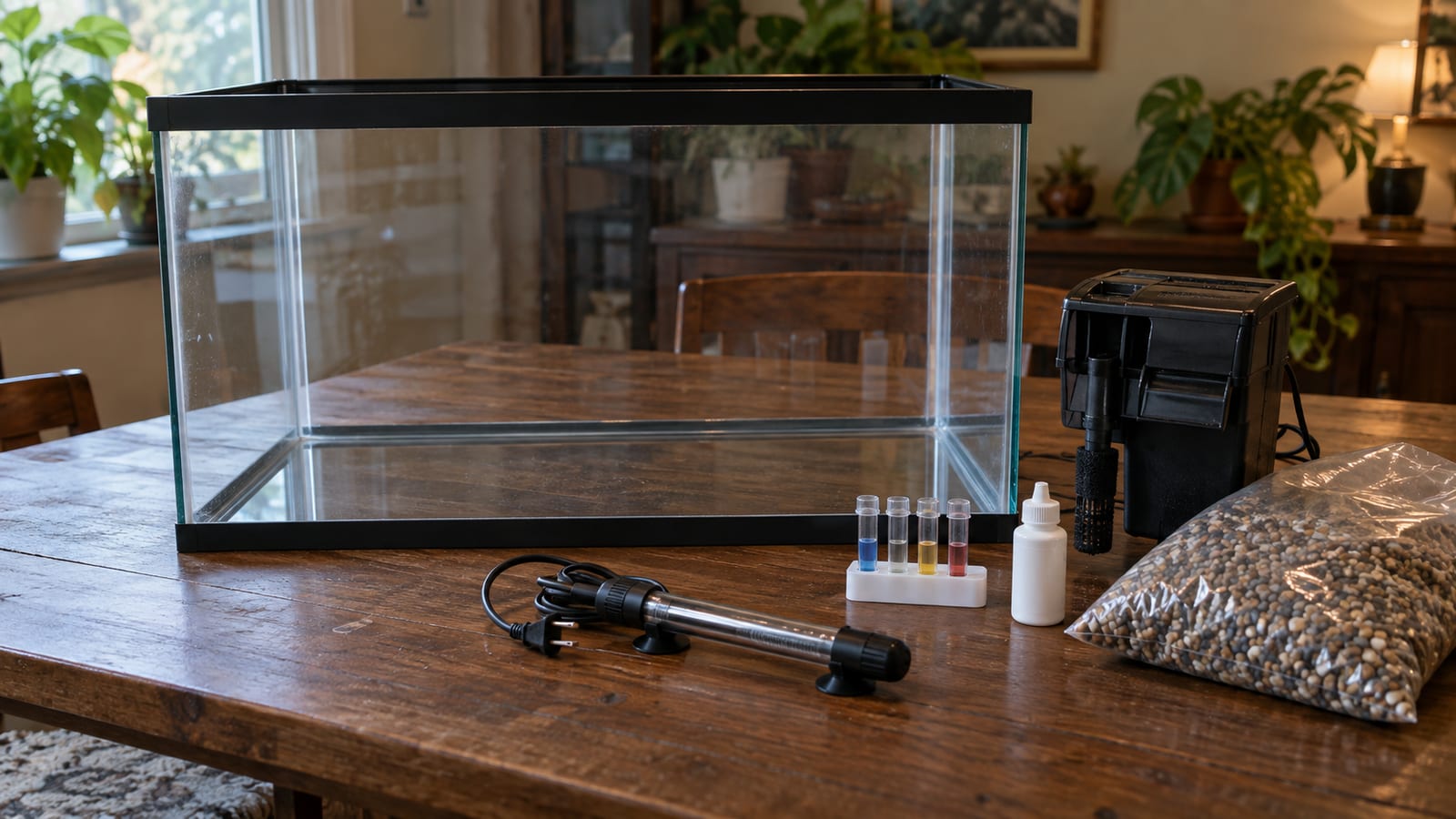
20 Gallon Fish Tank Setup Cost: Every Item, Priced
What a 20 gallon fish tank setup costs in 2026, item by item: about $230 on a tight budget, $400–$500 done properly with a stand, and $10 a month to run.
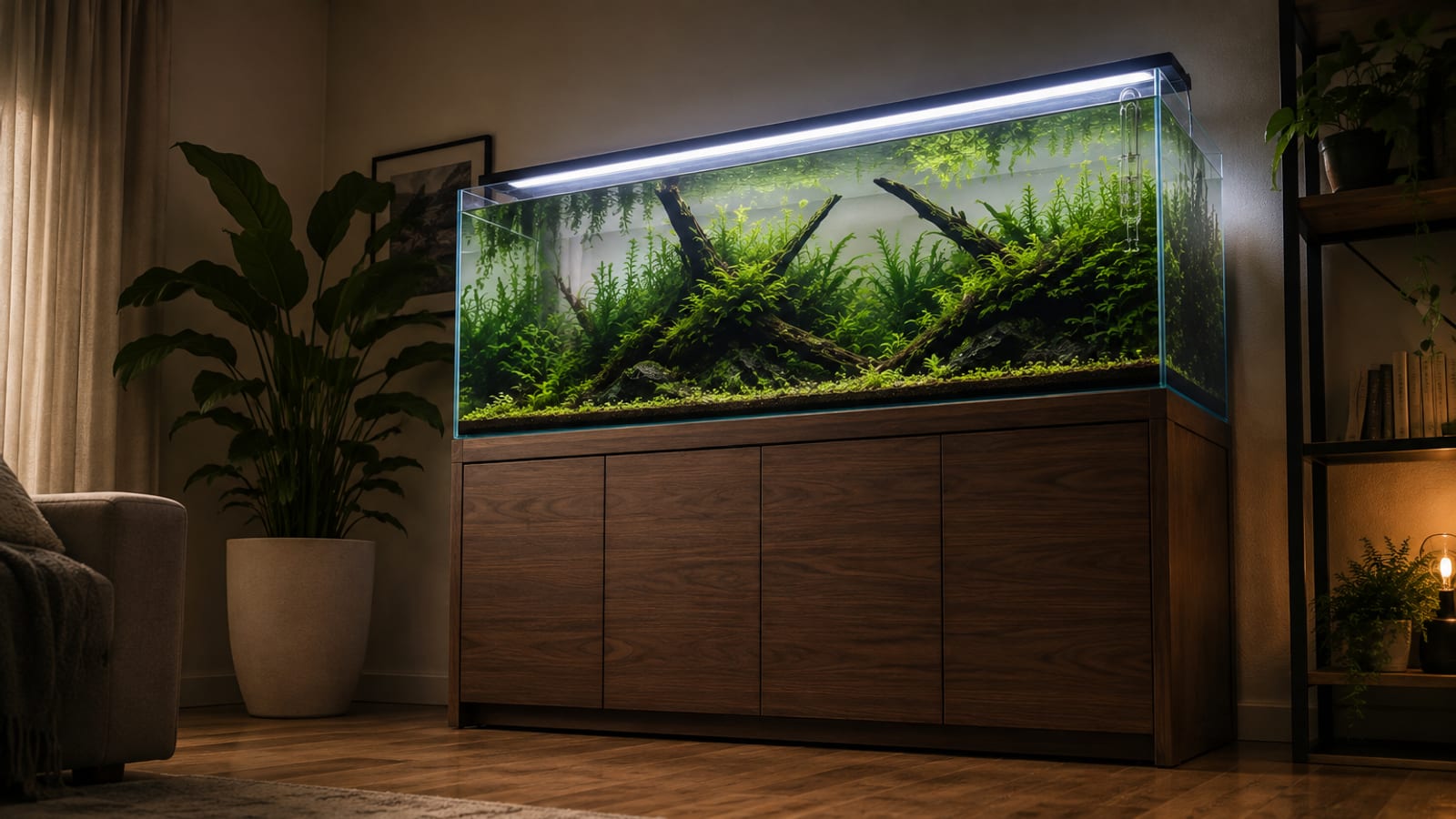
How Much Does a Fish Tank Weigh? Every Size, Filled
How much does a fish tank weigh? A filled 55 gallon comes to around 625 lb. Full weight table by tank size, plus what your floor can actually take.
How to Acclimate Fish to a New Tank (Freshwater)
How to acclimate fish to a new tank: float the bag 15 minutes, add tank water every 5 minutes for 20, then net them in. Never pour the bag water in.