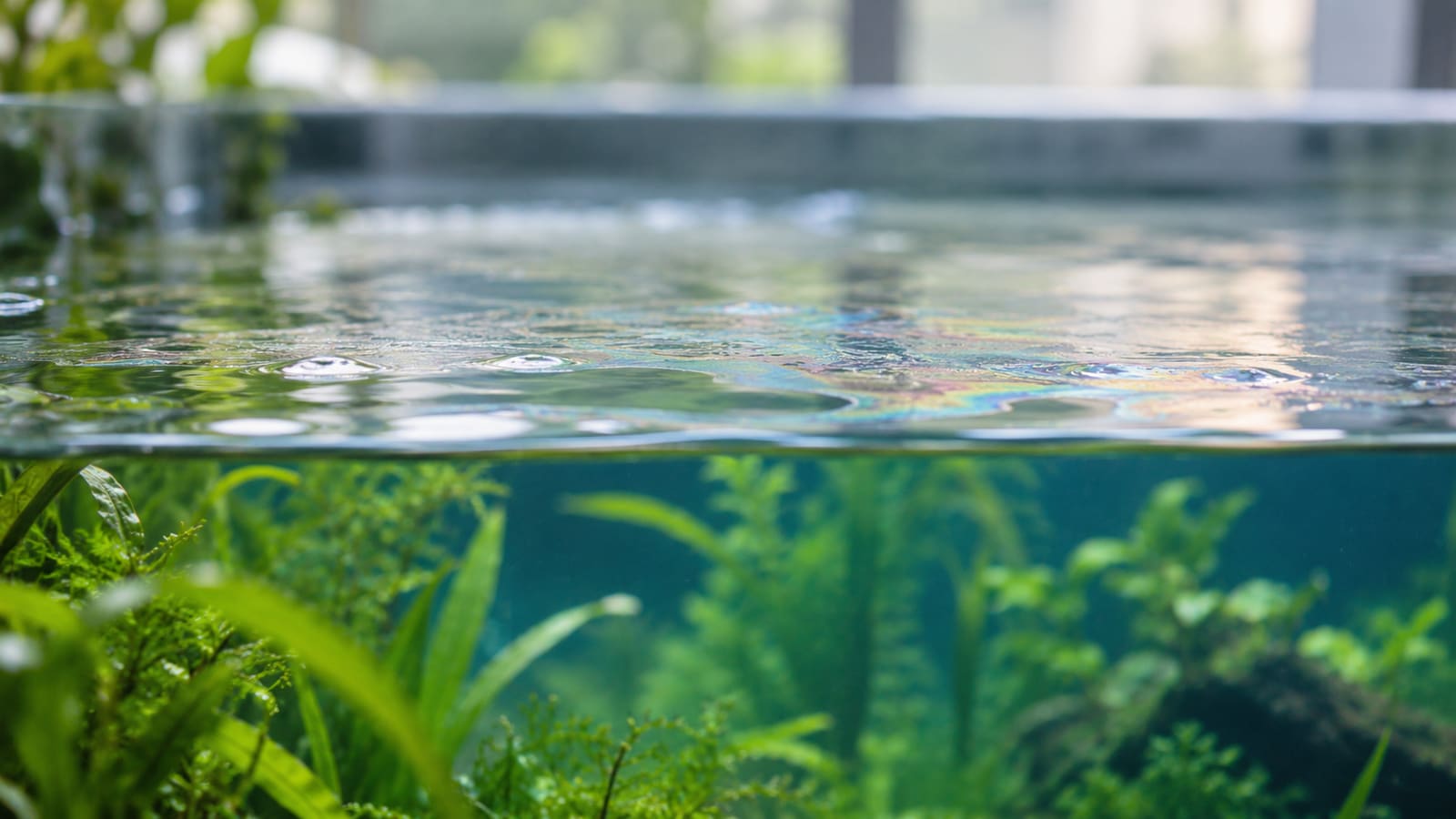
Leave the slime on decorations alone unless it is thick or smells. The one kind worth fixing is a film on the water surface, which cuts oxygen exchange. Make the filter outlet ripple the surface, add an air stone, and feed less oily food. A paper towel laid on the surface lifts the existing film off.
The numbers
| Surface film | Slime on surfaces | Cyanobacteria | |
|---|---|---|---|
| What you see | A dull, oily or slightly cloudy layer on top of the water, sometimes with a rainbow sheen | Clear, white or light brown slippery coating on glass, wood and decorations | Dark green, blue-green or almost black slimy sheets |
| Smell | None | None, or faintly earthy | Strong, musty, swampy |
| Harmful? | Can lower oxygen if it covers the whole surface | No. Shrimp and fry feed on it | Smothers plants, fouls the water when it dies |
| What to do | Break up the surface with the filter outlet or an air stone | Nothing, or wipe the glass during water changes | Siphon out, increase flow, cut feeding and light |
Biofilm is the thin, slippery layer of bacteria that grows on every surface in an aquarium, and most of it is doing useful work. The bacteria that keep a tank safe for fish live in it, on the filter media, gravel and decorations. Shrimp and baby fish feed on it. You cannot remove it, and you should not try.
The one form worth fixing is a film on the water surface. A dull, oily layer on top of the water slows the exchange of oxygen. Make the filter outlet ripple the surface, add an air stone, and feed less. A paper towel laid on the surface lifts the existing film off.
What biofilm is
Wherever water touches a surface, bacteria settle on it and wrap themselves in a thin slime they produce themselves. Fungi, single-celled algae and tiny animals move in, and the result is a living layer a fraction of a millimetre thick. It forms on glass, gravel, wood, plant leaves, the inside of the hoses, and the filter media.
That last place is the important one. The bacteria in the nitrogen cycle, which turn toxic ammonia into much less harmful nitrate, live in biofilm. A mature filter is, in practical terms, a large surface covered in useful biofilm. It is the reason not to rinse filter media in tap water, which kills it.
The two kinds people notice
Slime on surfaces. A slippery, clear to light brown coating on the glass, on decorations or on new wood. It feels slick when you touch it. On new driftwood it can be thick and white for the first few weeks, which is covered in white fuzz on driftwood.
Surface film. A dull, slightly cloudy or oily layer on top of the water, sometimes with a rainbow sheen in the light. Food flakes sit on it instead of sinking. It is most obvious when you look across the surface at an angle.
If the slime is dark green, blue-green or black and smells strongly, it is not ordinary biofilm. That is cyanobacteria, and it needs different treatment.
Slime on surfaces: mostly leave it
Slime on decorations and gravel is normal and harmless. In a shrimp tank it is the main food source for young shrimp, and many keepers add new wood partly to grow it.
- Wipe the front glass during water changes so you can see in. That is enough for most tanks.
- Leave the decorations, gravel and the back glass alone. The film regrows within days of scrubbing anyway.
- Clean a decoration only if the coating is thick enough to drip or it smells. Rinse it in old tank water rather than tap water.
- Never scrub the filter media clean. Squeeze sponges in a bucket of tank water to clear the clogging, and stop there.
Surface film: fix the surface movement
A film on the surface forms when two things happen together: the water surface is still, and something is adding oils or proteins.
The oils and proteins come from fish food, especially fatty foods, from overfeeding, from plant fertiliser, and from soap or lotion on hands that go into the tank. On a still surface they collect in a layer, and bacteria grow on them. On a moving surface they mix back into the water and the filter removes them.
A thick film is more than a cosmetic problem. Oxygen enters the water at the surface, and a film covering the whole tank slows that down. Fish gasping at the top of a tank with a film are telling you about it.
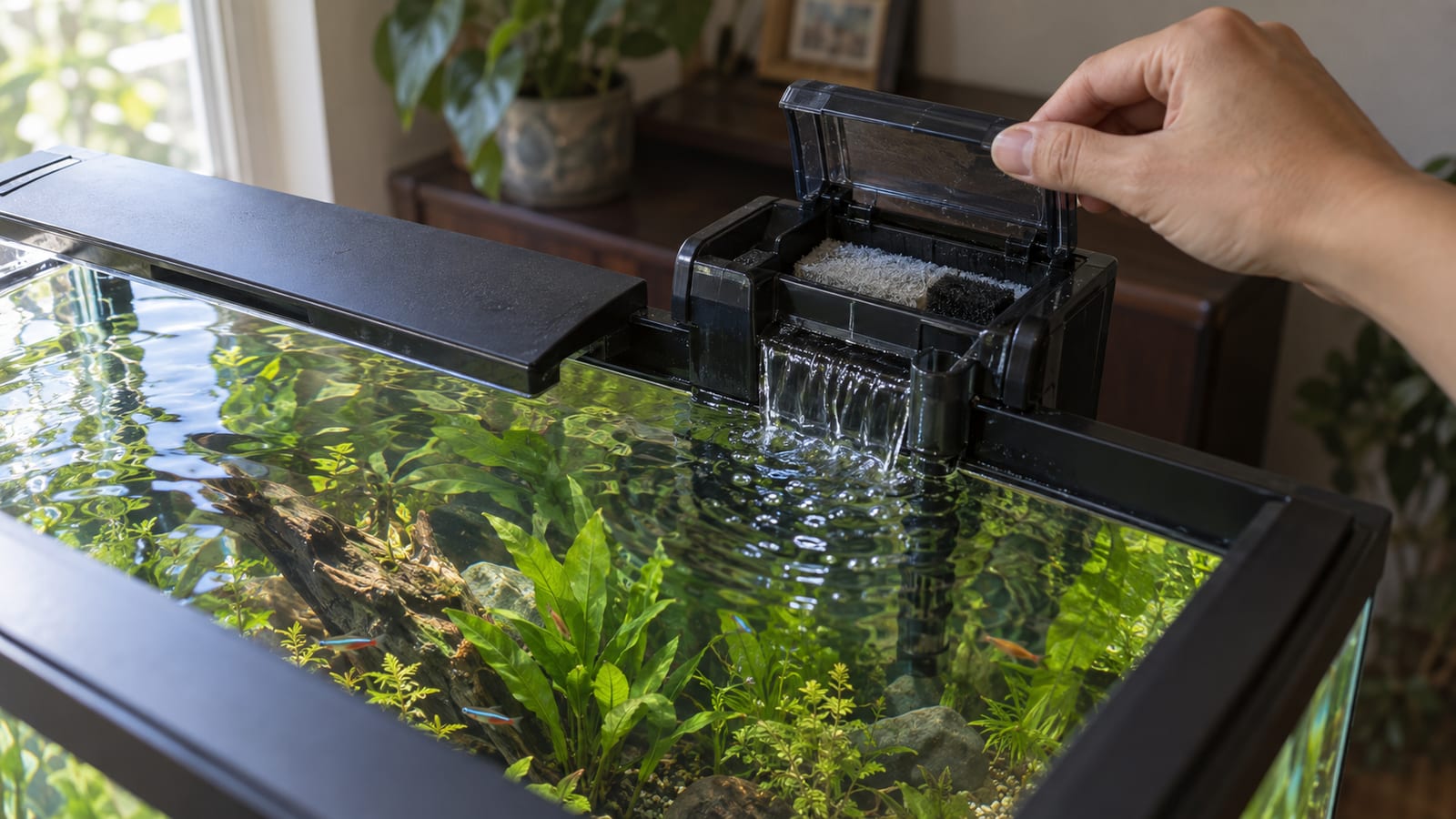
- Move the surface. Point the filter outlet slightly upwards so it ripples the whole surface. A hang-on-back filter does this naturally if the water level is a little below its lip, so it splashes as it returns.
- Add an air stone. The bubbles break the surface where they rise and carry the film into the water.
- Lift off what is there. Lay a sheet of plain, unscented paper towel flat on the surface, wait a second, and lift it straight up. Repeat until the surface looks clear.
- Feed less. Only what the fish eat in about two minutes, once or twice a day.
- Rinse your hands with plain water before they go in the tank. Soap and lotion residue add to the film.
If it keeps coming back
A small surface skimmer draws the top layer of water into a filter, and it solves stubborn cases. Try the free fixes first. In most beginner tanks, aiming the outlet at the surface is enough.
The one thing worth taking from this
Biofilm is the tank working, not the tank getting dirty. Leave the slime on the surfaces, and keep your filter's biofilm out of tap water. Only a film on top of the water needs fixing, and moving the surface fixes most cases.
Questions people ask
Mentioned in this guide
Related guides
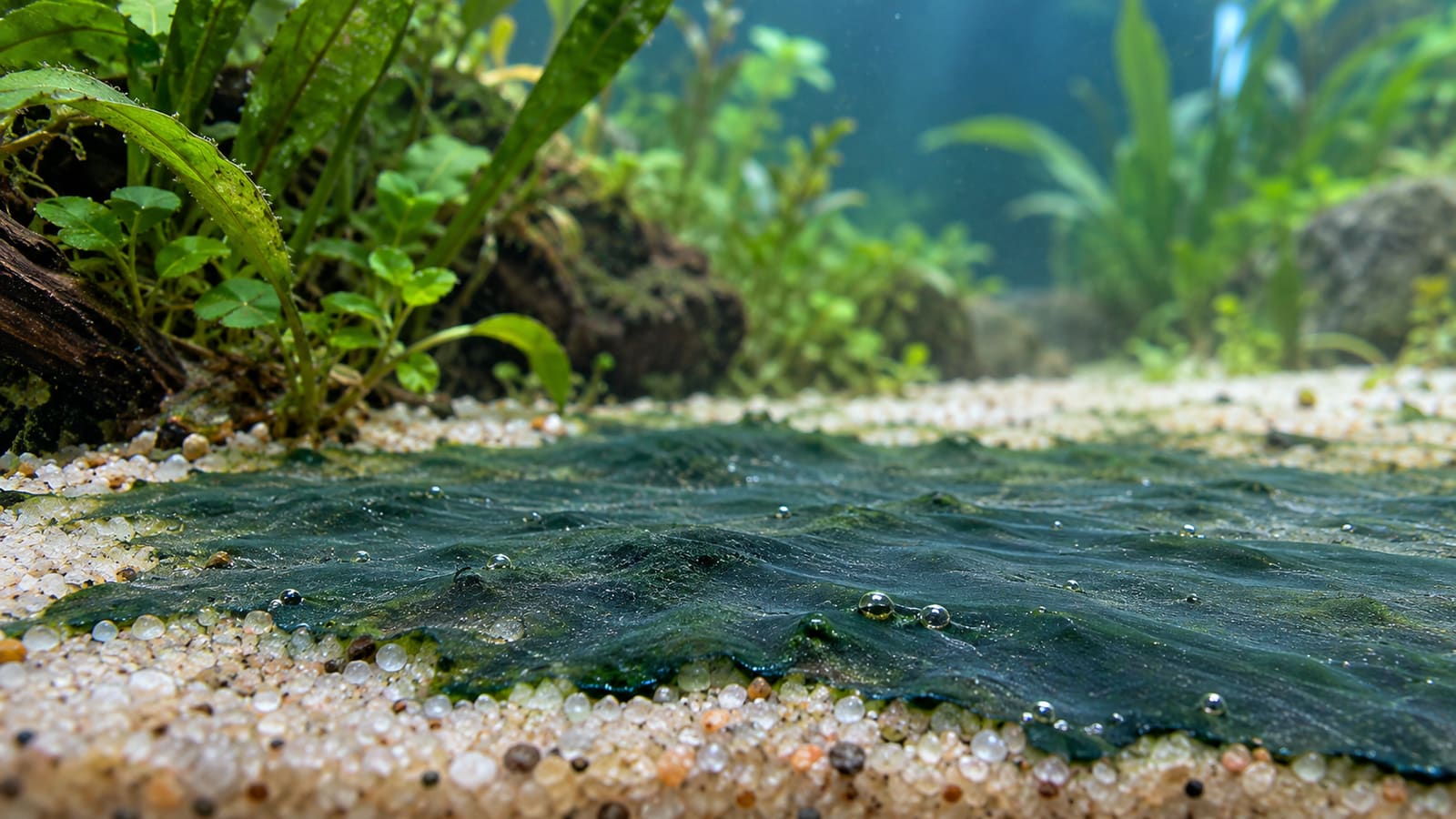
Blue-Green Algae in an Aquarium: It's Bacteria, and How to Clear It
Blue-green algae is cyanobacteria: a slimy sheet that peels off and smells like a swamp. Why it grows, how to remove it, and how to keep it from coming back.
Why Does My Fish Tank Smell? Match the Smell to the Cause
Why does my fish tank smell? A healthy tank smells like damp soil. Rotten eggs, rotting fish and musty swamp each point to one cause — matched in one table.
How to Lower Nitrates in a Fish Tank (and Keep Them Down)
To lower nitrates in a fish tank, change 50% of the water, then size your weekly change to fit. The tap water trap, the maths and which removers work.