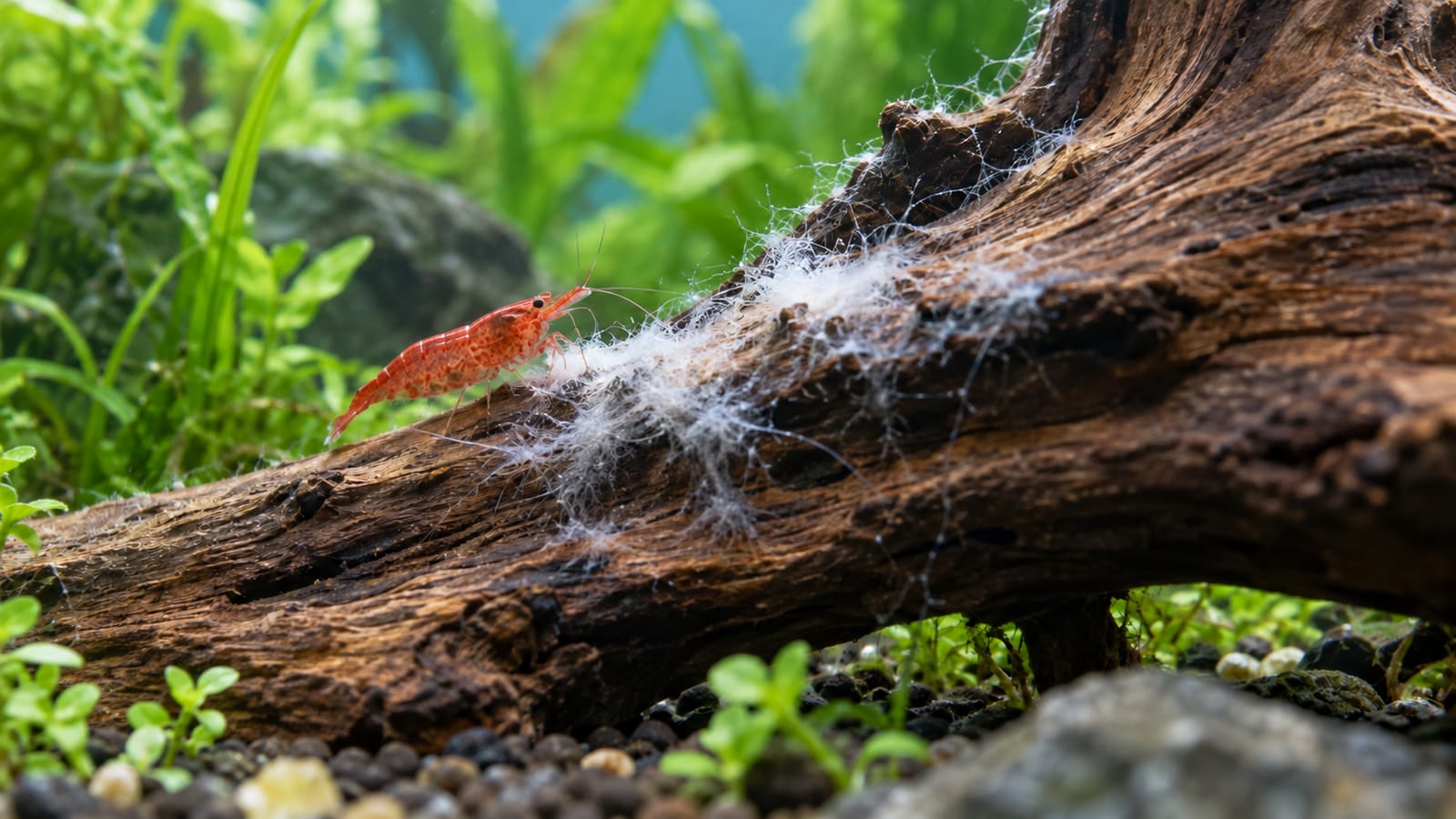
White cotton-like fuzz on new driftwood is a harmless bacterial and fungal growth that fades within a few weeks. A hard white crust at the waterline is mineral deposit from evaporation. White fuzz on a fish is different: that is a disease, not algae, and needs attention today.
The numbers
| What it looks like | Where | Harmful? | What to do | |
|---|---|---|---|---|
| Fuzz on new driftwood | Soft white or grey cotton, sometimes slimy threads | Wood added in the last few weeks | No | Wipe or siphon it, or leave it. It fades in 2–4 weeks |
| Mineral crust | Hard, chalky white line or spots that will not wipe off | Glass at the waterline, lid, heater | No | Scrape with a razor blade or soften with white vinegar above the water |
| Snail eggs | Hard white dots like sesame seeds | Glass, wood, rocks | No | Scrape off if you mind them. Nerite eggs never hatch in freshwater |
| Bleached algae | Tufts or patches that turned white | Where algae grew before | No | It is dead algae after a treatment. Remove it, or let snails eat it |
| Fuzz on a fish | Cotton-like tufts on the body, fins or mouth | On the fish itself | Yes | Test the water, isolate the fish, identify the disease before treating |
Most white growth in a fish tank is not algae. Freshwater tanks do not really get a white alga. When people search for "white algae", they usually have one of three harmless things: a soft white fuzz on new driftwood, a hard white crust at the waterline, or white dots that turn out to be snail eggs.
The one white thing to take seriously is fuzz on a fish. That is a disease, not anything growing in the tank, and it needs attention today.
Which white stuff do you have?
The table above lists every common case. The quickest way to sort them is to look at where it is and touch it.
- Soft cotton or slimy threads on wood added in the last few weeks: driftwood fuzz. This is the most common by far, and the section below covers it.
- Hard and chalky, will not wipe off, at the waterline: mineral deposit.
- Hard white dots, each one separate, like sesame seeds: snail eggs, most often from nerite snails. See identifying snail eggs.
- Patches that used to be green or black and have turned white: algae that has died, often a few days after a treatment such as liquid carbon on black beard algae.
- A thin clear or white slime on glass, decorations or the water surface: biofilm, a normal layer of bacteria that covers everything in a tank. The biofilm guide covers it.
- Tiny white worms moving on the glass: not algae either. See worms in a fish tank.
White fuzz on new driftwood
Almost every new piece of driftwood grows it. Within a few days of going into the tank, the wood sprouts a soft white or grey coating, sometimes like cotton wool and sometimes like strings of slime.
It is a mix of bacteria and fungi feeding on the sugars and starches that leach out of fresh wood. It is not mould in the household sense, it does not attack fish, and it does not spread to anything else in the tank. Once the wood has nothing left to give, the fuzz dies back. That usually takes two to four weeks.
- Leave it if you can live with the look. It goes away by itself, and doing nothing is a valid choice.
- Wipe it off with a soft brush or siphon it out during a water change if you prefer. It will regrow for a while, which is normal.
- Let the clean-up crew help. Shrimp, snails and plecos graze it eagerly.
- Keep up the weekly water change. The fuzz adds a little to the waste load while it lasts.
Next time, soak the wood first
Soaking new driftwood in a bucket for a week or two, or boiling it for an hour, washes out much of what the fuzz feeds on. It also gets rid of most of the tannins that turn the water tea-coloured. Neither stops the fuzz completely.
Hard white crust at the waterline
A chalky white line along the glass at the water's edge, or on the lid and the top of the heater, is minerals left behind when water evaporates. Hard tap water leaves more of it, and open-top tanks evaporate faster.
It is harmless to fish. To remove it, lower the water level slightly and scrape the glass with a razor blade, using a plastic one on acrylic tanks. Stubborn crust softens with white vinegar on a cloth. Use it only above the waterline and rinse the area before the water goes back up.
To slow it down, top up evaporation with distilled or RO water instead of tap water. The water you add then carries no new minerals.
When the white is on the fish
White on the fish itself is a disease, not algae, and the tank's appearance has nothing to do with it.
- Small white grains like salt on the body and fins are usually ich, a common parasite.
- Cotton-like tufts on the body, fins or mouth are usually a fungal or bacterial infection, often following an injury or poor water quality.
Test the water first, since both often follow stress. Then move the fish to a separate tank if you can, and identify the disease before adding any medicine. Different causes need different treatments.
The one thing worth taking from this
White growth in a tank is almost always harmless, and the most common case, fuzz on new driftwood, fixes itself. Check the fish rather than the decorations. White on a fish is the case that needs action.
Questions people ask
Mentioned in this guide
Related guides
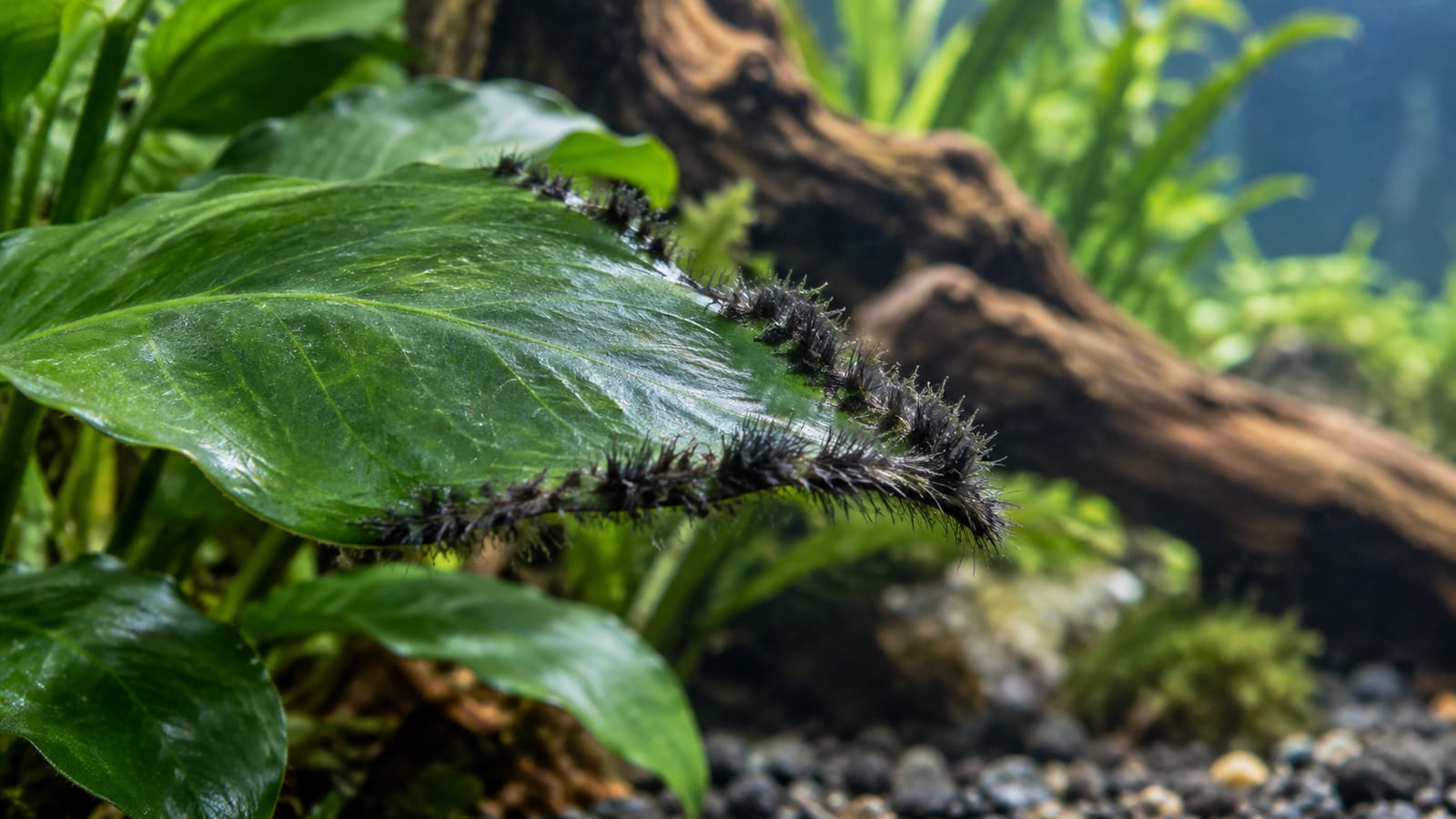
Black Algae in a Fish Tank: Black Beard Algae and How to Remove It
Black algae in a fish tank is almost always black beard algae: dark tufts on leaf edges and wood that will not wipe off. Why it grows and how to get rid of it.
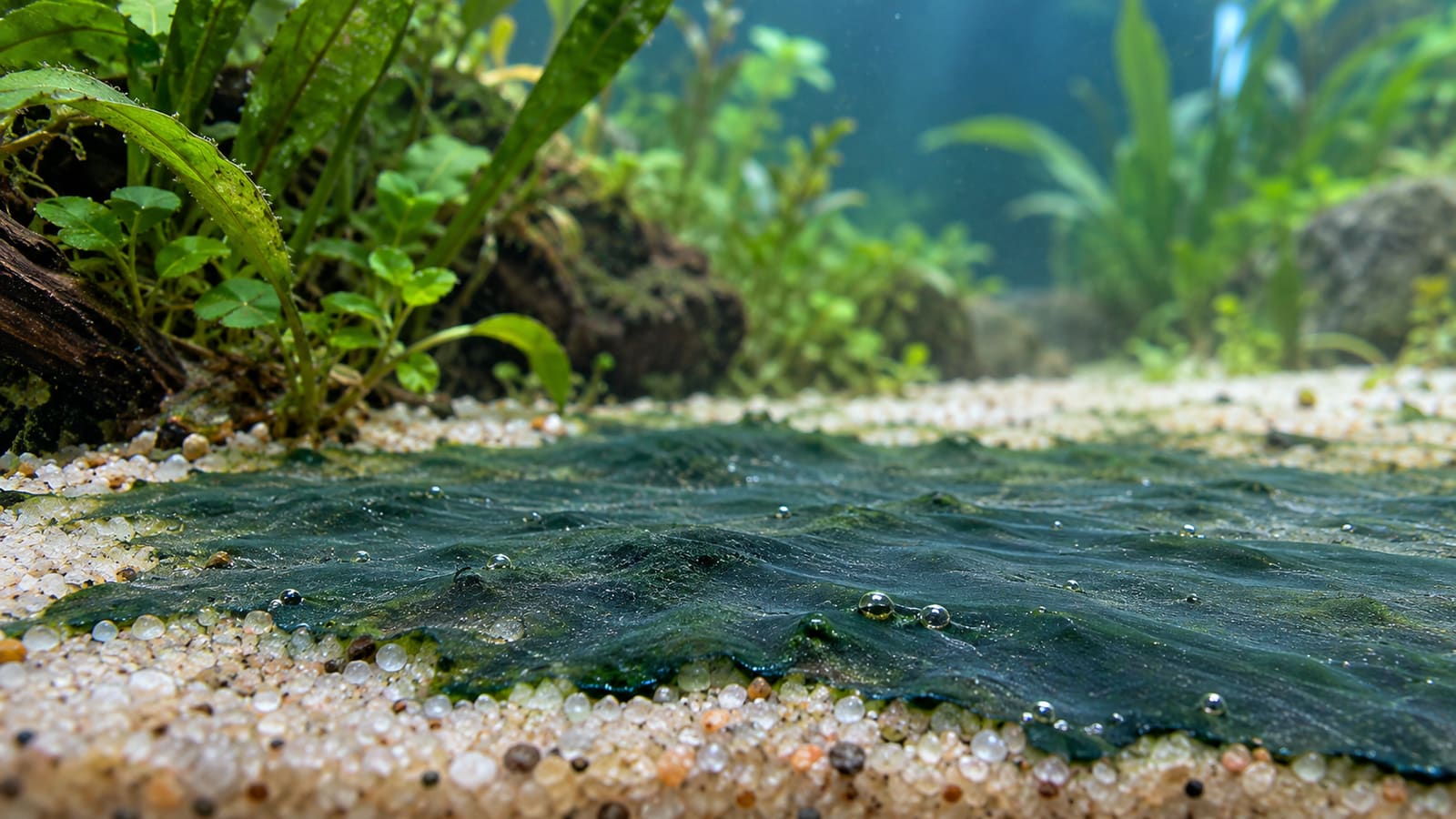
Blue-Green Algae in an Aquarium: It's Bacteria, and How to Clear It
Blue-green algae is cyanobacteria: a slimy sheet that peels off and smells like a swamp. Why it grows, how to remove it, and how to keep it from coming back.
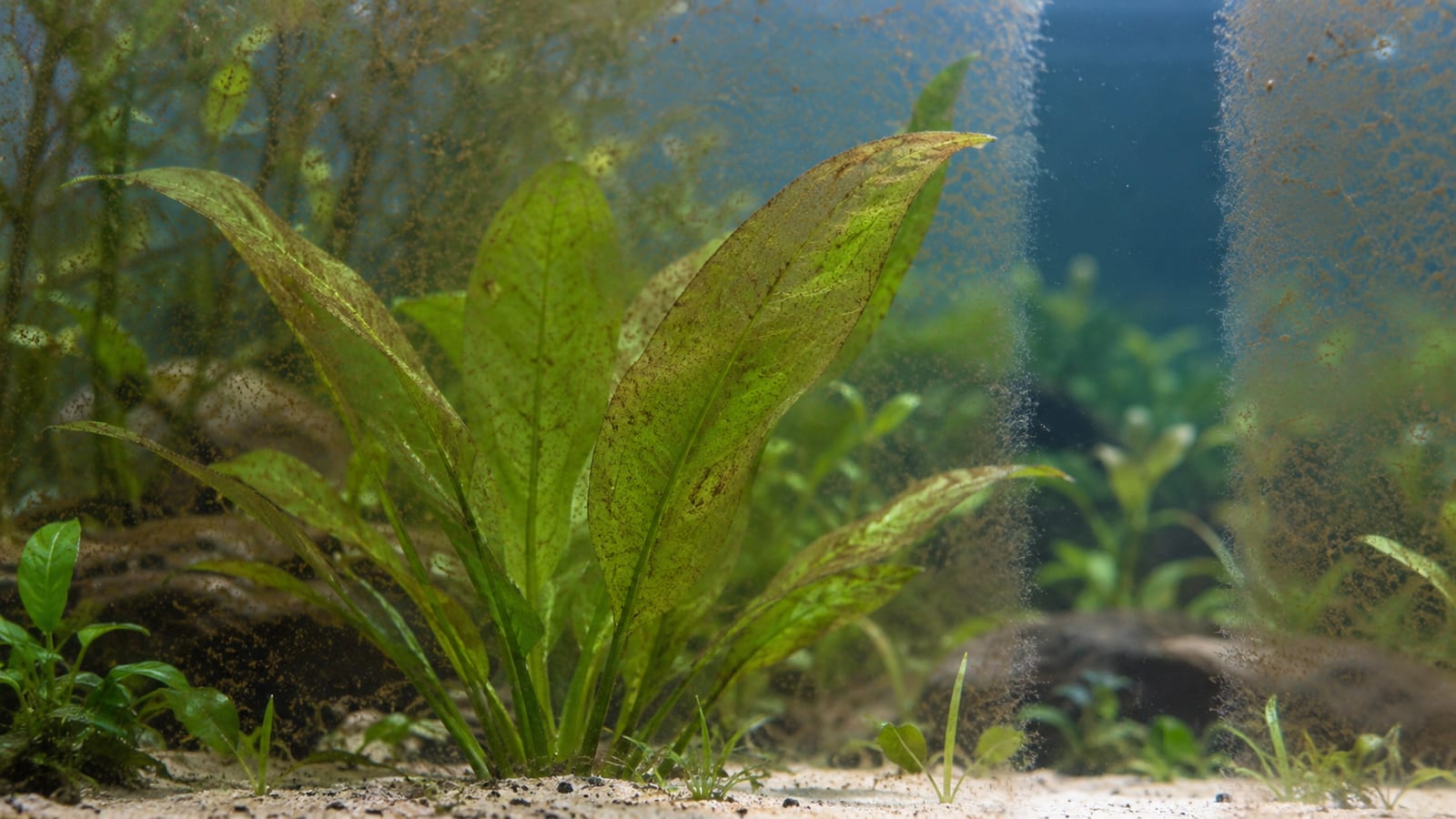
Brown Algae in Fish Tank: Why It Happens and When It Ends
Brown algae in fish tank? It is almost always diatoms. How to confirm it, how long a new-tank bloom lasts, and what actually clears it.