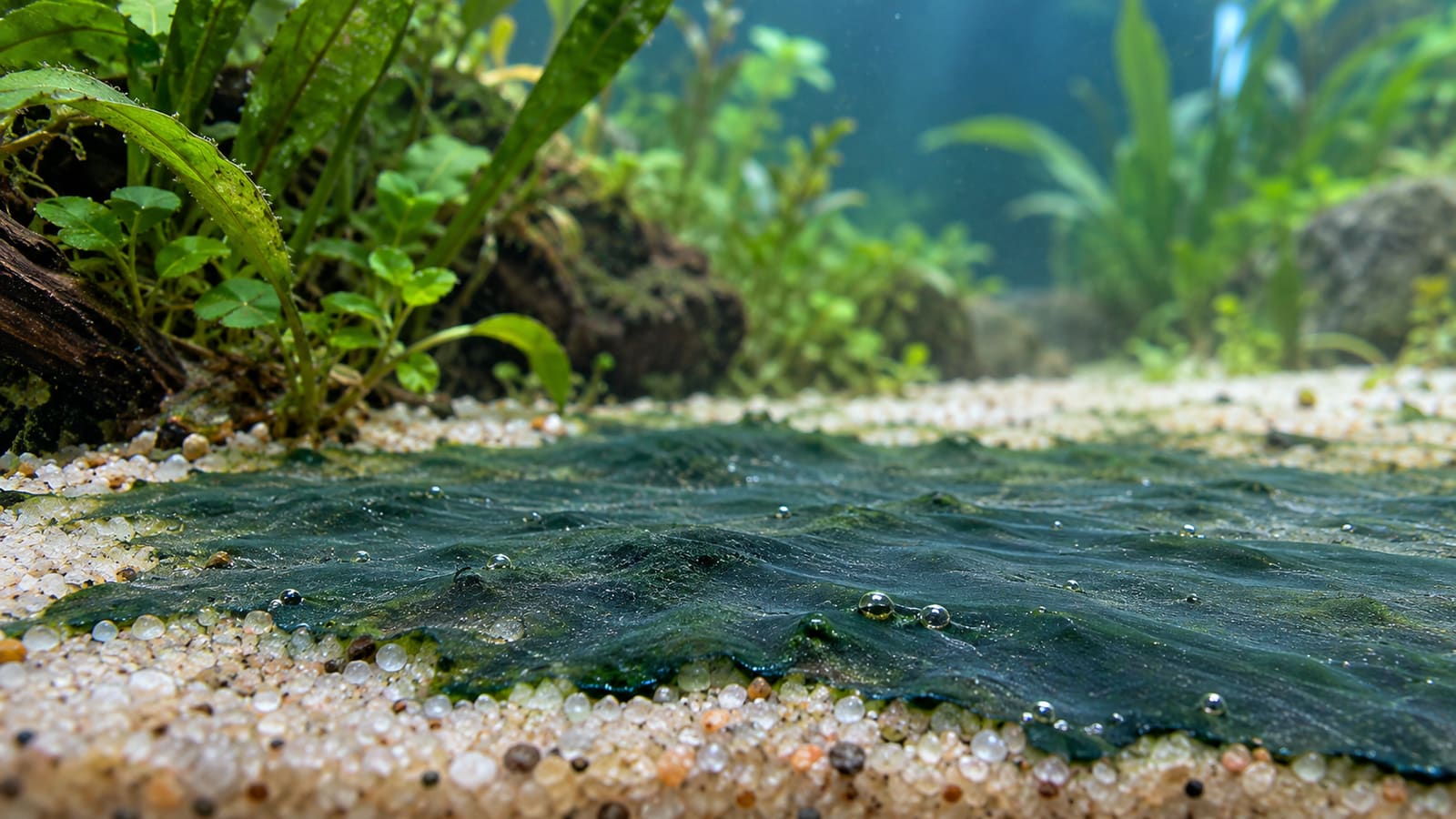
Siphon out as much as you can, cut feeding and the lighting period, and increase water flow where it grows. It usually grows in still spots with too much waste, so the long-term fix is maintenance, not a product. A three-day blackout clears what is left in most tanks.
Some links go to retailers. As an Amazon Associate, Aquarium for Beginners earns from qualifying purchases, at no extra cost to you.
The numbers
| Cyanobacteria (blue-green algae) | Diatoms (brown algae) | Green spot or hair algae | |
|---|---|---|---|
| What you see | A slimy sheet, dark green, blue-green or almost black, sometimes with bubbles in it | Soft brown dust on glass, gravel and leaves | Hard green dots on glass, or green strands on plants |
| The finger test | Peels off in a sheet | Wipes off in a cloud | Spots need a scraper. Strands pull off in tufts |
| Smell | Strong, musty, swampy | None | None |
| Where it starts | Substrate along the front glass, still corners, plant leaves | Everywhere at once, in a new tank | Glass and leaves in bright light |
| Snails and shrimp eat it? | Mostly no | Yes | Some do |
Blue-green algae is not algae. It is cyanobacteria, a bacterium that photosynthesises, and it grows where water is still and waste has built up. It forms a slimy sheet, usually dark green to blue-green, that peels off in one piece and smells strongly of a swamp. That smell is often how people find it before they see it.
Siphon out every sheet you can reach, increase the water flow where it grew, and cut the feeding and the lighting period. If it comes back, a three-day blackout clears what is left in most tanks.
Is it cyanobacteria, or something else?
Touch it. The table above has the details, but the finger test settles most cases.
- Peels off in a slimy sheet: cyanobacteria. This page is for you.
- Wipes off in a brown cloud: diatoms, which are harmless and normal in a new tank. See brown algae in a fish tank.
- Hard green dots that need a scraper, or green strands: green algae, which is a different problem with different fixes.
The smell is the other giveaway. Cyanobacteria smells musty and swampy, strong enough that you notice it when you lift the lid. If the tank smells and you cannot see the cause, tracing the smell helps find it.
Why it grows
Cyanobacteria needs light, nutrients and somewhere the water does not move. In most tanks it is a combination of these:
- Dead spots. Corners, the front of the substrate and the space behind decorations, where the filter's flow does not reach. Waste settles there and the sheet starts on top of it.
- Too much waste. Overfeeding, too many fish, or a long gap between water changes. The extra organic matter feeds it.
- Long lighting. Ten hours or more a day, or a tank in direct sun.
- Low nitrate in a planted tank. This one surprises people. Many cyanobacteria can make use of nitrogen from the air dissolved in the water, which other algae cannot. In a heavily planted tank where the plants have used up the nitrate, cyanobacteria has the advantage.
It often starts along the front glass, where light from the room reaches the substrate and the water is stillest.
How to get rid of it
- Siphon out every sheet you can reach during a 30% water change. It lifts off in pieces, so go slowly and catch the fragments.
- Vacuum the substrate under where it was growing. The waste beneath is what fed it.
- Wipe it off leaves and decorations by hand, and rinse them in tank water if you can take them out.
- Increase the flow in the spot where it grew. Point the filter output that way, or add a small air stone or powerhead.
- Cut the lighting to six hours a day on a timer, and move the tank out of direct sun if it is in it.
- Feed less: only what the fish finish in about two minutes, once a day, for the next two weeks.
Repeat the siphoning every few days. In many tanks this alone clears it within two weeks, because the conditions it needs are gone.
If it keeps coming back: a blackout
Cyanobacteria needs light, so taking the light away for a few days starves what is left. It works well, and it is safe for fish and most plants.
- Do a large water change and siphon out as much as you can first.
- Add an air stone. Plants stop producing oxygen in the dark.
- Cover the whole tank with a blanket or dark bin bags, so no room light gets in.
- Leave it for three days. Do not feed, and do not lift the cover to check.
- Uncover it, siphon out the dead remains, and do another large water change.
Blackout only fixes the symptom
Without changing the flow, feeding and lighting, cyanobacteria returns within weeks of a blackout. Do the checklist above first, then use the blackout to clear what is left.
What not to do
Do not buy an algae eater for it. Almost nothing eats cyanobacteria reliably, and an extra fish adds waste.
Do not reach for an antibiotic first. Erythromycin kills cyanobacteria, but the cause is still there when the treatment ends. It is a last resort for a tank where everything else has been done, and in some countries it needs a vet's prescription.
Do not leave it to grow. It covers plants and blocks their light, and a large mass of it fouls the water when it dies off.
The one thing worth taking from this
Cyanobacteria is a sign that waste is collecting somewhere the water does not move. Remove it by hand, then fix the flow and the feeding. The sheet is the part you can see, and the cause is the still corner under it.
Questions people ask
Mentioned in this guide
Related guides
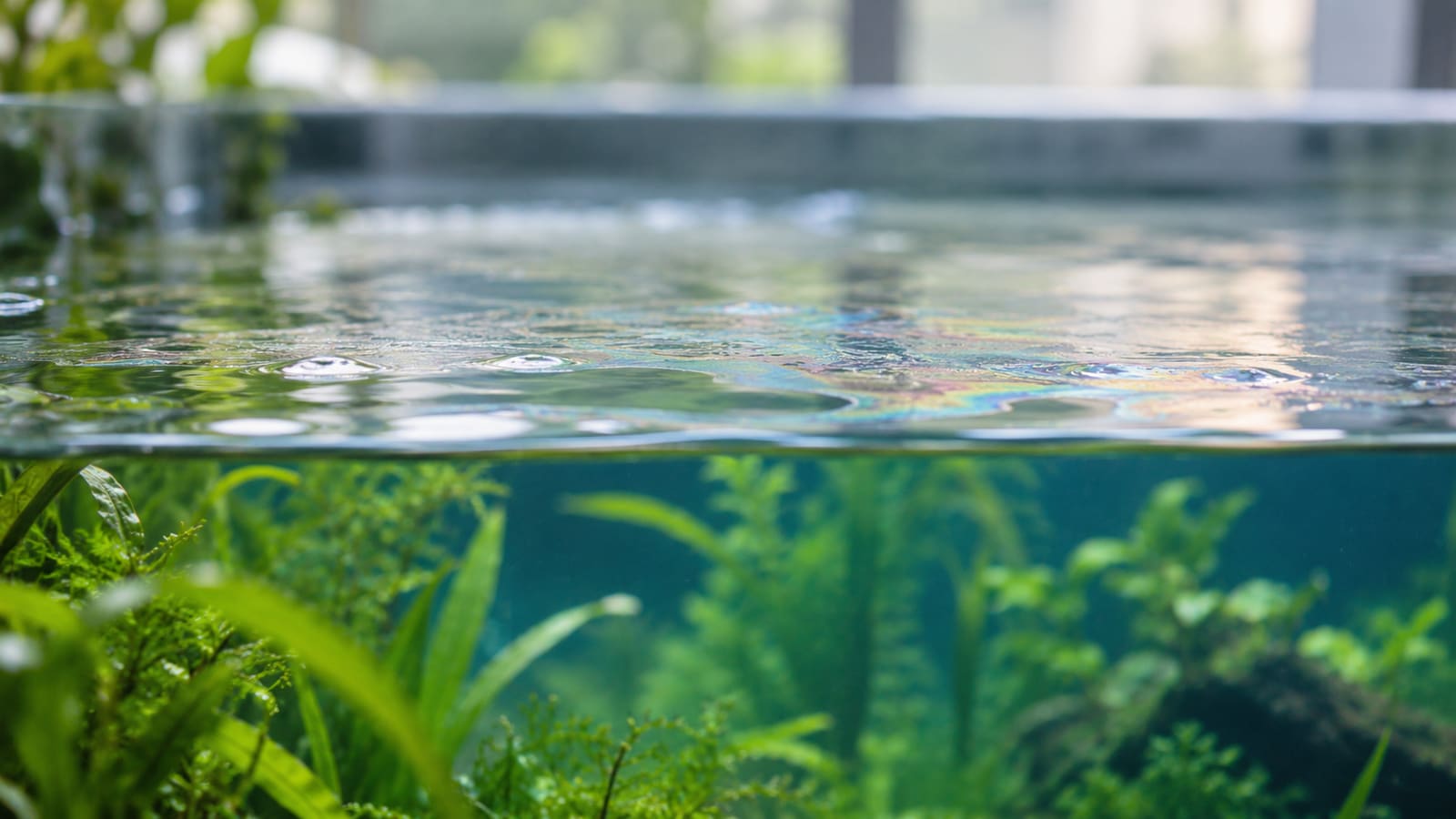
Biofilm in an Aquarium: The Slime You Mostly Want, and the Film You Don't
Biofilm is the thin layer of bacteria on every surface in a tank, and most of it is useful. When surface film or slime is a problem, and how to fix it.
Why Does My Fish Tank Smell? Match the Smell to the Cause
Why does my fish tank smell? A healthy tank smells like damp soil. Rotten eggs, rotting fish and musty swamp each point to one cause — matched in one table.
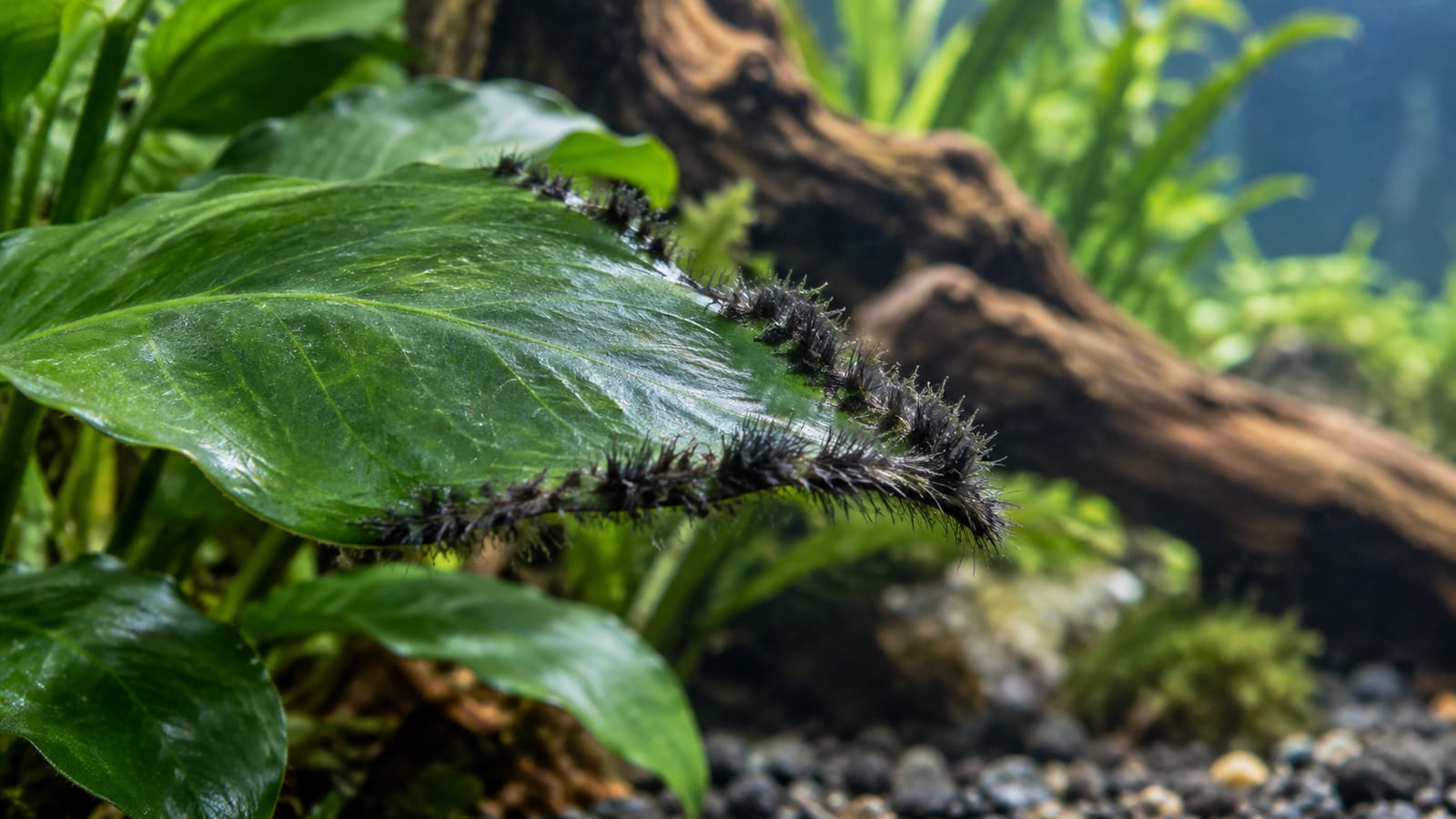
Black Algae in a Fish Tank: Black Beard Algae and How to Remove It
Black algae in a fish tank is almost always black beard algae: dark tufts on leaf edges and wood that will not wipe off. Why it grows and how to get rid of it.