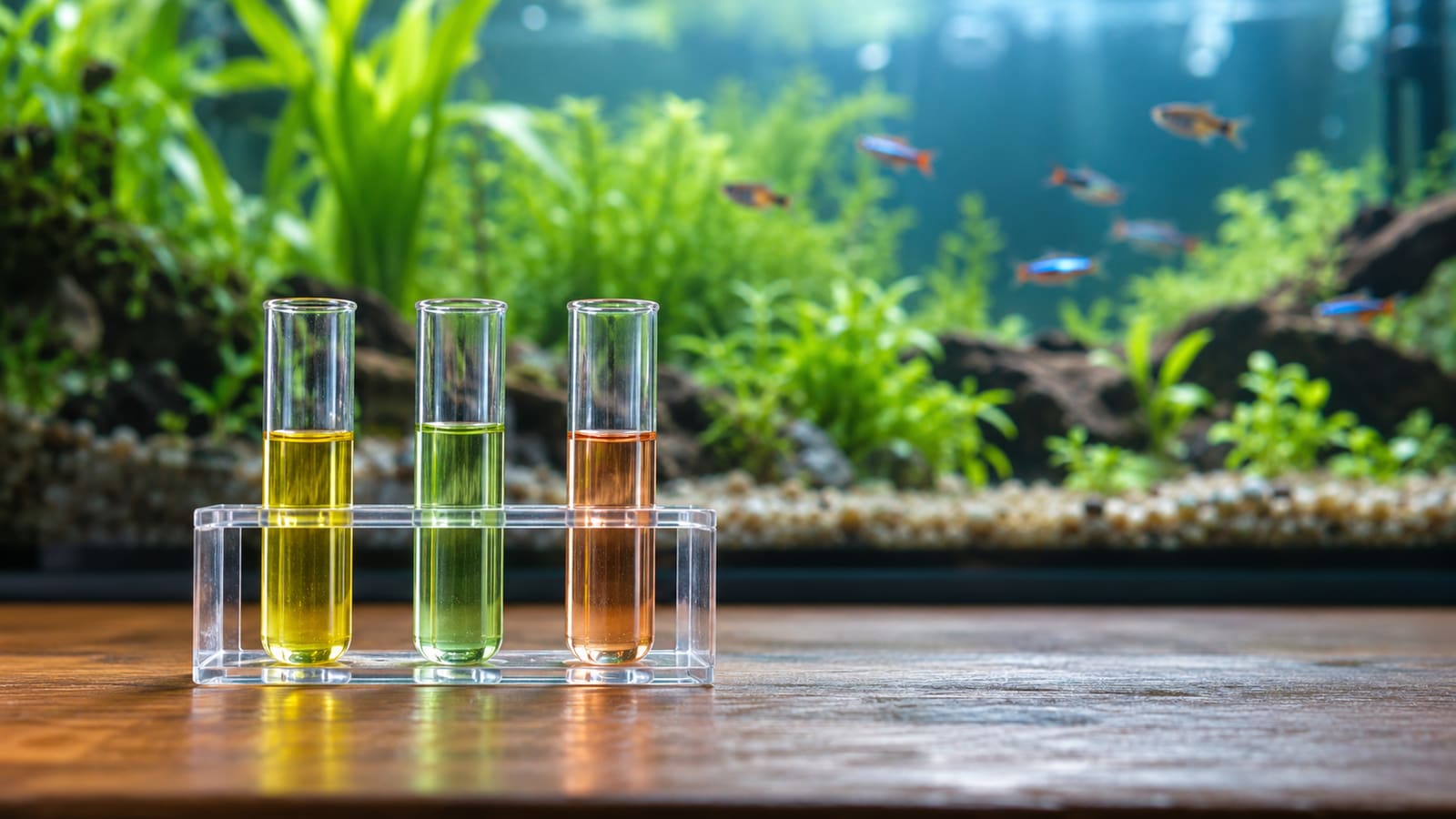
In a tank under two months old the cause is usually ammonia or nitrite from an uncycled filter. Test ammonia, nitrite and nitrate today, and change 30–50% of the water if either of the first two reads above zero. Then match the timing of the deaths to the table below, and stop adding fish until the cause is fixed.
Some links go to retailers. As an Amazon Associate, Aquarium for Beginners earns from qualifying purchases, at no extra cost to you.
The numbers
| Most likely cause | How to confirm | What to do | |
|---|---|---|---|
| In the first weeks of a new tank, one after another | Ammonia and nitrite from a filter that has not cycled yet | Ammonia or nitrite reads above 0 ppm | Change 30–50% of the water daily until both read 0. Add no fish |
| Within a day of a water change | Chlorine or chloramine, a temperature gap, or a sudden pH swing | Conditioner skipped or under-dosed, or new water felt different by hand | Dose conditioner for the whole tank volume. Match temperature within 2°F |
| Within a week of buying, new fish only | Stress from transport, poor acclimation or disease from the store | Older fish are fine, and water tests clean | Buy from a different shop, acclimate slowly, quarantine next time |
| An old tank, after a long gap in maintenance | Nitrate and acidity built up, then a big water change shocked the fish | Nitrate above 40 ppm, pH lower than your tap water | Smaller changes, 20% every few days, to bring it back gradually |
| Many fish at once, overnight | A toxin, a failed heater or filter, or no oxygen | Thermometer off, filter stopped, sprays or paint used nearby | Change 50% at once, add aeration, find the source |
| One species only | The water or the tank does not suit that species, or a tankmate bullies it | Look up its temperature and pH range. Watch at feeding time | Stop buying it until the conditions match |
When fish keep dying, the water is almost always the reason, and the timing tells you which part of it. Fish that die one after another in a new tank are usually being poisoned by ammonia or nitrite, because the filter bacteria are not established yet. Fish that die after a water change point at chlorine or temperature. New fish dying while old fish are fine points at the shop or the move.
Before anything else, test ammonia, nitrite and nitrate. If ammonia or nitrite reads above zero, change 30–50% of the water today with dechlorinated water at the tank's temperature, and do not add any more fish.
Step 1: write down when they died
It sounds like paperwork, but the pattern is the fastest way to the cause. Think about:
- How old is the tank? Under two months is a different problem from two years.
- What changed in the 48 hours before each death? A water change, new fish, a cleaned filter, a new decoration, a hot day.
- Which fish died? All kinds, one species, or only the new ones.
- How fast? One every few days, or several overnight.
Then match it to the table above. Most cases land clearly in one row.
Step 2: test the water, all of it
- Ammonia: should be 0 ppm. Anything above it is toxic, and 0.5 ppm is enough to kill sensitive fish over a few days.
- Nitrite: should be 0 ppm. It stops fish carrying oxygen in their blood, which is why they gasp. If it reads above 0, see how to lower nitrites.
- Nitrate: under 40 ppm, ideally under 20. High nitrate weakens fish slowly rather than killing them overnight. See how to lower nitrates.
- Temperature: most tropical fish want 74–80°F. See what temperature a fish tank should be for species ranges.
- pH, compared with your tap water. A tank that reads a full point lower than the tap has been building up acid for a while.
Use a liquid test kit if you can
Test strips read in broad bands. A strip that shows 0 can miss 0.25 ppm of ammonia, which already stresses fish. A liquid kit costs more upfront and lasts for hundreds of tests.
The most common cause: a tank that has not cycled
A new tank has no bacteria to break down fish waste. The waste becomes ammonia, which builds up in the water. Over the following weeks, bacteria grow in the filter and turn ammonia into nitrite, which is also toxic, and then into nitrate, which is much less harmful. That process is the nitrogen cycle, and it usually takes four to eight weeks.
Fish added before it finishes are living in their own waste. The symptoms come slowly: a fish stops eating, sits on the bottom, breathes fast, and dies a few days later. Then another one does. It looks like a disease moving through the tank, but a test kit shows the real cause. If your tank has not finished cycling, this guide to New Tank Syndrome: signs and next steps covers the warning signs and what to test.
The fix is water changes, not medicine. Change 30–50% of the water every day ammonia or nitrite reads above zero, feed very lightly, and leave the filter media alone. The bacteria in it are the long-term fix, and rinsing it in tap water kills them. There is a step-by-step guide to changing the water without shocking the fish.
The other half of the fix is not adding more fish until both readings hold at zero for a week. Then add a few at a time, about two weeks apart, so the bacteria can grow to match.
Deaths after a water change
If fish die within a day of a water change, the new water was different from the old water in a way that hurt them. In order of how often it happens:
- No conditioner, or not enough. Tap water contains chlorine or chloramine, which burn gills within minutes. Dose conditioner for the whole tank volume, not just the bucket, and check that your conditioner handles chloramine if your water utility uses it.
- A temperature gap. Water a few degrees colder or warmer than the tank is a shock. Match it with a thermometer or by hand, within about 2°F.
- A pH swing in a neglected tank. See the next section.
Deaths in an old tank
A tank that has run for a long time without water changes slowly builds up nitrate, and the water slowly turns more acidic. The fish adapt to it, gradually, as it drifts. Then the owner notices, does a large water change, and the fish die.
The large change swings the pH back up in one go. That swing is a shock in itself, and any ammonia in the water becomes more toxic at higher pH. Experienced keepers call it old tank syndrome.
The way out is gradual. Change about 20% every two or three days for two weeks, until nitrate is under 20 ppm and the tank's pH is close to the tap's. Then keep to a weekly schedule so it does not drift again.
New fish dying, old fish fine
When only the newest fish die, usually within the first week, the problem came in with them.
- Stress from the trip. Fish go through a farm, a wholesaler and a shop before your tank, and some arrive weakened. Mass-bred neon tetras and fancy guppies are known for it.
- Rushed acclimation. A fish dropped straight into different water can die from the change alone. Read how to acclimate fish before the next purchase.
- Disease from the shop. If new fish show white spots, frayed fins or a thin body after a few days, they brought something with them. A small quarantine tank, where new fish spend two to four weeks before joining the others, stops it reaching the main tank.
If it keeps happening with fish from the same shop, try a different shop. Some have consistently better stock.
Many fish at once
When several fish die overnight, look for something sudden.
- Heater or filter failure. Check the thermometer, and check that the filter is running and moving water.
- No oxygen. In hot weather, or after the filter stops, the water can run out of oxygen. Fish gasp at the surface before they die.
- A toxin. Air freshener, bug spray, paint fumes, soap or lotion on hands, or a decoration that was not made for aquariums. Copper-based medicines kill snails and shrimp at normal doses.
Change 50% of the water straight away, add an air stone, and find the cause before you restock.
Overstocking and overfeeding make all of it worse
Neither kills fish on its own, but both raise the amount of waste in the water, and every problem above gets worse with more waste. A tank with too many fish has less room for error. The stocking guide for a 10 gallon explains why the old "one inch per gallon" rule overstocks small tanks. Feed only what the fish finish in about two minutes, once or twice a day.
The one thing worth taking from this
Repeated deaths are not bad luck, and they are rarely a mystery disease. Test the water and note when the fish died. Between them, those two things point at the cause in almost every case, and the fix is usually water changes and patience, not a product.
Questions people ask
Mentioned in this guide
Related guides
How to Lower Nitrites in a Fish Tank: What to Do Today
To lower nitrites in a fish tank, change 50% of the water today and add a little aquarium salt to block it. Then fix the cause. Exact doses, sourced.
Fish Lying on the Bottom of the Tank: Test the Water First
A fish lying on the bottom of the tank is usually reacting to the water: ammonia, nitrite, temperature or oxygen. What to check first and what to do today.
Brown Algae in Fish Tank: Why It Happens and When It Ends
Brown algae in fish tank? It is almost always diatoms. How to confirm it, how long a new-tank bloom lasts, and what actually clears it.