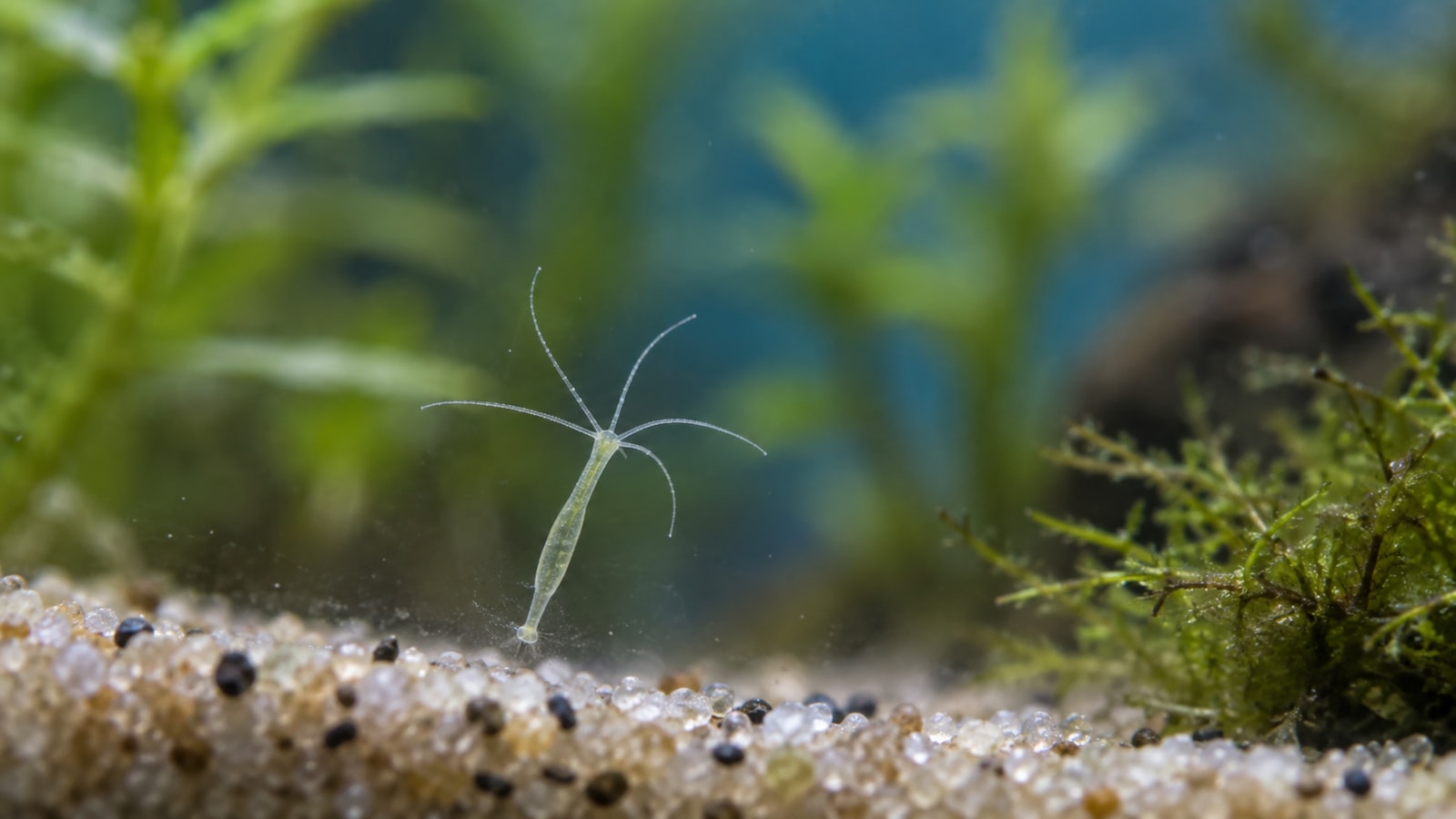
Adult fish and adult shrimp are too big for them. Fry and baby shrimp are not. In a community tank, cut the feeding and they starve. In a fry or shrimp tank, treat with No Planaria or, if there are no snails, fenbendazole.
The numbers
| Community tank | Shrimp tank | Fry tank | |
|---|---|---|---|
| Is it a problem? | No. Adult fish are too big | Yes, for shrimplets | Yes. Hydra eat fry |
| First step | Feed less | Feed less | Switch to feeding in small portions the fry finish |
| If that is not enough | Rarely needed | No Planaria (betel nut) | Fenbendazole, if there are no snails |
| Watch out for | Nothing | Snail losses, oxygen drop | Snails die with fenbendazole |
Hydra in an aquarium only matter if you have babies in the tank. They are tiny relatives of jellyfish that sting and eat whatever drifts into their tentacles. Adult fish and adult shrimp are too big to be prey. Fry and baby shrimp are not.
In a community tank, cut the feeding and they starve out. In a shrimp or fry tank, cut the feeding and treat if they do not go.
What hydra look like
A hydra is a thin stalk, a few millimetres long, stuck by its base to the glass, a plant or a rock. At the free end is a ring of four to six thin tentacles that sway in the current. They are usually white, pale brown or bright green.
They do not crawl like a worm. They stay put, and contract into a small blob when touched, then slowly stretch out again. Over time they can move by somersaulting end over end, but you will rarely see it.
If what you have is moving, it is not hydra. The worms in a fish tank guide covers the things that do move.
Why hydra appear
Hydra need a lot of very small food. That is why they turn up in two kinds of tank above all others: fry tanks, where the keeper feeds baby brine shrimp or powdered food several times a day, and shrimp tanks, where fine food settles on every surface.
They were almost certainly in the tank already, in numbers too small to see, having come in on a plant or in shop water. When feeding goes up, they can cover the glass within a week or two.
Green hydra are different
Green hydra carry algae inside their bodies that feed them sugars from light. They depend less on prey, so starving them works slowly. For green hydra, shortening the light period helps as well.
Hydra in a community tank
Feed less and let the fish help. Feed what the fish finish in two minutes, vacuum the substrate at the next water change, and within two or three weeks most of the hydra shrink and disappear. Many fish eat them, including gouramis, guppies and mollies. There is no need to medicate.
Hydra in a shrimp or fry tank
- Feed in small portions that are gone within minutes, rather than one large feeding that settles on the glass and substrate.
- Siphon out uneaten baby brine shrimp and powdered food after each feeding.
- Siphon the hydra off the glass with airline tubing rather than scraping them, since scraped hydra drift and reattach.
- If they are still spreading after two weeks of lighter feeding, treat.
No Planaria, a betel nut extract, kills hydra as well as planaria and is the usual choice in shrimp tanks. Shrimp tolerate it at the label dose. It is sold as safe for snails, but keepers regularly report snail losses, so move any snails you care about first.
Fenbendazole is even more effective. Hydra are more sensitive to it than planaria are, so it often works at the low end of the dosing range. It kills snails, though, so use it only in a tank without them.
With either treatment, follow the product's dosing exactly, add an air stone for the duration, and do a large water change afterwards. Many keepers repeat the course a week later to catch any hydra that survived as buds.
Move the fry, or not?
Fry tolerate both treatments better than they tolerate hydra. There is no need to move them out, but do not feed heavily during treatment, and keep the water well aerated.
Keeping them out
Hydra arrive with live plants, shop water and live food cultures. Tissue-culture plants are grown sterile, and pouring fish into a net rather than tipping the bag water into the tank keeps the shop's hydra in the shop. Rinse baby brine shrimp in fresh water before feeding them.
The one thing worth taking from this
Hydra are a measurement of how much small food is in the water. Bring that down and most of them go. Treat only when there is something small enough in the tank for them to eat.
Questions people ask
Mentioned in this guide
Related guides
How to Get Rid of Duckweed in an Aquarium Without Hurting Fish
How to get rid of duckweed in an aquarium without hurting fish: net it, wipe the glass, pick it out of moss, then check for six weeks so it stays gone.
Planaria in an Aquarium: Harmless to Fish, Bad for Shrimp
Planaria in an aquarium are flatworms that glide on the glass. With fish they are harmless. In a shrimp tank, here is how to trap them and treat safely.
Scuds in an Aquarium: Harmless With Fish, a Problem With Shrimp
Scuds in an aquarium are tiny curled crustaceans that swim on their side. With fish they are free live food. With only shrimp they are a rival.