In a tank with fish, feed less and let the fish eat them. In a shrimp tank they eat eggs and babies, so cut the feeding, trap them overnight, and if that is not enough, treat with a betel-nut product such as No Planaria. Fenbendazole works too, but kills snails.
The numbers
| Feed less | Planaria trap | No Planaria (betel nut) | Fenbendazole | |
|---|---|---|---|---|
| Works alone? | In a fish tank, usually. In a shrimp tank, slowly | Reduces numbers. Rarely clears them | Yes | Yes, and also kills hydra |
| Safe for shrimp? | Yes | Yes | Yes, at the label dose | Most shrimp tolerate it. Some sensitive species do not |
| Safe for snails? | Yes | Yes | Sold as safe. Snail losses are reported | No. It kills them |
| Main risk | None | None | Oxygen drop as worms die. Add aeration | Losing every snail in the tank |
Whether planaria in an aquarium matter depends on what else lives in the tank. In a tank with fish, they are harmless: the fish eat them, and feeding less makes the rest go away. In a shrimp tank they eat eggs and babies, and they are worth removing. Feed less, trap them overnight, and if that is not enough, treat with a betel-nut product such as No Planaria.
Is it really planaria?
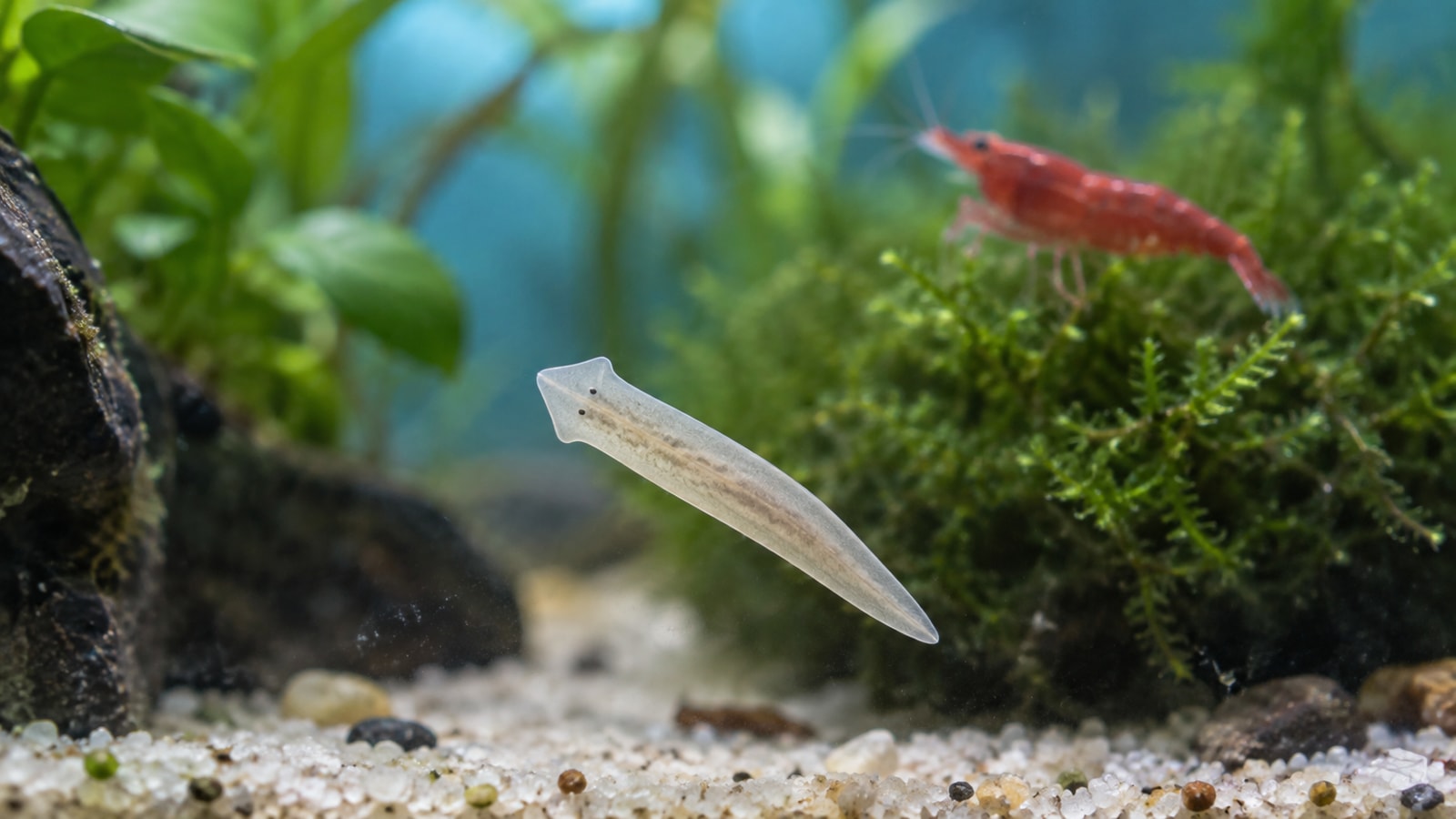
Planaria are small flatworms, usually 3 to 15 mm, white, grey or brown. Two things together confirm one:
- A triangular, arrow-shaped head with two dark eye spots, which makes them look slightly cross-eyed under a flashlight.
- A smooth, gliding movement along the glass, like a tiny slug. They do not thrash.
A thin worm that whips and wriggles is a detritus worm, which is harmless in every tank. If you are not sure which you have, the worms in a fish tank guide covers all the common ones side by side.
The easiest way to see them
Check the glass with a flashlight an hour after lights-out. Planaria are most active in the dark, and a tank that looks clean by day can have dozens on the glass at night.
Why planaria appear
They were almost certainly there already, in numbers too small to see. They come in on live plants, moss and shop water, and sit quietly until there is enough food. Then they breed fast.
The food is the same food that feeds snails and detritus worms: uneaten pellets, powdered shrimp food, anything left on the bottom. A planaria bloom almost always follows a change in feeding.
Planaria in a tank with fish
Do nothing except feed less. Feed what the fish finish in two minutes, vacuum the substrate at the next water change, and most fish will pick off the planaria they find. The population falls back within a few weeks. There is no reason to medicate a fish-only tank for them.
Planaria in a shrimp tank
Here they are a real problem. They eat shrimp eggs and baby shrimp, and several can overwhelm an adult shrimp in the middle of a moult. A colony that has stopped growing for no clear reason is often a planaria colony in disguise. Work through these in order.
- Cut feeding hard. Feed only what the shrimp clear in an hour or two, and take out anything left after that.
- Trap overnight. A planaria trap is a small tube with holes too small for shrimp. Bait it with a pea-sized piece of raw shrimp or fish, set it on the substrate at lights-out, and empty it in the morning. Repeat for a week.
- Siphon out the ones you see on the glass with airline tubing. Lift them out whole: never squash or cut them, since a piece can regrow.
- If numbers stay high after two weeks, treat.
Which treatment to use
No Planaria is an extract of betel nut, and it is the usual choice in shrimp tanks. It kills planaria and hydra, and shrimp tolerate it at the dose on the label. It is sold as safe for snails, but keepers regularly report losing snails to it, so move any you care about to a bucket for the treatment.
Fenbendazole, a dewormer sold as dog wormer granules and in aquarium products, kills planaria and is even more effective against hydra. It also reliably kills snails. Use it only if the tank has no snails, or they are somewhere else for the duration.
Whichever you use, follow the product's dosing exactly, and keep these three things in mind:
- Add an air stone. Dying worms use up oxygen as they decay, and so do the bacteria breaking them down.
- Do a large water change afterwards, and vacuum the substrate to take out the dead worms before they rot.
- Repeat a week or two later. Eggs survive the first round, and the second catches what hatched.
Do not use copper or salt
Copper-based medications kill planaria, but they kill shrimp and snails too, and copper lingers in the tank for months. Salt at a dose that affects planaria harms plants and shrimp first.
Keeping them out
The only reliable way to keep planaria out of a new shrimp tank is to add nothing that has been in another tank's water. Tissue-culture plants, sold in sealed cups of gel, are grown sterile. Moss and plants from other keepers bring whatever lived in their tank with them.
The one thing worth taking from this
Planaria are a feeding problem first and a pest second. In a fish tank, feeding less is the whole fix. In a shrimp tank, it is still the first step, and treatment only lasts if the feeding stays light afterwards.
Questions people ask
Mentioned in this guide
Related guides
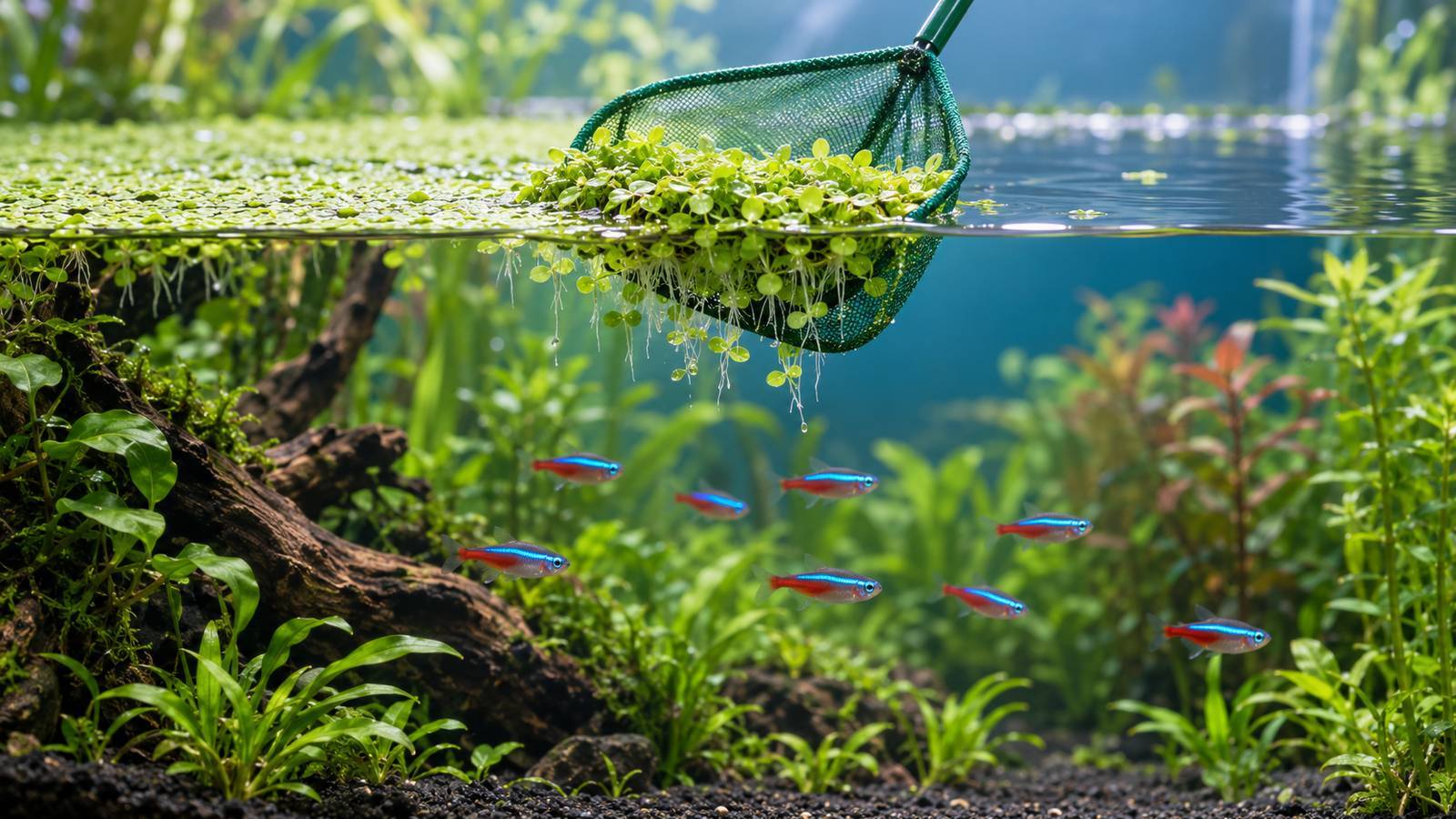
How to Get Rid of Duckweed in an Aquarium Without Hurting Fish
How to get rid of duckweed in an aquarium without hurting fish: net it, wipe the glass, pick it out of moss, then check for six weeks so it stays gone.
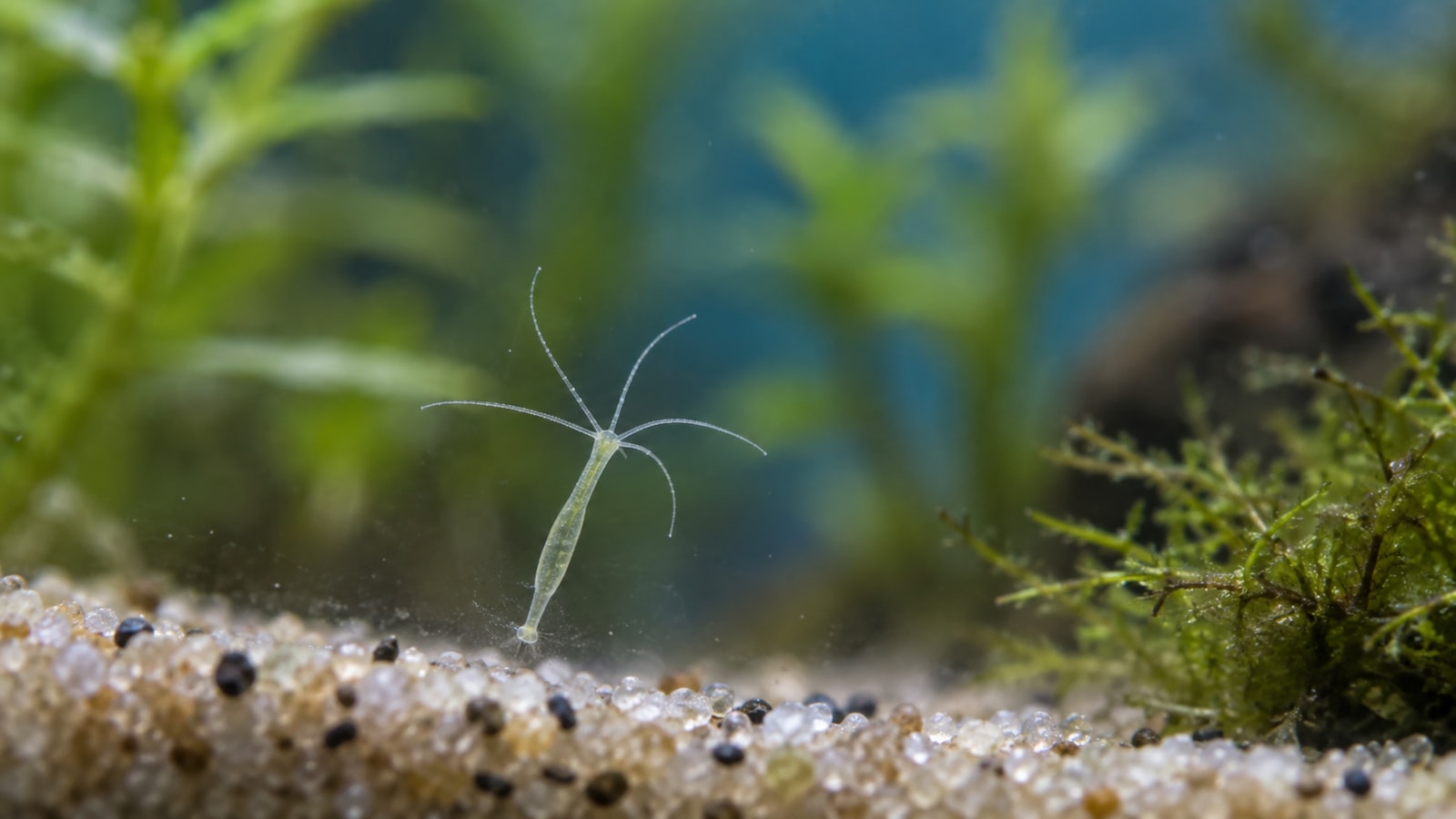
Hydra in an Aquarium: Harmless to Fish, Deadly to Fry
Hydra in an aquarium look like tiny stalks with tentacles. They are harmless to adult fish but eat fry and baby shrimp. How to starve them out or treat them.
Scuds in an Aquarium: Harmless With Fish, a Problem With Shrimp
Scuds in an aquarium are tiny curled crustaceans that swim on their side. With fish they are free live food. With only shrimp they are a rival.