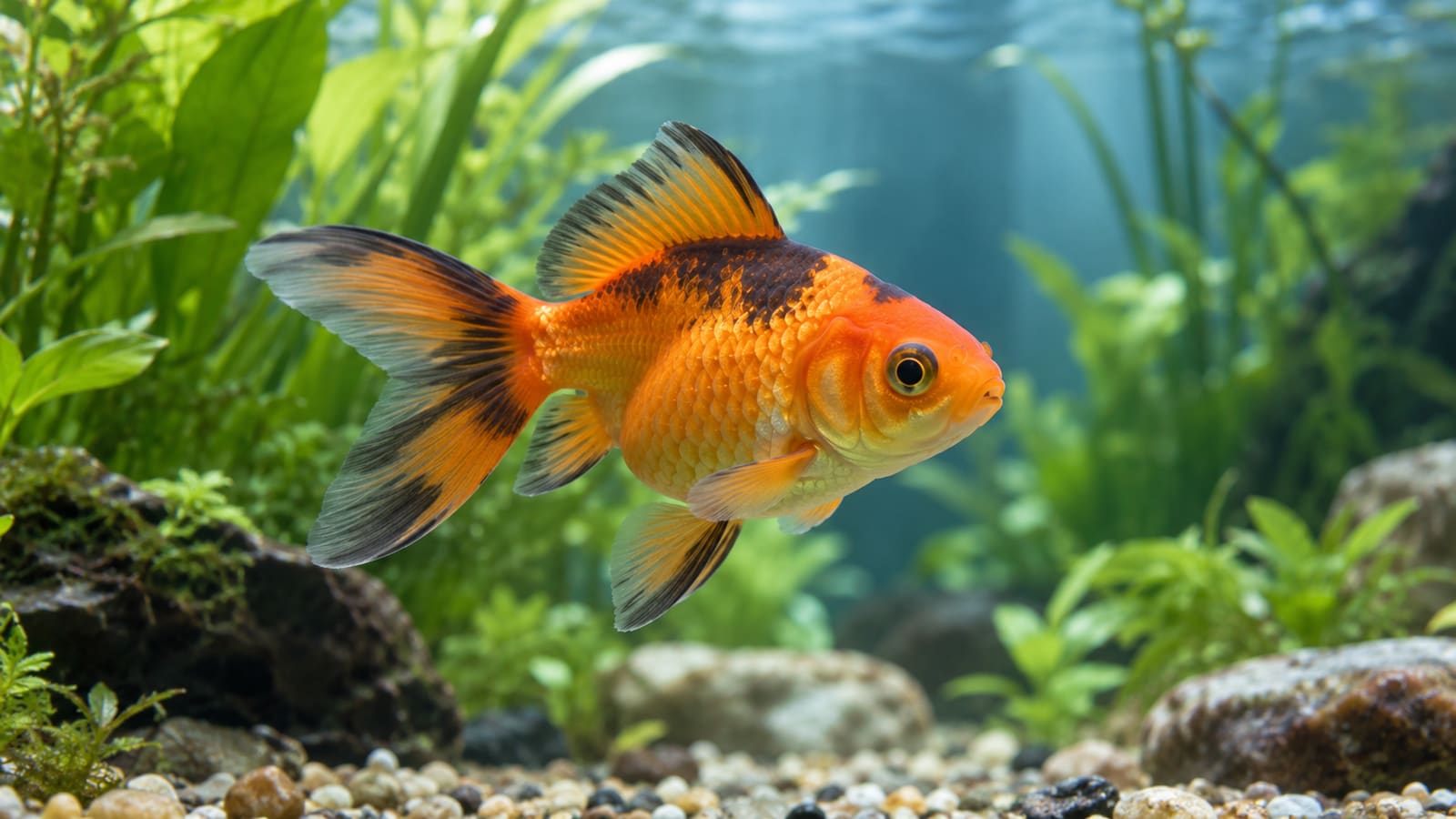
If the water is fine and the fish is acting normally, it is most likely a natural colour change, which is common in young goldfish and harmless. Black spots the size of a pinhead in a pond fish can be a parasite.
Some links go to retailers. As an Amazon Associate, Aquarium for Beginners earns from qualifying purchases, at no extra cost to you.
The numbers
| Ammonia burns healing | Natural colour change | Black spot parasite | |
|---|---|---|---|
| What it looks like | Black or smudgy patches on the body and fin edges | Black areas that spread or fade over weeks | Tiny raised black dots, like pepper |
| How fast | Days, after a water problem | Weeks to months | Appears over days |
| Other signs | Red streaks, clamped fins, gasping, recent high ammonia | None. Fish acts normally | Usually pond fish, with snails and birds around |
| What to do | Test now, water changes until ammonia reads 0 | Nothing | Usually harmless; ask a vet if heavy |
Test the water before anything else. When black patches appear on a goldfish over a few days, the most common cause is ammonia burns healing. Ammonia in the water damages the skin, and as it heals it often turns black. The black is the recovery, but it means the water was bad recently, and may still be.
If the water tests fine and the fish eats and swims normally, the black is most likely a natural colour change. That is common in young goldfish and is harmless.
Ammonia burns healing
This is the cause to rule out first, because it means something in the tank needs fixing.
Ammonia comes from fish waste and uneaten food. In a tank that is new, overcrowded, overfed or overdue for a water change, it builds up and burns the skin and gills. The burnt areas often go red or inflamed first, then black as they heal.
Signs that point to ammonia:
- The black appeared over days, not months.
- The tank is under two months old, or holds several goldfish in a small space.
- There are red streaks in the fins, clamped fins, or the fish is gasping at the surface.
- A water change was skipped, or the fish were overfed recently.
What to do: test ammonia and nitrite. If either reads above zero, change 30–50% of the water today with dechlorinated water at the same temperature, and repeat daily until both read zero. Feed lightly until then. In a new tank, this is the nitrogen cycle still settling. The black usually fades over a few weeks once the water is clean.
Natural colour change
Goldfish colours are not fixed. Many are born dark or bronze and turn orange in their first year, and black markings often appear, spread or vanish as they grow. Some calico and fancy goldfish change colour for years.
If the water is fine, the black came on gradually over weeks, and the fish behaves normally, nothing is wrong. There is nothing to treat and no way to stop it. The reverse happens too: goldfish turning white is usually the same process.
Black spot parasite
Tiny, slightly raised black dots, like a sprinkling of pepper, can be a parasite called black spot. It is mostly seen in pond goldfish, because its life cycle needs snails and fish-eating birds. In an indoor tank it is rare.
Black spot looks alarming but is usually harmless and often clears by itself, because the parasite cannot complete its life cycle in a tank. If the fish is heavily covered or unwell, ask a vet before treating.
What you need
| Item | Why |
|---|---|
| Liquid test kit | Tells you in five minutes whether ammonia is behind it |
| Water conditioner | Makes tap water safe for the extra water changes, and binds ammonia in the meantime |
The one thing worth taking from this
Black on a goldfish is either healing or genetics. A water test tells you which. If ammonia reads above zero, fix the water and the black will fade. If it reads zero, enjoy the new colours.
Questions people ask
Mentioned in this guide
Related guides
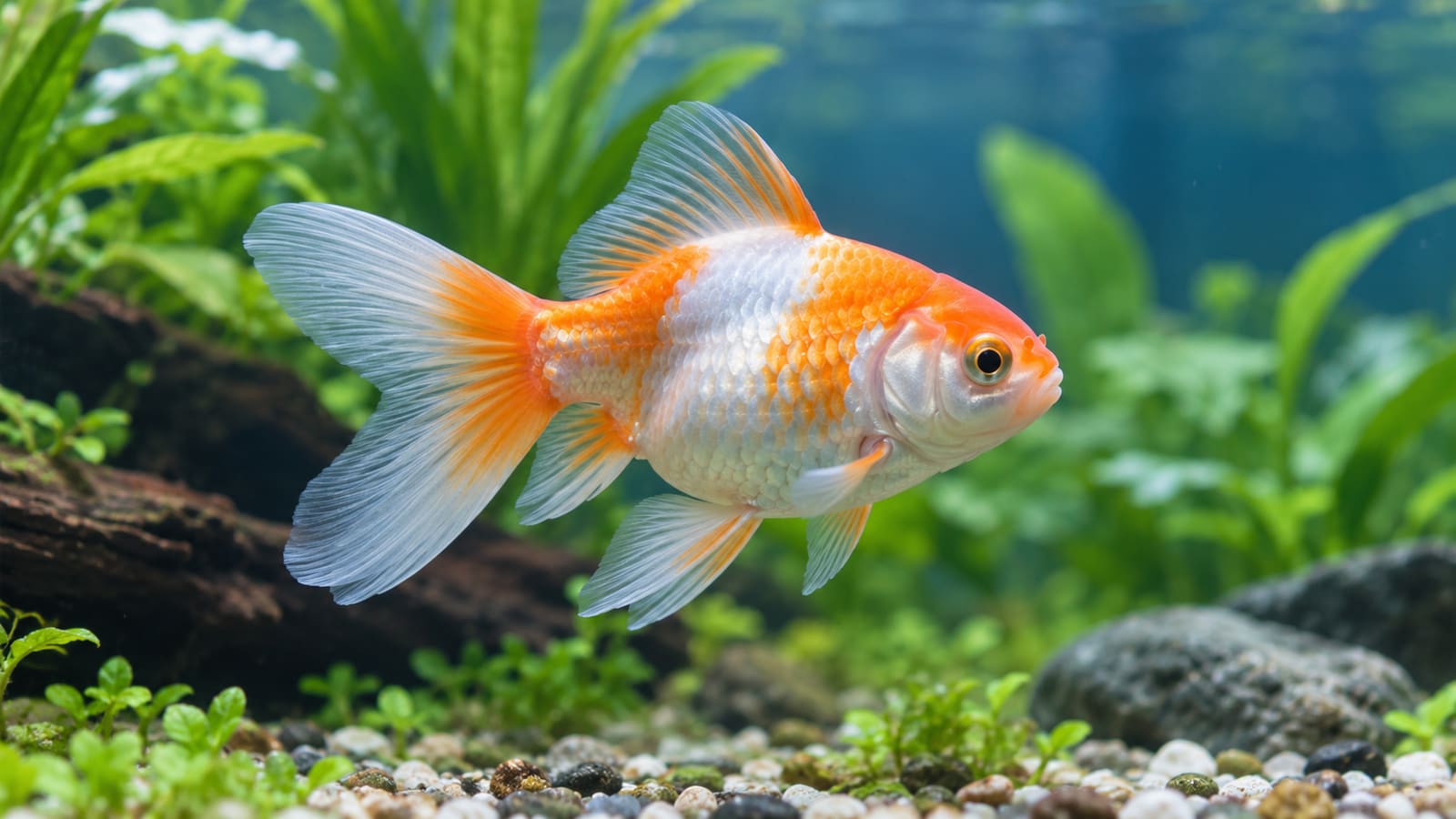
Why Is My Goldfish Turning White? Age, Light or Water
A goldfish fading to white is usually age, genetics or too little light. White spots, patches or fuzz are different. How to tell a harmless fade from a problem.
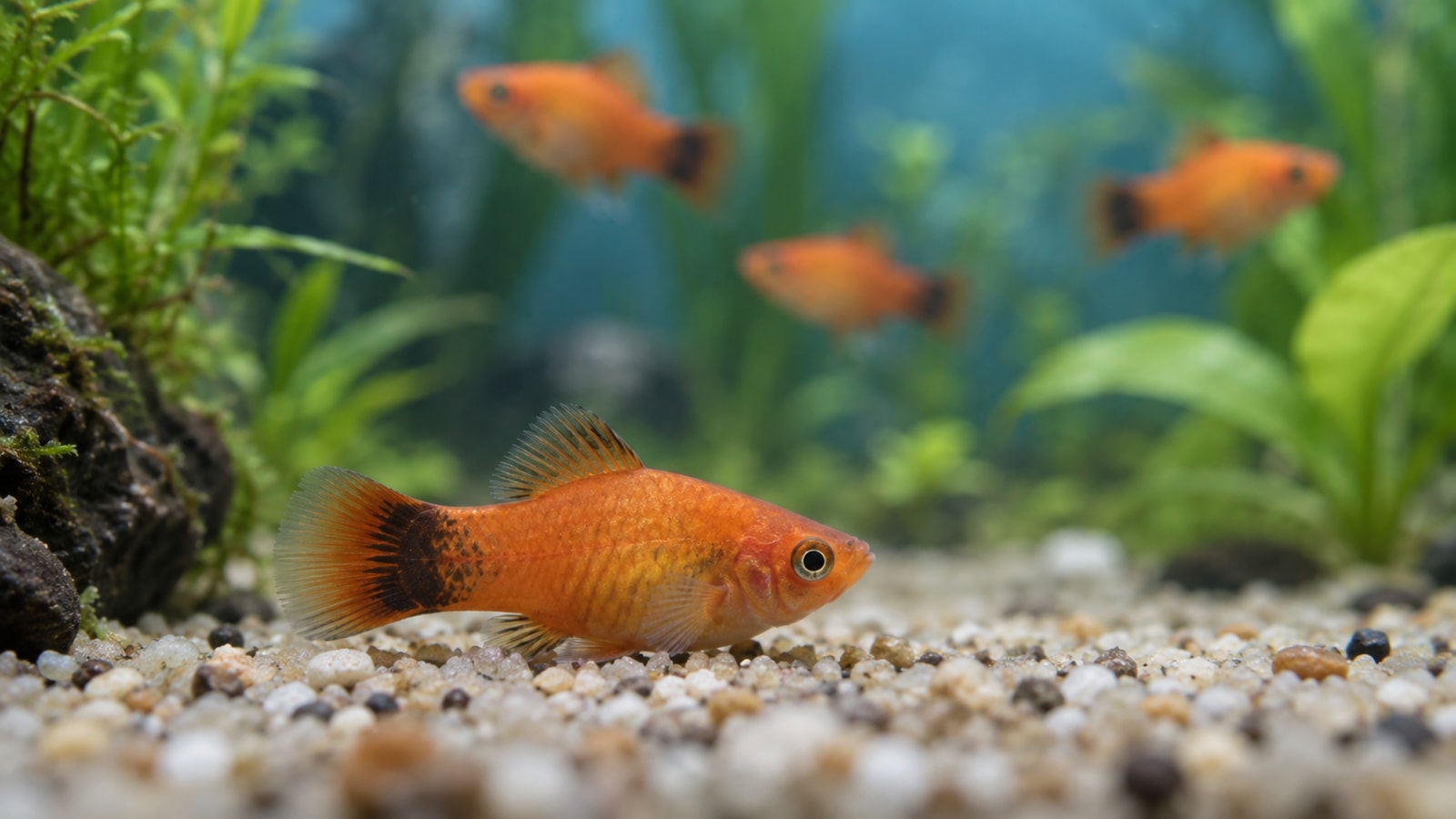
Fish Lying on the Bottom of the Tank: Test the Water First
A fish lying on the bottom of the tank is usually reacting to the water: ammonia, nitrite, temperature or oxygen. What to check first and what to do today.
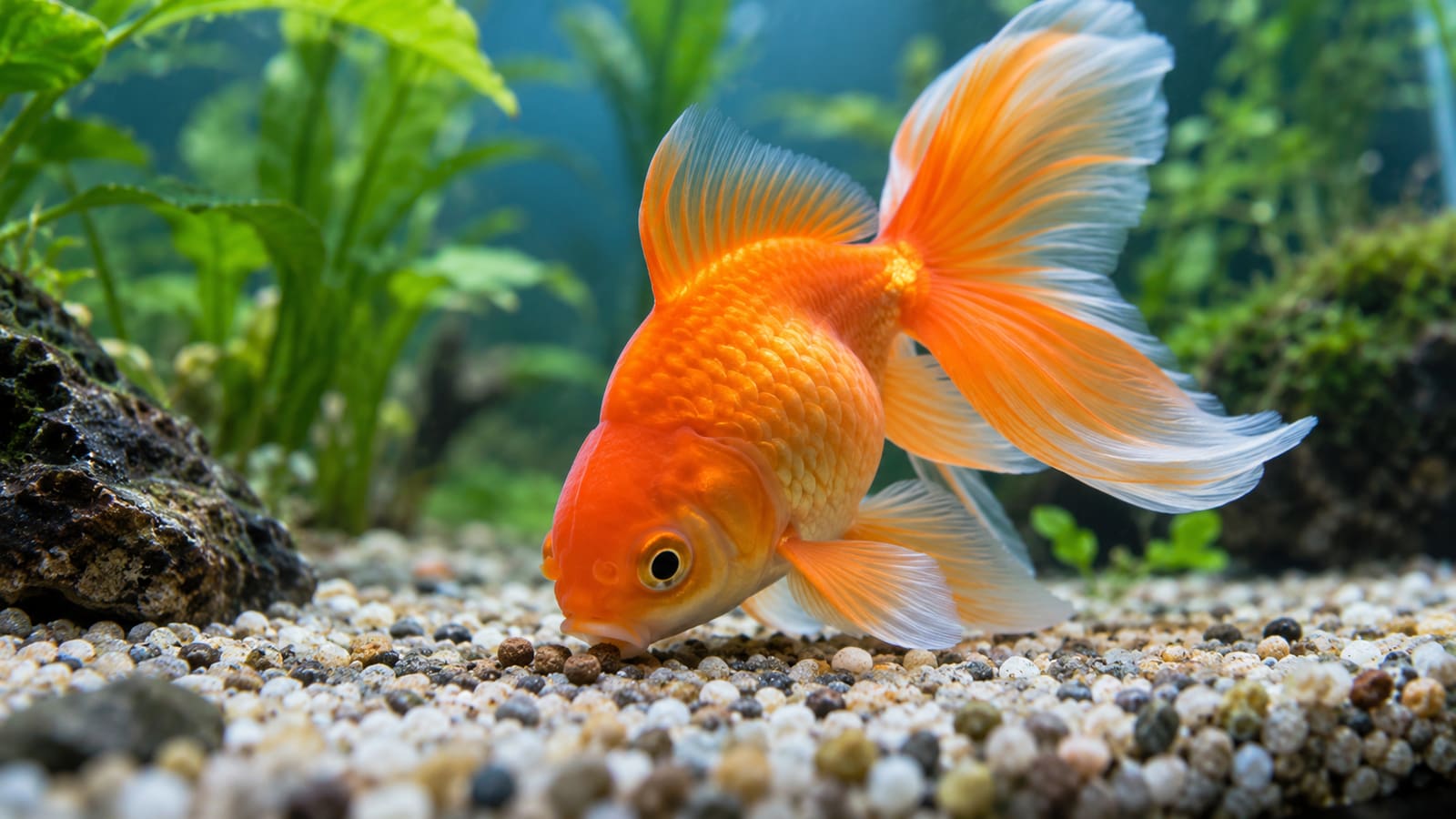
How Often to Feed Goldfish: Schedule by Age and Water Temp
How often to feed goldfish: once or twice a day, what they eat in 1-2 minutes. See how much in grams and a pond feeding chart by water temperature.