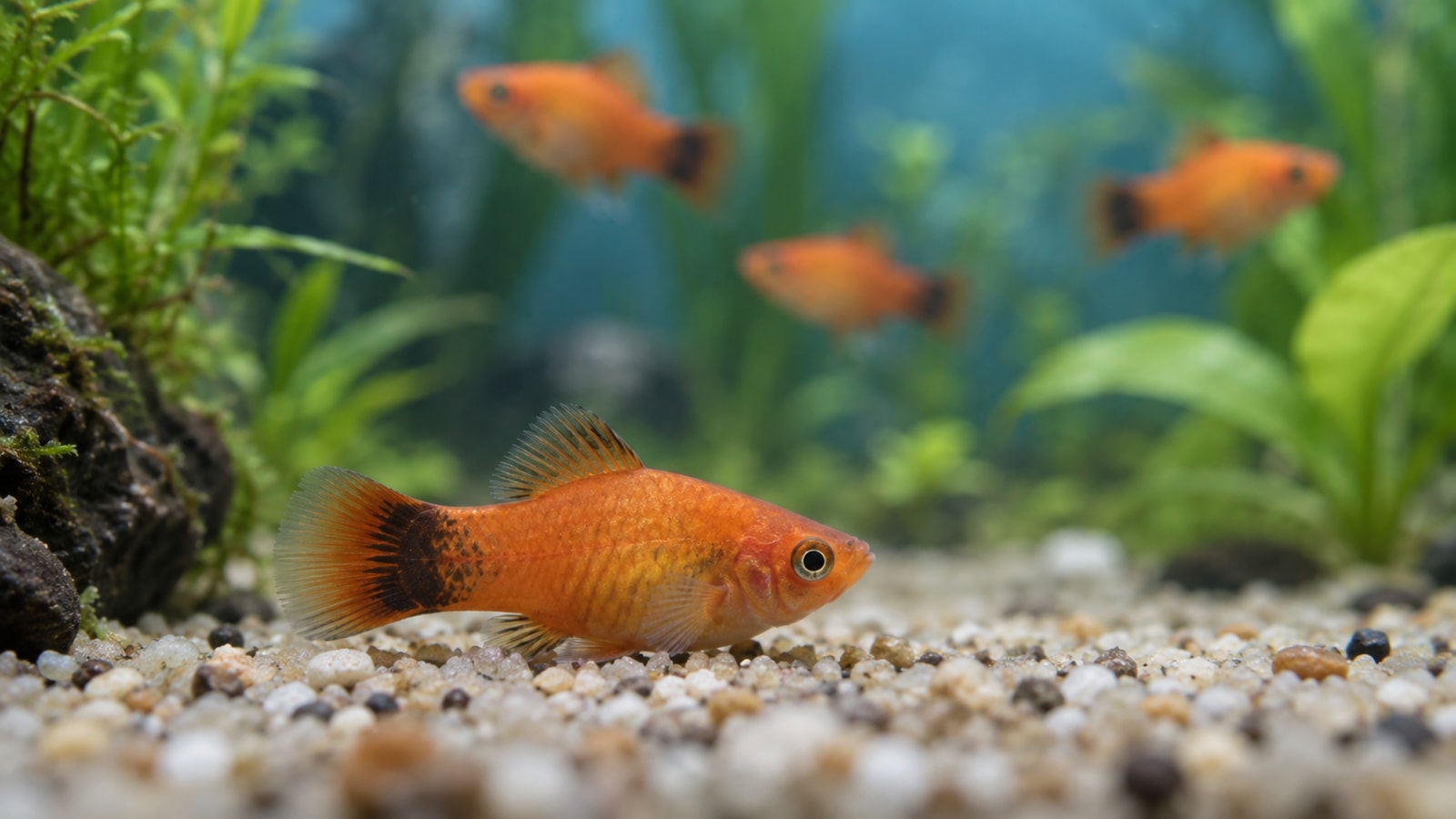
Test ammonia, nitrite and temperature today. If ammonia or nitrite reads above zero, change 30–50% of the water with dechlorinated, temperature-matched water. In a tank under two months old, that is the cause far more often than disease.
Some links go to retailers. As an Amazon Associate, Aquarium for Beginners earns from qualifying purchases, at no extra cost to you.
The numbers
| What else you see | How to confirm | What to do | |
|---|---|---|---|
| Ammonia or nitrite | Several fish affected, fast gills, clamped fins. Tank under 2 months old | Test kit reads above 0 ppm | Change 30–50% of the water today, and daily until it reads 0 |
| Temperature | Sluggish fish, heater light off or tank feels cold. Or very warm after a hot day | Thermometer outside 74–80°F for tropical fish | Fix the heater, or cool slowly. No more than 2–3°F an hour |
| Low oxygen | Other fish gasping at the surface, still water surface | Improves quickly when you add an air stone | Add an air stone, lower the water level to the filter output, cool a hot tank |
| Stress from a new move | Only the new fish, in its first day or two | Water tests fine, fish still breathes normally | Lights off, leave it alone for a day |
| Swim bladder trouble | Fish struggles to rise, floats tilted, or sinks when it stops swimming | Water tests fine. Often after a big meal | Fast for 2–3 days, then feed small meals |
| Illness or old age | Weight loss, spots, frayed fins, one fish only | Water tests fine, other fish normal | Isolate if possible and identify the disease before medicating |
Test the water before you do anything else. A fish lying on the bottom of the tank is most often reacting to the water, not to a disease. Ammonia, nitrite, the wrong temperature and low oxygen all cause it, and all of them show up on a test kit or a thermometer within five minutes.
If ammonia or nitrite reads above zero, change 30–50% of the water today with dechlorinated water matched to the tank's temperature. In a tank under two months old, that is the cause far more often than anything else.
First: is this fish supposed to be on the bottom?
Some fish live there. Corydoras, plecos, loaches, gobies and most catfish spend the day on the substrate. Bettas, especially long-finned ones, often rest on the bottom or on a leaf. None of that is a problem, and betta lying on the bottom covers how to tell resting from sick.
The question is whether the behaviour has changed. A fish that normally swims mid-water and is now on the bottom, or a bottom-dweller that has stopped moving around, is telling you something. Watch for:
- Breathing. Gills moving much faster than usual mean the fish is struggling to get oxygen, whatever the reason.
- Colour. A fish that has gone pale or dark is stressed.
- Fins. Fins pressed against the body are called clamped fins and are a general sign of stress.
- Reaction. A resting fish swims off when you come close. A sick one does not.
Step 1: test the water now
The table above lists every common cause. Four of them are about the water, and they are the ones to rule out first because they affect every fish in the tank.
- Test ammonia and nitrite. Both should read 0 ppm in a cycled tank. Anything above that explains the behaviour.
- Check the thermometer. Most tropical fish want 74–80°F. See what temperature a fish tank should be for species ranges.
- Look at the other fish. If several are at the surface gulping, oxygen is low.
- Think back 48 hours. A water change, a new fish, a new decoration or a cleaned filter is often the trigger.
Use a liquid test kit if you can
Test strips read in broad bands and often show 0 when ammonia is at 0.25 ppm, which is already enough to stress fish. A liquid kit is more accurate, and it lasts for hundreds of tests.
If the water is the problem
Ammonia or nitrite above zero. Change 30–50% of the water today, using a dechlorinating conditioner and water at the same temperature as the tank. Test again tomorrow and repeat until both read zero. Feed very lightly, or not at all, for a day or two. Do not clean the filter media in tap water while this is happening. The bacteria in it are what will fix the problem long term, and in a new tank they are still growing, which is what the nitrogen cycle is. There is a full walk-through of how to change the water safely. For nitrite, a small dose of aquarium salt also protects the fish while you work on it: see how to lower nitrites.
Temperature. If the tank is cold, check the heater is plugged in and its light comes on. If it is too hot after a heatwave, turn off the lights, float a sealed bag of ice or a bottle of cold water, and bring it down slowly. A sudden swing of more than a few degrees is its own shock.
Oxygen. Add an air stone, or lower the water level so the filter output splashes and breaks the surface. Warm water holds less oxygen, so heat and low oxygen often come together.
If the water is fine
Then look at the fish itself.
It is new. A fish that has just come home often hides or sits on the bottom for a day or two. Turn the lights off, do not feed it the first day, and leave it be. If the transfer was rushed, read how to acclimate fish before the next one.
It struggles to swim up, or floats at an angle. That points at the swim bladder, the organ that keeps a fish level. In bettas it is especially common: see swim bladder trouble in bettas. The most common cause is constipation or a large meal of dry food. Stop feeding for two or three days, then feed smaller meals of food that has been soaked first.
It is one fish, and it is losing weight or shows spots, frayed fins or swelling. That is an illness, and the treatment depends on which. Move the fish to a separate container if you can, and identify the disease before adding any medication. Medicating the whole tank for an unknown cause can make things worse.
It is old. Many small community fish live three to five years. An old fish may slow down and spend more time resting before it dies, with nothing wrong with the tank. When fish die one after another, though, it is rarely age. See why do my fish keep dying.
The one thing worth taking from this
When one fish lies on the bottom, the tank is often speaking for all of them. Test the water before you blame the fish, and before you add any medicine. A water change is safe whatever the cause, and it fixes the most common one.
Questions people ask
Mentioned in this guide
Related guides
Why Is My Goldfish Turning Black? Check the Ammonia First
Black patches on a goldfish are often healing ammonia burns, which means the water was bad recently. Otherwise it is a natural colour change. How to tell which.
Betta Lying on the Bottom of the Tank: Resting, Cold or Sick?
Bettas rest on the bottom more than most fish, and often it means nothing. How to tell a resting betta from a cold or sick one, and what to check first.
Why Do My Fish Keep Dying? Work Out When, Then Why
When fish keep dying one after another, the timing names the cause: a new tank, a water change, new fish or a neglected tank. How to find yours and stop it.