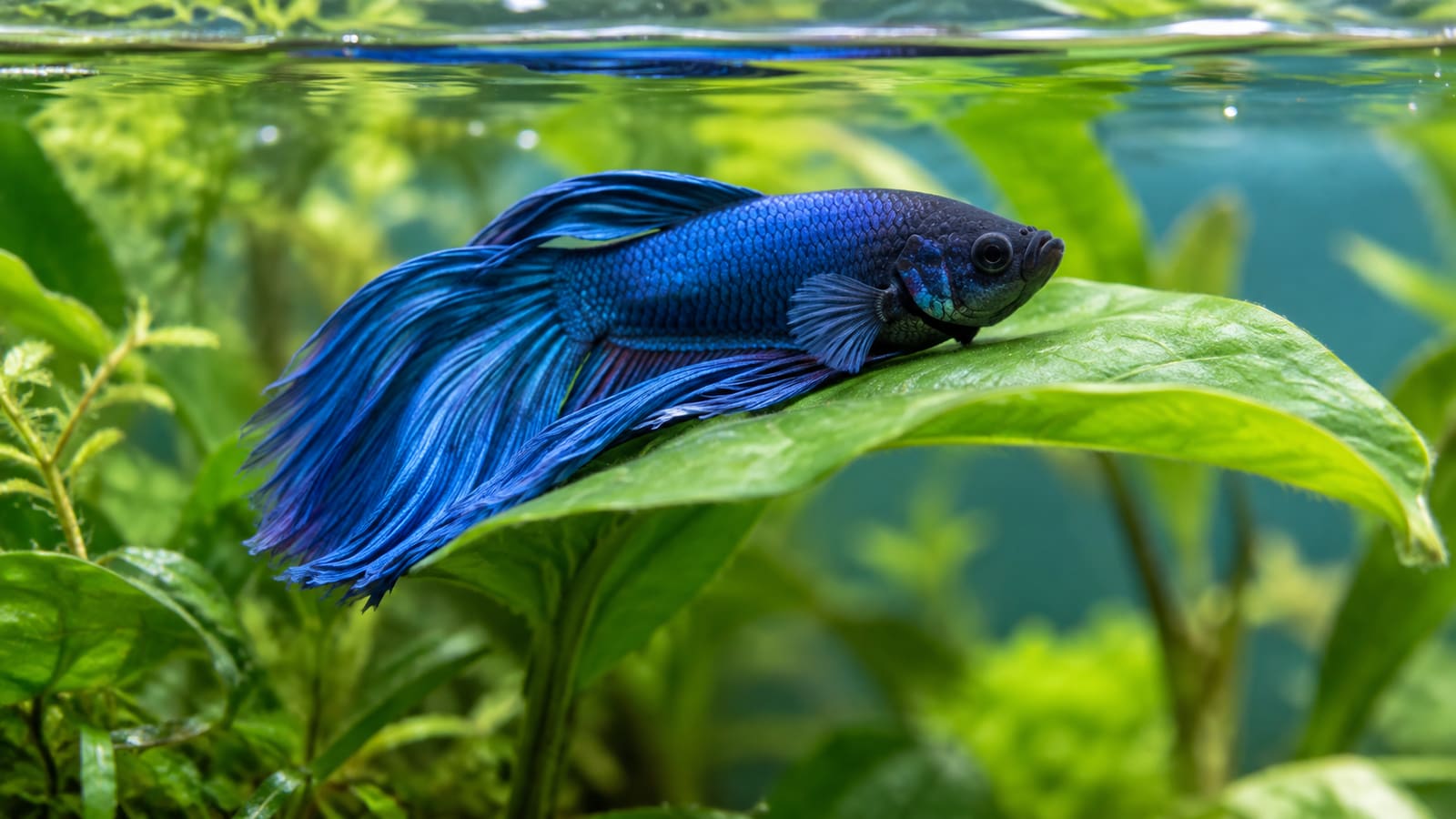
Stop feeding for two to three days, keep the water at 78–80°F, and lower the water level so the fish can reach the surface easily. Then feed smaller meals of soaked food. If the scales start sticking out like a pine cone, it is dropsy instead, which is far more serious.
Some links go to retailers. As an Amazon Associate, Aquarium for Beginners earns from qualifying purchases, at no extra cost to you.
The numbers
| Most likely cause | What else you see | What to do | |
|---|---|---|---|
| Floats at the top, can't swim down | Overfeeding, constipation or swallowed air | Swollen belly, often after a big meal of dry pellets | Fast 2–3 days, then feed small soaked meals |
| Sinks, struggles to leave the bottom | Constipation, cold water, or poor water quality | Lethargy, clamped fins, little or no waste | Test the water, check the heater, fast 2–3 days |
| Swims tilted or on its side | Digestion, or a body shape prone to it | Short, round-bodied bettas get it more often | Fast, then switch to smaller, more frequent meals |
| Swollen, with scales sticking out | Dropsy, not swim bladder trouble | Pine-cone scales seen from above, bulging eyes | Isolate and treat for dropsy today |
| Keeps happening, or never improves | Infection, injury or a permanent problem | No change after a fast and clean water | Make the tank easy to live in: shallow water, resting leaves |
Swim bladder disease is not a disease. It is a set of symptoms, and in bettas the usual cause is the food. The swim bladder is a small gas-filled organ that lets a fish float level without effort. When a betta overeats or gets constipated, the swollen stomach and gut press on it, and the fish floats at the top, sinks to the bottom, or swims on its side.
Stop feeding for two to three days, keep the water at 78–80°F, and lower the water level so the fish can reach the surface easily. Most bettas swim normally again within a few days.
Is it swim bladder, or something else?
The table above lists the common patterns. Two quick checks rule out the most serious alternatives.
- Look down at the fish from above. If the scales stick out from the body like an opened pine cone, it is not swim bladder trouble. That is dropsy, which needs treatment today.
- Test the water. If ammonia or nitrite reads above zero, the fish is reacting to the water, and the fix is a water change first. See fish lying on the bottom of the tank for that case.
A betta resting on a leaf or the bottom, with a normal body shape and normal swimming when it moves, is not sick. Bettas, especially long-finned ones, rest a lot.
Why bettas get it so often
Their stomachs are tiny. A betta's stomach is roughly the size of its eye. A portion that looks small to us, five or six pellets twice a day, is far more than it can handle.
Dry food swells. Pellets and flakes absorb water and expand after they are eaten. A betta that eats eagerly at the surface can also gulp air with them. Which pellets suit a betta's mouth is in the best food for betta fish.
Cold slows digestion. Bettas are tropical fish. In water below about 76°F their digestion slows down, food sits in the gut longer, and constipation follows. An unheated bowl or a tank in a cold room is a common root cause.
Body shape. Selective breeding has produced bettas with short, round bodies, and in those the organs sit closer together. They get swim bladder trouble more easily and more often.
The three-day fix
- Stop feeding for two to three days. A healthy adult betta loses nothing from a short fast, and it gives the gut time to empty.
- Check the heater and keep the water at 78–80°F. Warmth speeds up digestion. See what temperature a fish tank should be.
- Lower the water level to a few inches, or add a leaf hammock near the surface, so the fish can rest and breathe without fighting to swim.
- Turn the filter flow down if the fish is being pushed around.
- Test the water, and do a water change if ammonia or nitrite reads above zero.
- After the fast, offer a small portion of thawed frozen daphnia, which works as a gentle laxative.
How much a betta actually needs
Two to three pellets, once or twice a day, is plenty for an adult betta. Soaking pellets in a little tank water for a few minutes before feeding lets them swell outside the fish rather than inside it. Many keepers skip one day of feeding a week.
If the fast doesn't work
If the betta is no better after three days of fasting in warm, clean water, the cause is probably not food.
Epsom salt. If the belly is still swollen, a few days in a separate container with Epsom salt can help a constipated fish pass waste. Epsom salt is magnesium sulphate, not aquarium salt. Use about one tablespoon per five gallons, dissolved before the fish goes in, and match the temperature to the main tank.
Infection or injury. A bacterial infection can affect the swim bladder directly, and so can a fall or a fight. These are harder to treat. A betta that also stops eating, loses colour or develops other symptoms needs a diagnosis before any medication.
A permanent condition. Some bettas, particularly short-bodied ones, never fully recover, or have repeated episodes. They can still live a normal lifespan. Keep the water shallow, give them resting spots near the surface, keep the flow gentle and feed small meals.
How to prevent it
Feed less than you think, soak dry food first, keep the water warm and steady, and skip one day of feeding a week. That routine prevents most cases before they start.
What you need
| Item | Why |
|---|---|
| Small adjustable heater | Holds 78–80°F so digestion keeps moving. Suits a 5–10 gallon betta tank |
| Digital thermometer | The only way to know the heater is doing its job |
| Betta leaf hammock | A resting spot near the surface, so a struggling betta does not have to swim up to breathe |
| Epsom salt, unscented | For the separate container, only if a fast has not worked |
Use plain, unscented Epsom salt only. Bath salts with fragrance or oils are toxic to fish.
The one thing worth taking from this
In a betta, swim bladder trouble almost always starts with the food bowl or the thermometer. Check for pine-cone scales first, then fast the fish, warm the water and make it easy to reach the surface. Most bettas are back to normal within days.
Questions people ask
Mentioned in this guide
Related guides
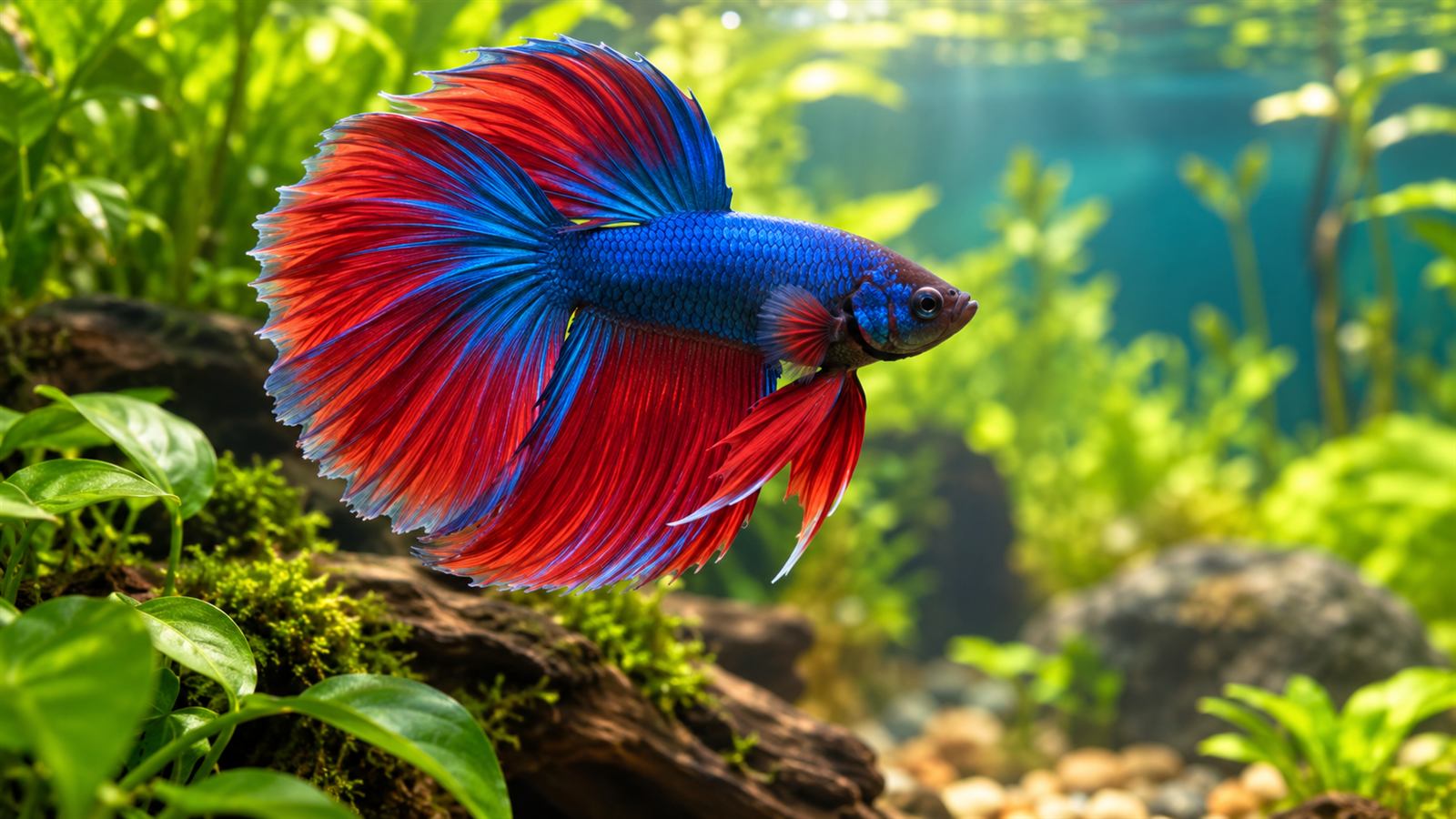
Betta Fin Rot: Signs, Treatment, and When to Medicate
Betta fin rot usually starts with dirty or cold water. How to tell it from tail biting, the clean-water fix, when to medicate, and how fins grow back.
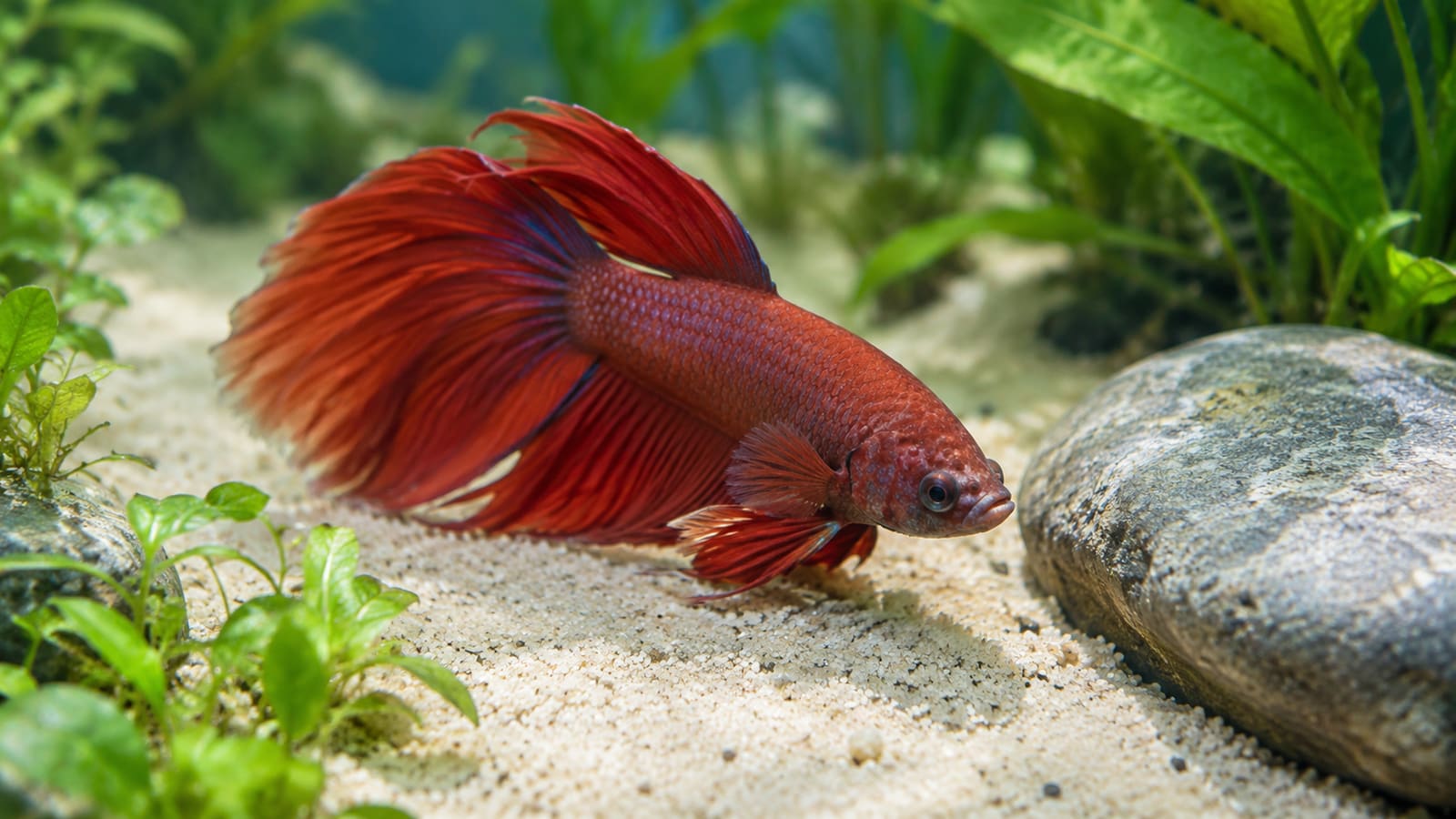
Dropsy in Bettas: The Pine-Cone Sign and What You Can Still Do
Dropsy in a betta shows as a swollen body with scales raised like a pine cone. What causes it, whether it spreads, early treatment, and when it is too late.
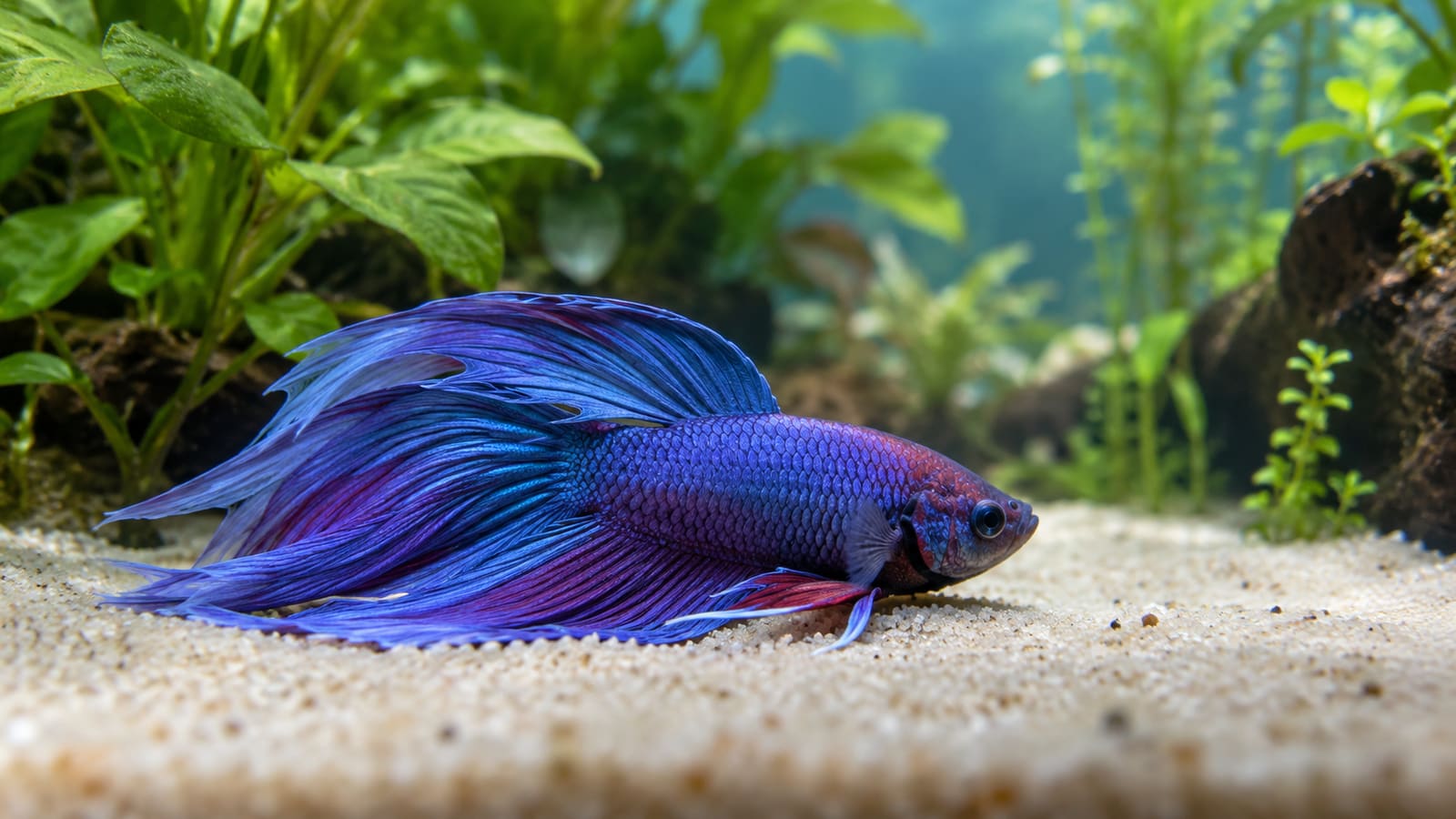
Betta Lying on the Bottom of the Tank: Resting, Cold or Sick?
Bettas rest on the bottom more than most fish, and often it means nothing. How to tell a resting betta from a cold or sick one, and what to check first.