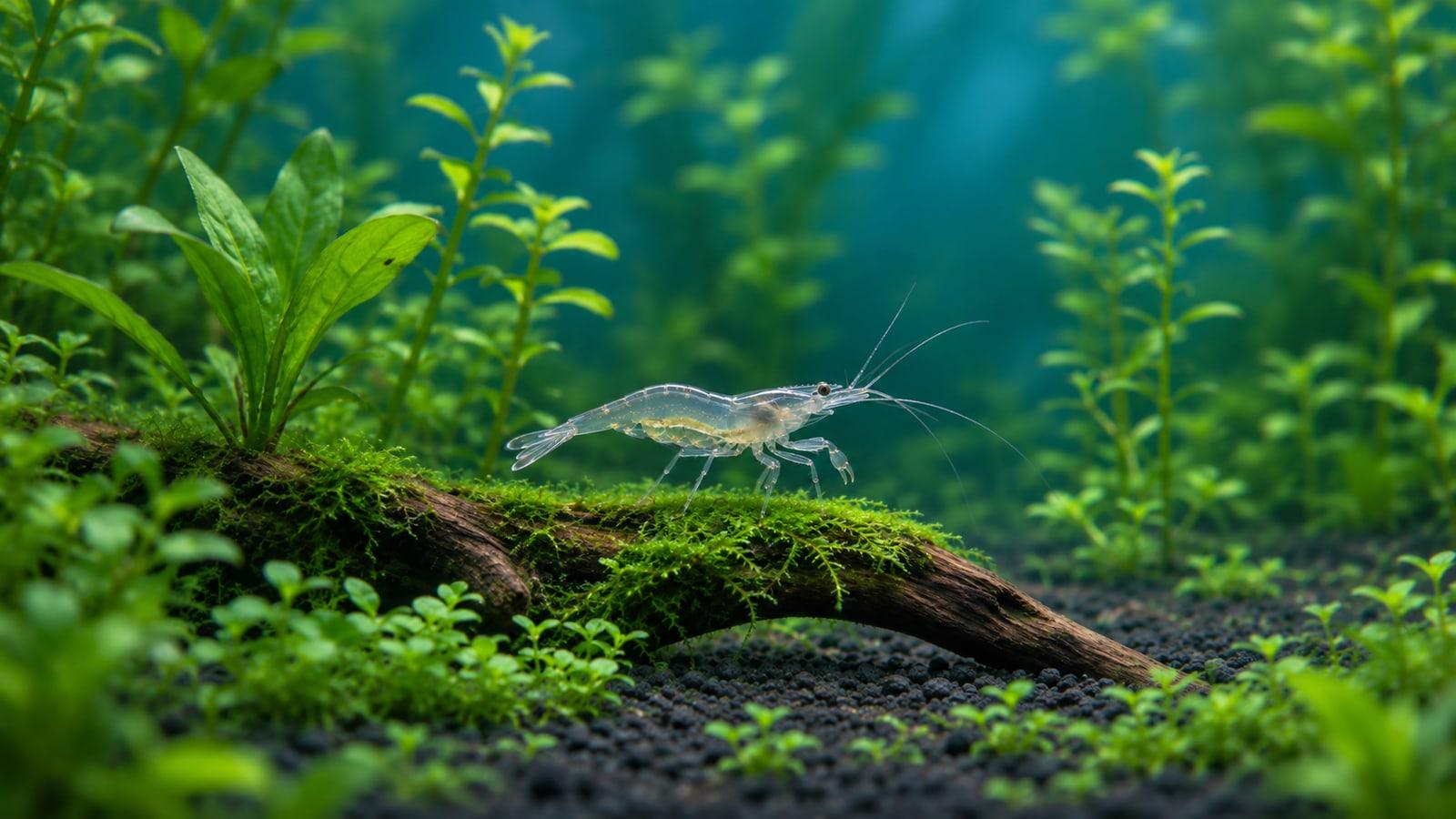
Deaths in the first days are most likely the trip and the water; several at once point to the water; one at a time after months is usually age. Based on field studies and keeper reports, not our own tanks.
The numbers
| When it died | Most likely cause | What to do |
|---|---|---|
| Within 1–3 days of purchase | The trip, a rushed move, chlorine or a big change in water | Drip acclimate the next ones over an hour or more |
| In the first few weeks | Uncycled tank, ammonia or nitrite, a fish eating them, copper | Test the water; check tank mates and medicines |
| One at a time, after months | Old age, especially large adults or females that carried eggs | Normal; nothing to fix |
| Several at once, any time | The water or a toxin, not age | Test the water today, change some, look for anything new |
| About a year after a small one was bought | Old age | A full life |
Ghost shrimp live about a year. A field study of the common US species found adults die within their first year, after breeding. A store shrimp is usually already an adult of unknown age, so a few months in your tank can be most of a life.
That explains the pattern keepers describe: the ones that get past the first few days usually have months left, and deaths in those first days are most likely the trip and the tank, not age. This page is built from field studies of wild shrimp, a university species database, hobby care guides and keeper reports. We found no study that has measured ghost shrimp lifespan in home tanks, and we have not kept them for this page. The table above sorts deaths by when they happen, which is the quickest way to tell old age from a problem you can fix.
How long do ghost shrimp live?
About a year from hatching. The best evidence is a field study by Beck and Cowell (1976), who sampled a population of eastern grass shrimp, Palaemonetes paludosus, every month for a year in the Hillsborough River near Tampa, Florida. Their finding: "Longevity was confined to 1 yr", with adults dying after spawning between April and October. Animal Diversity Web, the University of Michigan's species database, puts it the same way: "Eastern grass shrimp are confined to a one year life cycle."
The eastern grass shrimp is the ghost shrimp most US stores sell, but the name is a shop label that covers more than one species. The breeding guide explains what "ghost shrimp" really are; the lifespans of the others are further down this page.
The ghost shrimp life cycle
A female carries her eggs under her tail for about two weeks in warm water, and the larvae become tiny shrimp within days. The young reach maturity, at about 0.8 in (20 mm), in two to three months when the water is above 79°F (26°C), and in four to five months when it is cooler (Beck and Cowell, 1976). They breed, and in the wild they die within the year. Full grown, they reach about 2 in (50 mm). The breeding guide covers the eggs and larvae in detail.
Does a tank add time?
It might. A tank has no predators, steady food and no wild breeding season, any of which could add months. Or it might not. A 2019 compilation of longevity data in decapod crustaceans gives one year for the eastern grass shrimp, taken from the Florida study, and no figure from shrimp kept in captivity. We found no tank study either, so the honest answer is about a year, with keeper reports of more, covered below.
How old is a ghost shrimp when you buy it?
Older than most buyers assume. No shop labels a shrimp's age, and no source we found states it, so what follows is our reasoning from size.
The Shrimp Farm, a shrimp retailer, sells its ghost shrimp at about 1 inch and says they reach about 2 inches when fully grown. The eastern grass shrimp matures at 20 mm, about 0.8 in, and in the Florida study that took two to three months in warm water and four to five in cool water. So a 1-inch shrimp is most likely already an adult with at least a couple of months of its year behind it. The same shop's care sheet adds that store shrimp "may be smaller juveniles", so a small one may be younger. A large shrimp near 2 inches is close to full size and may be in its last months.
Then there is how they are kept. The same retailer notes ghost shrimp are "commonly found being sold as feeder shrimp to be fed to larger fish", and its care sheet warns that "a ghost shrimp kept in a dirty feeder tank may not make it more than a couple of weeks", and that feeder shrimp "may have been through the wringer and not live much longer even with excellent care". That is a seller's view, not a measurement, but it fits what keepers see. In one forum thread, two keepers report that shrimp from one store lived noticeably longer than shrimp from another.
Our suggestion, which no source tests: buy from a tank with no dead shrimp in it, pick the smaller adults, and expect to lose one or two in the first week.
Why are my ghost shrimp dying? Check when it happened
If you are asking "why did my ghost shrimp die?" or "why do my ghost shrimp keep dying?", the timing is the best clue. Hobby guides such as Fishkeeping World list the usual causes: transport shock, rushed acclimation, chlorine or chloramine, and ammonia or nitrite. None says which cause fits which death. Sorting them by timing is our own reading, not a source's, but it narrows the list.
In the first few days
The trip and the change of water. A shrimp that has been bagged, carried home and dropped into water with different hardness, temperature and chlorine content is under stress it may not survive, and feeder stock may arrive already weak. Keepers report that ghost shrimp moved into very different water chemistry die quickly.
Shrimp get the slow version of acclimation: drip acclimate them over an hour or more. Use a dechlorinator on tap water, every time.
In the first few weeks
Usually the tank. A tank that has not cycled builds up ammonia and nitrite, and so does overfeeding in a tank that has. Both are on the hobby guides' list of shrimp killers.
Then the other residents. Ghost shrimp are small, and any fish whose mouth fits one may eat it. Keepers report bettas eating small shrimp, which is why a betta may or may not leave them alone.
And medicine. Seachem's label for its copper treatment says to "Remove all invertebrates - these are extremely sensitive to copper and will not tolerate treatment with a copper-based medication." Copper is one of the things on the list of what kills fish and shrimp in a tank. Treat fish elsewhere.
One at a time, after months
Most likely age, and nothing you did. A shrimp that was an adult when you bought it, and has lived several months with you, may simply have reached the end of its year. That is especially likely for the largest shrimp, and for a female that has just carried eggs: in the wild, adults die after spawning.
So do ghost shrimp die after laying eggs? Often soon after, yes. No source we found says the eggs themselves kill her; breeding simply comes near the end of a one-year life. The breeding guide covers that cycle.
Several at once
Probably not age. Even in the wild, where a whole generation dies within its year, the deaths in the Florida study were spread from April to October, not packed into one week. In one forum thread about exactly this, a keeper's shrimp, bought as adults seven months earlier, started dying together; another keeper doubted a whole group dies of old age at once and suspected a contaminant, or a fish stressing them. Test for ammonia and nitrite today, change some water, and think about anything new in or near the tank: air freshener, bug spray, soap or lotion on hands, a new decoration or a medicine.
A note on moulting
Shrimp grow by shedding their shell, and a moult that goes wrong can kill one. Guides written for dwarf shrimp, not ghost shrimp, say very soft or very hard water raises the risk of failed moults, and that large, sudden water changes can upset the timing. Small, matched water changes avoid both.
The lifespan of ghost shrimp, species by species
"Ghost shrimp" in a US store can be one of several species, and the breeding guide explains how hard they are to tell apart. Every lifespan we found for them was measured in the wild, and all sit at about a year or less.
| Shrimp sold as "ghost shrimp" | Lifespan in the wild | Where the figure comes from |
|---|---|---|
| Eastern grass shrimp (Palaemonetes paludosus) | About a year | Field study, Florida river (Beck and Cowell, 1976) |
| Mississippi grass shrimp (Palaemonetes kadiakensis) | One-year life cycle; all adults gone by September | Field study, one West Virginia wetland (Aderman, 1998) |
| Daggerblade grass shrimp (Palaemonetes pugio) | 6 to 13 months; summer-hatched shrimp shorter | Field study, two South Carolina estuaries (Alon and Stancyk, 1982); Animal Diversity Web gives the same range |
| Whisker or long-arm shrimp (Macrobrachium lanchesteri) | No published figure we could find | — |
The Smithsonian notes that the Mississippi grass shrimp "is sold through the aquarium trade". For the daggerblade, the study found a clear split by season: at one South Carolina site, shrimp hatched in summer lived 6 to 7 months and the winter generation 9 to 10; at the other, 9 to 10 and 12 to 13. The authors put the differences down to "numerous environmental factors". That is a pattern in wild estuaries, not a tank result, and it is no reason to keep a tank cold. Warm water also speeds growth to adulthood, so our reading is that a warm tank may move the year along faster. No study has tested that in a tank.
If you have read that ghost shrimp live 3 to 5 years, that figure belongs to a different animal: the bay ghost shrimp, a marine shrimp that burrows in the sand of Pacific coast tidal flats and is used as fishing bait. It is not the freshwater shrimp in a fish shop's tank.
Can ghost shrimp live two years?
Keepers report it. In forum threads, one keeper says ghost shrimp live "for 18 months in ideal conditions" and that "8-10 months is common in community tanks"; another says two years under good conditions. Shrimp shops say much the same: The Shrimp Farm gives "1-1.5 years" on its care sheet and "1-2 years" on its product page.
None of them gives a source. The one source we could trace for a figure of 18 to 24 months is a hobby wiki that credits its lifespan data to a 1996 database entry, which we could not open. Petco's freshwater shrimp care sheet says "up to 3 years with proper care, depending on species", one line for every shrimp the sheet covers rather than a figure for ghost shrimp.
So two years is possible for a shrimp bought young and kept well, by keeper report. Every measured figure we found says about a year. Plan on a year, and count anything past it as a bonus.
Signs a ghost shrimp is old
There is very little reliable here. Keepers report that ghost shrimp turn cloudy or whitish near the end; one keeper's shrimp used to "last about 6 months, turn cloudy/white, and die". The Shrimp Farm's care sheet agrees that a shrimp may turn white at the end of its life, but notes that shrimp can also turn white just before a moult. We found no study describing how an old ghost shrimp looks or behaves, and no reliable age at which the change starts.
The other clues are circumstantial: a large adult, months in your tank, and perhaps a clutch of eggs carried recently.
What is not a sign of age: a clear, empty shell on the gravel. That is a moult, and the shrimp that left it is alive and hiding. Shrimp guides say adults moult every three or four weeks, and a moult often shows a split along the back. A dead ghost shrimp is different: the body is still inside it.
How to help ghost shrimp live a full year
Nothing here adds years. These steps remove the things that cut the year short.
- Add them to a cycled tank, never a new one.
- Drip acclimate them over an hour or more.
- Keep copper medicine out of their tank. Treat sick fish in a separate tank.
- Choose tank mates too small to eat them, and give the shrimp cover such as plants or moss.
- Make small, matched water changes and keep the temperature steady. The Shrimp Farm's care sheet gives 65–82°F (18–27.5°C); how to hold a tank steady covers the heater.
- Feed lightly. Uneaten food turns into ammonia.
About a year from hatching, less from the shop. Get them through the first week and, keepers report, most have months left; several deaths at once mean the water, not age. If you are choosing between shrimp, Amano shrimp vs ghost shrimp compares the two.
Sources
- Beck and Cowell (1976). Life History and Ecology of the Freshwater Caridean Shrimp, Palaemonetes paludosus (Gibbes). American Midland Naturalist 96: 52–65.
- Baranowski (2011). Palaemonetes paludosus. Animal Diversity Web, University of Michigan Museum of Zoology.
- Aderman (1998). Life history, ecology, and low pH tolerance of the freshwater prawn, Palaemonetes kadiakensis Rathbun, in a mitigated wetland of the Green Bottom Wildlife Management Area, West Virginia. M.S. thesis, Marshall University.
- Smithsonian Environmental Research Center. Palaemon kadiakensis. NEMESIS.
- Geraci (2001). Palaemonetes pugio. Animal Diversity Web, University of Michigan Museum of Zoology.
- Alon and Stancyk (1982). Variation in life-history patterns of the grass shrimp Palaemonetes pugio in two South Carolina estuarine systems. Marine Biology 68: 265–276.
- Animal Diversity Web. Neotrypaea californiensis (bay ghost shrimp, a marine burrowing shrimp).
- Puts (2024). Ghost Shrimp (Palaemon) Care: Cheap, Useful & Underrated. The Shrimp Farm (a shrimp retailer).
- The Shrimp Farm. Ghost Shrimp. Product page (a shrimp retailer).
- Fishkeeping World. How long do ghost shrimp live for? and Why are my ghost shrimp dying? Hobby FAQs, no author or sources given.
- The Aquarium Wiki. Ghost Shrimp page, footnoting a 1996 record of the Conservation Management Institute, Virginia Tech, which we could not open.
- Petco. Thriving Freshwater Shrimp: Tank, Food, & Compatibility Tips (freshwater shrimp care sheet, updated 17 July 2024). Retailer care sheet covering eight shrimp, ghost shrimp among them; read 19 November 2026.
- Seachem. Cupramine product page.
- Newton. Are my shrimp dead or moulting? Swell UK (a retailer's help guide).
- Puts (2026). Failed Molting in Shrimp. The Shrimp Farm. Written about dwarf shrimp.
- Keeper reports: aquariacentral.com, "ghost shrimp lifespan" (2007); fishforums.net, "How long can ghost shrimp live?" (2021).
- Vogt (2019). A compilation of longevity data in decapod crustaceans. Nauplius 27: e2019011.
- Hill. Amano shrimp: Spineless heroes. Practical Fishkeeping. Used only for the Amano figure in the FAQ.
- Curtis (2024). Amano Shrimp Care Sheet. The Shrimp Farm (a shrimp retailer). Used only for the Amano figure in the FAQ.
Questions people ask
Mentioned in this guide
Related guides
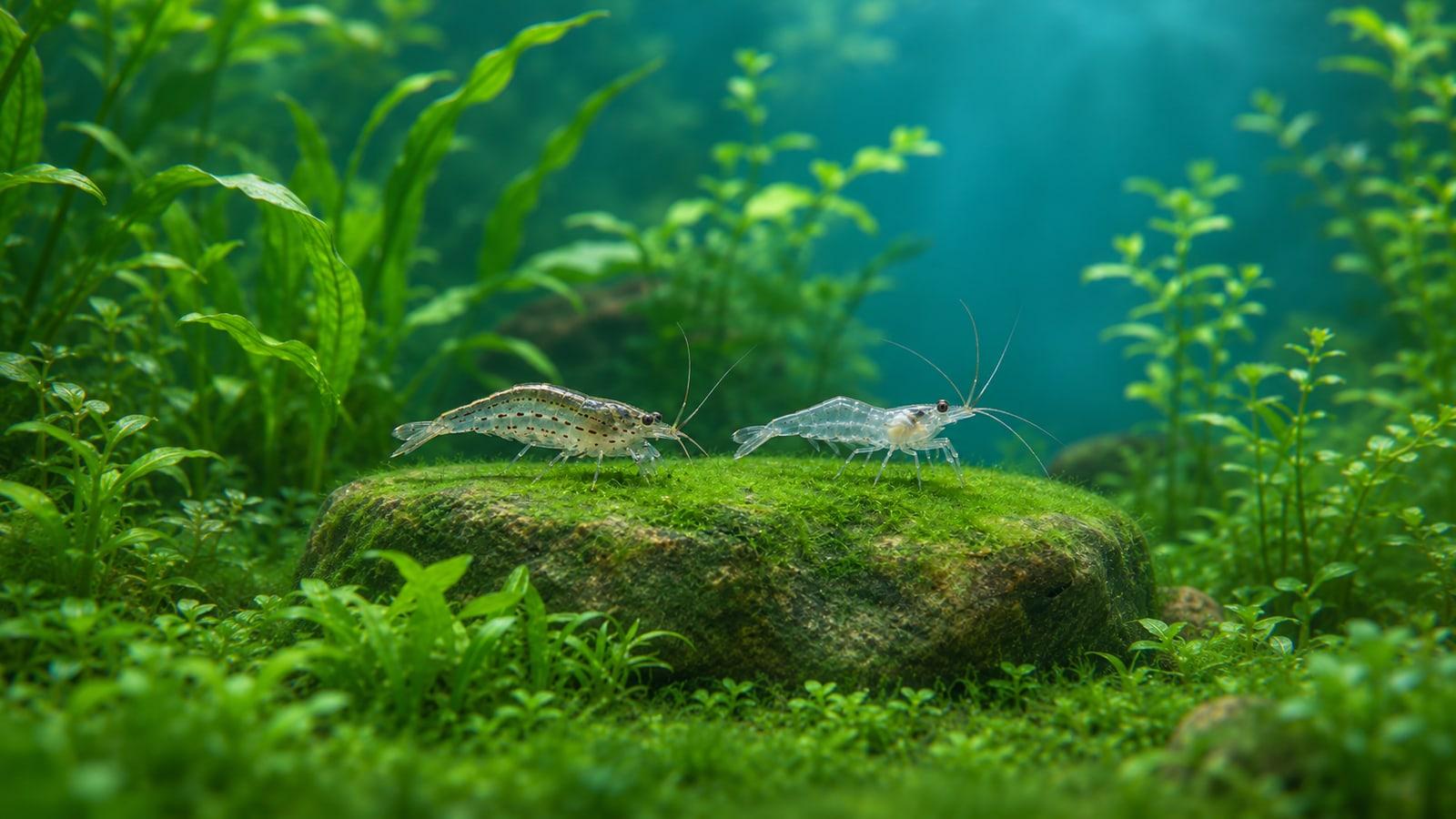
Amano Shrimp vs Ghost Shrimp: Algae Eater or Cheap Cleaner
Amano shrimp vs ghost shrimp: Amanos eat hair algae but can't breed in fresh water. Ghost shrimp cost under $1, live a year and may eat fry. Which to buy
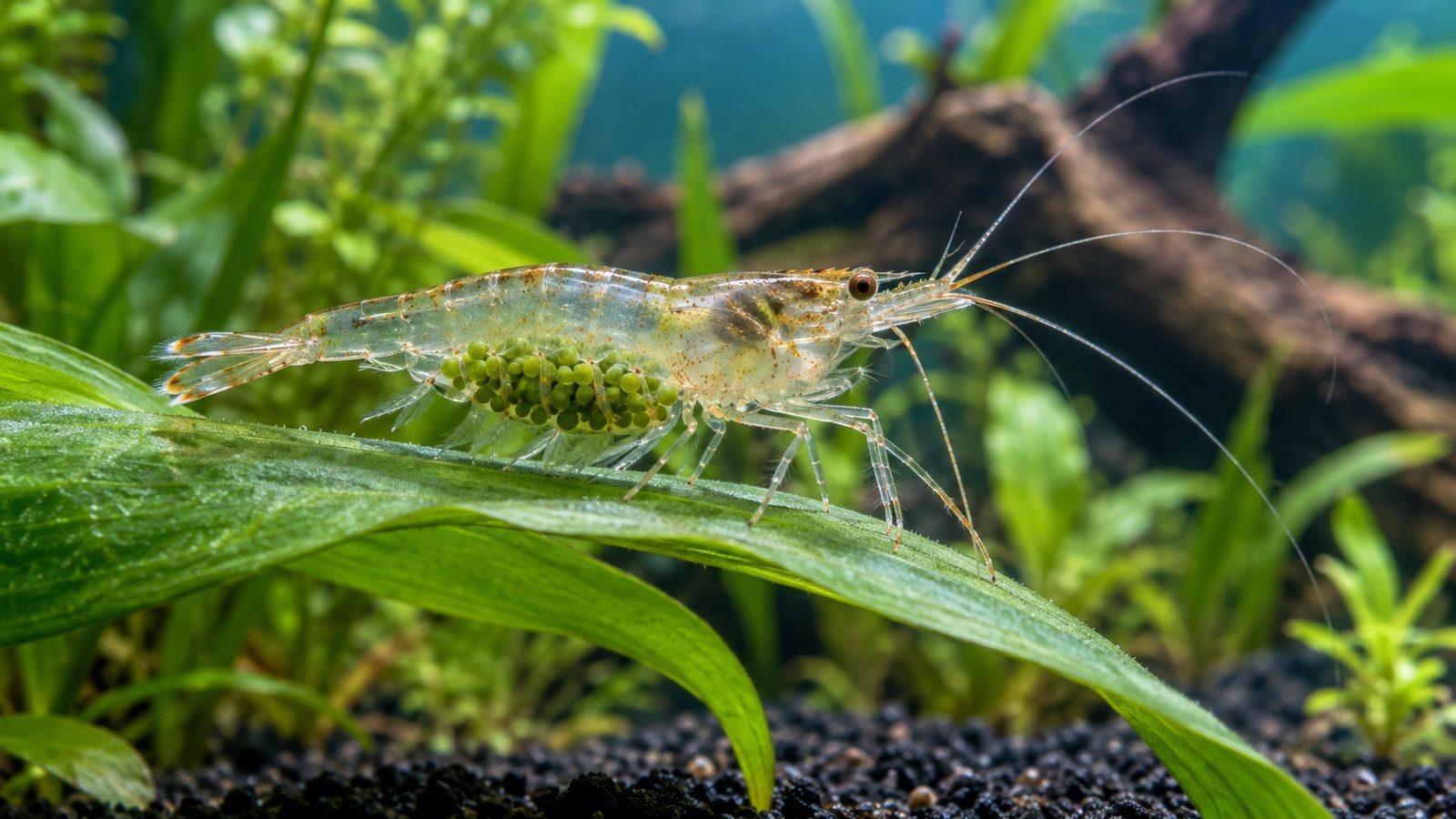
Ghost Shrimp Breeding: Eggs, Larvae and Which Ones Need Salt
Ghost shrimp breeding works in freshwater for most US ghost shrimp. How to spot the eggs, when they hatch, raising the larvae, and which kind needs salt.
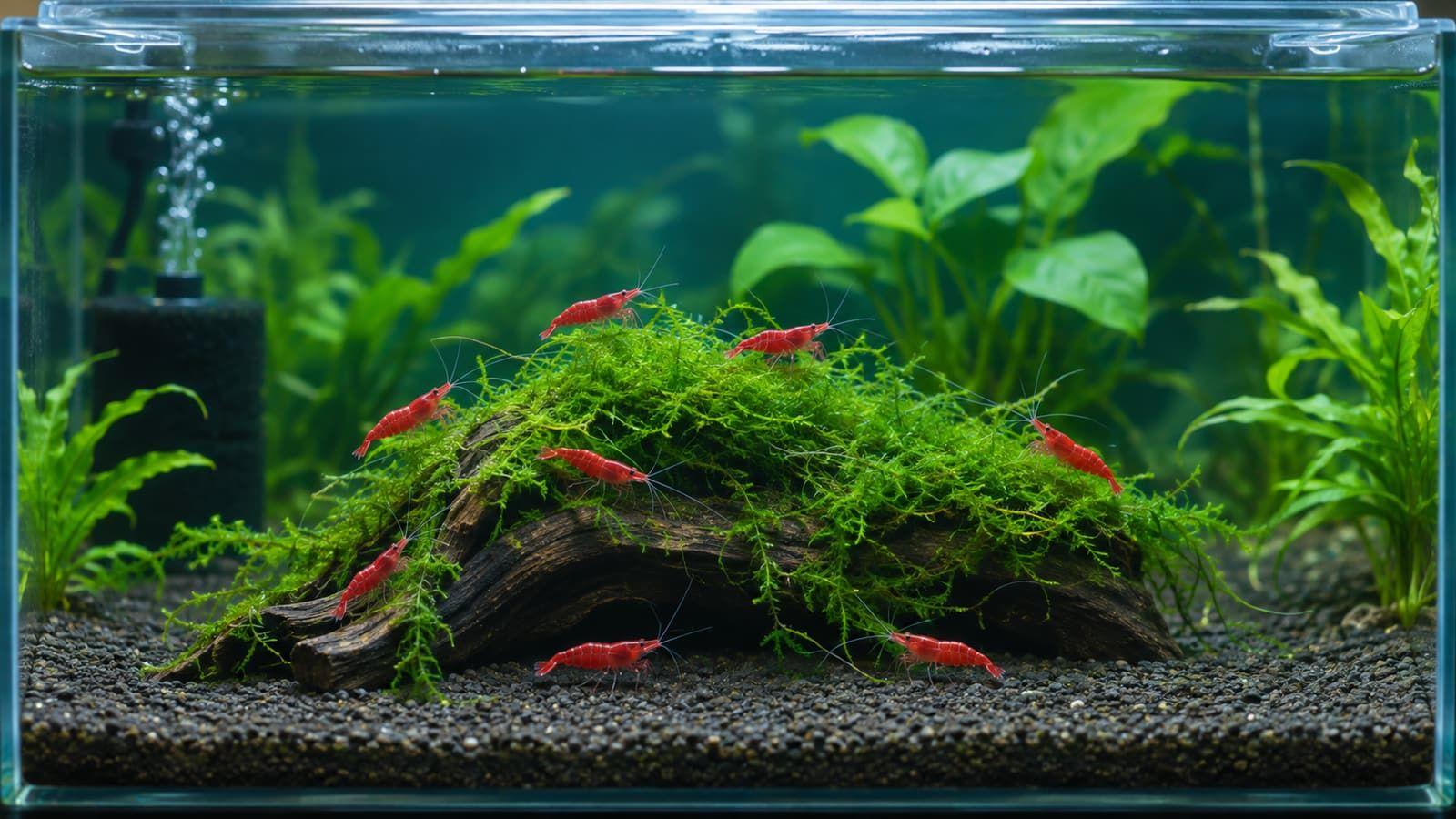
Shrimp Tank Setup: A Cherry Shrimp Tank, Step by Step
Shrimp tank setup for cherry shrimp: the tank, sponge filter, substrate and heater, the water numbers, when the cycle is done, and how many to add.