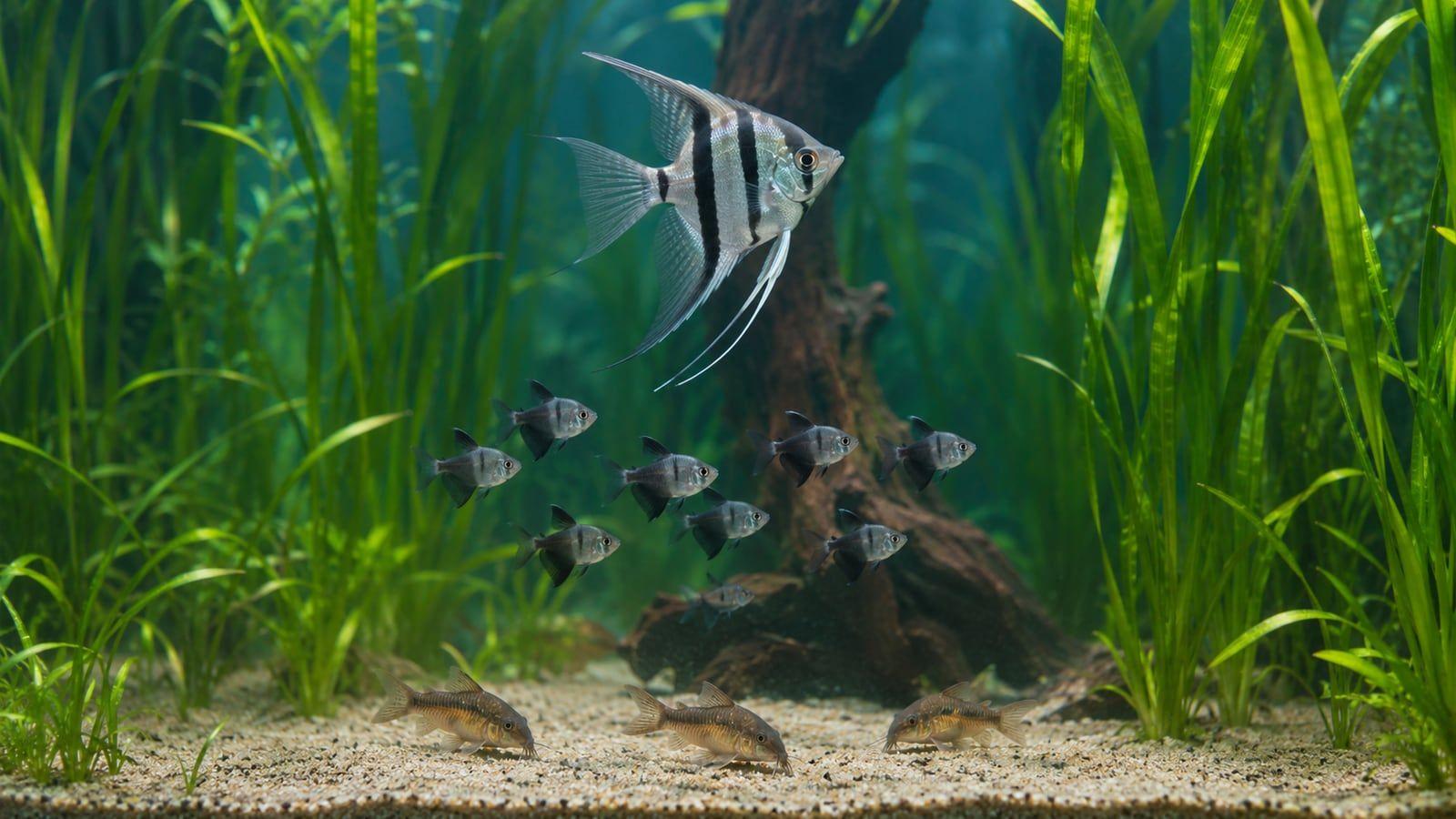
Neon tetras, guppies, shrimp, bettas and fin-nippers like tiger barbs are not. An adult angelfish is about 6 inches long and 8 tall and needs a 75 gallon. Based on species databases, care sheets, three lab studies and keeper reports, not our own tanks.
The numbers
| Tank mate | Verdict | Adult size | Temperature | Why |
|---|---|---|---|---|
| Angelfish (for reference) | — | 6 in long, 8 in tall | 75–86°F | Needs a tank 39 in long, 16 deep, 20 tall: a 75 gallon |
| Corydoras (Sterba's, bronze) | Yes | 2.6 in / 3 in | 75–82°F / 70–81°F | Bottom dwellers Aquarium Co-Op and Chewy both recommend. Groups of six |
| Bristlenose pleco | Yes | 5 in | 70–79°F | Bottom dweller; territorial only with its own kind and similar-shaped fish |
| Black skirt tetra | Yes, in a group of 12 | 2.4 in | 68–79°F | Deep-bodied; Seriously Fish says unlikely to be eaten. Nips in small groups |
| Lemon tetra | Yes, in a group of 8–10 | 1.6 in | 68–82°F | A higher-bodied, very peaceful tetra |
| Pearl gourami | Yes | 5 in | 75–86°F | Same range as the angelfish; "one of the most peaceful gouramis" |
| Bolivian ram | Yes | 3.1 in | 75–82°F | Dwarf cichlid Chewy and PetMD list; a weak competitor that wants clean water and a 36 × 18 in base |
| Cardinal tetra | Risky | 1.4 in | 73–84°F | Bigger than a neon, still bite-sized for an adult angel |
| Rummy-nose tetra | Risky | 2 in | 73–79°F | Keepers report success; wants groups of 10 and 36 in to swim |
| Kribensis | Risky | 4 in | 75–81°F | A breeding pair claims the bottom and defends it |
| Danios, rasboras, rainbowfish | Risky | Varies | Varies | Too busy for angels, says one care sheet; others list them |
| Discus | Risky, experienced keepers only | 5.5 in | 79–86°F | Warmer water; Aqueon says only above 82°F, in a larger tank |
| Neon tetra | No | 1.2 in | 70–77°F | Eaten as the angel grows; shares only 75–77°F |
| Guppy | No | 1.4 in (males) | — | Small and long-finned: eaten or nipped |
| Betta | No | — | — | Long fins; angelfish may nip them |
| Tiger barb, serpae tetra | No | 2.4 in / 1.6 in | 68–79°F / 68–82°F | Known fin-nippers |
| Dwarf shrimp | No | 3–4 cm | — | Food |
| Clown loach | No | 16 in | 75–86°F | Far too big; Seriously Fish advises against it with many cichlids |
| Goldfish | No | 6–12 in | 65–72°F | Cold-water fish |
Good angelfish tank mates are peaceful fish too big to swallow and too calm to nip: corydoras, a bristlenose pleco, black skirt tetras, pearl gouramis and Bolivian rams. Skip neon tetras, guppies, shrimp and fin-nippers like tiger barbs.
The reason is size. An adult angelfish (Pterophyllum scalare) is about 6 inches long and 8 or more tall, according to Seriously Fish; a neon tetra is about 1.2 inches without the tail. Anything that fits in an angelfish's mouth ends up in it sooner or later. All of this also assumes a tank that fits an adult angelfish, which by Seriously Fish's minimum is a 75 gallon. This page is built from species databases (Seriously Fish, FishBase), vet-reviewed and retailer care sheets, three lab studies and keeper reports. We have not kept these fish together ourselves.
Angelfish tank mates at a glance
The table above sorts which fish can live with angelfish. Yes means the fish suits an adult angelfish in a 75 gallon. Risky means some keepers make it work, under the condition in the table. No means it gets eaten, nips fins, or needs different water. Fish sizes from the species databases are measured without the tail.
- Yes: corydoras, bristlenose pleco, black skirt tetras (in a group of about 12), lemon tetras, pearl gouramis, Bolivian rams.
- Risky: cardinal tetras, rummy-nose tetras, kribensis, danios, rasboras and rainbowfish, discus.
- No: neon tetras, guppies, bettas, tiger barbs, serpae tetras, dwarf shrimp, clown loaches, goldfish.
Most sizes and temperatures come from Seriously Fish species profiles; the guppy, shrimp and goldfish figures are the ones this site's own guides use. The verdicts are ours, built from those profiles, care sheets, three lab studies and keeper reports.
Tank size comes first
Seriously Fish says adult angelfish "reach 15 cm in body length and 20 cm or more in height, so it needs a tall tank", and gives the smallest aquarium as 100 × 40 × 50 cm, or 39 × 16 × 20 inches. FishBase also gives a minimum aquarium size of 100 cm.
The smallest standard tank that meets all three numbers is the 75 gallon, at 48½ × 18½ × 21⅛ inches. A 55 is long and tall enough but only 12¾ inches front to back, which is why a 55 is too narrow for angelfish; the tank dimensions chart has every standard size.
Other sources set the bar lower. Aqueon says angelfish need "an aquarium of 55 gallons or larger when full grown". Aquarium Co-Op, a fish retailer, allows up to four adult angelfish in a 29 gallon community tank. Chewy's angelfish guide calls a 20 gallon high the minimum and a 29 better for growing out juveniles, and suggests a 55 or a 75 for a group of adults. We follow the species database, because the depth figure is the one that tells you whether an 8-inch-tall fish can turn around among its tank mates. A 20 gallon suits smaller fish; see what does fit a 20 gallon.
Cramping matters for tank mates directly. PetMD's vet-reviewed page says "angelfish in aquariums that are too small may become aggressive toward tank mates."
What makes a good angelfish tank mate
Four checks decide it. A fish has to pass all four.
Too big to swallow
Seriously Fish's profile puts it in one line: "Good community fish but may eat small fish such as tetras." In the wild it feeds mostly on small crustaceans and other invertebrates from the bottom. Angelfish are sold small and grow fast. In a lab study, angelfish raised from hatchlings on commercial dry fish food reached about 4.8 cm (1.9 inches) long, tail included, and as tall in 135 days, about four and a half months; the breeding fish in that study were mature at 9 to 10 months old (Ortega-Salas et al., 2009). So judge a tank mate against the adult, not the fish in the shop.
The same water
Seriously Fish gives the angelfish 75–86°F. A tank mate's range should overlap it by more than a degree or two. Neon tetras (70–77°F) share only 75–77°F with an angelfish, while Sterba's corydoras (75–82°F) and pearl gouramis (75–86°F) sit inside its range. Our suggestion for a community is about 78°F: that is inside every Yes fish's range in the table above and inside Aqueon's and Aquarium Co-Op's angelfish ranges. It is our judgement from those figures, not a sourced setting. Setting the heater covers how to hold it there.
Calm, and no fin-nippers
An angelfish is a slow, hovering swimmer with long fins, which makes it a target for nippers. Chewy's guide adds that busy fish wear on it: barbs, danios, rasboras and rainbowfish "are too busy and will stress the angels by their incessant darting about the tank." It also works the other way. PetMD says to "skip long-finned fish like bettas, fancy goldfish, and fancy guppies, because angelfish may nip at their fins."
Room for a pair
Angelfish are cichlids. Aqueon notes they "can be aggressive toward one another, especially when attempting to pair off and spawn." Aquarium Co-Op finds that keeping "just one as the centerpiece fish" makes them "much more easygoing and docile overall." PetMD says that in a properly sized tank they are "usually peaceful—at least outside of breeding times." A kribensis pair adds a second territory, which is why kribensis sit on the risky list: Seriously Fish says they "become very territorial when breeding" and should not be kept with large species. The Bolivian ram is milder, but Seriously Fish calls it a weak competitor that needs very clean water and advises against territorial or aggressive tank mates, "including most other cichlids". Chewy and PetMD list rams with angelfish, so we keep it on the Yes list beside one angelfish; with a breeding pair, treat it as risky.
Will an angelfish eat neon tetras?
Eventually, very often, yes. Seriously Fish says angelfish may eat small fish such as tetras, and Chewy's guide is more direct: "They are not above eating smaller fish, such as neon tetras, guppies and similar-sized fish."
The numbers explain it. An adult angelfish is about 6 inches long and 8 tall. A neon tetra is about 30 mm (1.2 in) long without the tail; with the tail, an adult is roughly an inch and a half.
The forum argument is whether raising them together helps, and keepers report both outcomes. On one forum, a keeper was told by the shop that the neons and a young angel "would grow together and it would be fine"; after four or five months of peace, the angel was seen killing a neon. On another, a keeper's angels, raised with neons from small, grew and ate five of six, while another keeper added two small angels to established cardinals and lost none over three months. The raised-together stories that end badly share a timeline: months of peace, then the angel grows. We found no study that tested whether raising them together protects neons, and no source that gives the angelfish size at which neons become food.
Temperature is a second, separate reason. Neons are listed at 70–77°F and angelfish at 75–86°F, so they share only 75–77°F.
Cardinal tetras are the risky tetra, not a safe one. They grow a little bigger, about 35 mm without the tail, and prefer warmer water, 73–84°F. Aquarium Co-Op reports "good luck with … adult cardinal tetras", but keepers still warn that cardinals can be a snack. Cardinal tetra vs neon tetra covers the two side by side.
The tetras that work are higher-bodied, mid-sized ones in a big group. Seriously Fish says black skirt tetras are "unlikely to end up on the menu if combined with larger species such as angel fish", kept in a shoal of at least 12. Chewy's author sticks with "higher-bodied, mid-sized tetras of the genus Hyphessobrycon", such as the lemon tetra, except serpae tetras. Rummy-nose tetras are about 50 mm long, and keepers report them doing well with angels, but Seriously Fish wants them in groups of 10 or more with at least 36 inches of swimming length.
Tiger barbs and other fin-nippers
No tiger barbs. Seriously Fish calls them "notoriously aggressive with a reputation for biting the fins of other fishes" and says they do not make "an ideal companion for timid, slow-moving, or long-finned species", cichlids among them. Chewy's guide says many barbs are nippy with angels, "especially tiger barbs." Tiger barbs are known fin-nippers, and torn fins can turn into fin rot.
There is nuance. Seriously Fish says the nipping "only seems to be pronounced when insufficient numbers are purchased or space is limited." In a lab study that mixed angelfish, tiger barbs, neons and white cloud minnows, tiger barbs showed significantly more aggression towards their own kind than the neons or white clouds did (Sloman et al., 2011). In the same study, angelfish "appeared to have a beneficial effect on the welfare of small shoaling species by reducing aggression", though the abstract says nothing about whether any were eaten. That fits Seriously Fish's point that a big group of barbs keeps its squabbles mostly to itself. It is not a reason to try it with a slow, long-finned fish. Tiger barbs are also listed at 68–79°F, so they share only 75–79°F with an angelfish.
The rest of the list:
- Serpae tetras. Seriously Fish calls the serpae "notorious as an aggressive community inhabitant with a reputation for nipping the fins of tankmates", and a poor companion for slow, long-finned fish.
- Buenos Aires tetras, and all Moenkhausia and Astyanax tetras. Chewy's guide says they "can be a bit nippy with angels."
- Black skirt tetras have a reputation as a fin nipper too, but Seriously Fish says that "when maintained in these kind of numbers", a shoal of at least 12, "any squabbling is generally contained within the group." With that condition they stay on the Yes list.
It can run the other way while the angel is small: keepers report neons can be nippy with a young angelfish.
Bad tank mates for angelfish
- Neon tetras, chili rasboras and other nano fish. Food, as above. Aquarium Co-Op names microrasboras among the fish that would be eaten.
- Guppies. About 1.4 inches for a male, with long fins: eaten or nipped.
- Bettas. PetMD puts them on its skip list for their fins; Aquarium Co-Op calls them a maybe. We say no.
- Dwarf shrimp. Aquarium Co-Op says they would be eaten. Keep cherry shrimp in a shrimp tank of their own.
- Tiger barbs, serpae tetras and other nippers. See above.
- Clown loaches. Chewy's guide recommends them, but Seriously Fish gives them about 16 inches (400 mm), a 180 × 60 cm base as the minimum for a group, and says to avoid slow-moving species "such as … many cichlids". We side with the species database.
- Goldfish. Cold-water fish, kept at about 65–72°F, and PetMD names fancy goldfish as fin-nip targets. They have their own tank-mate list.
- Large or aggressive cichlids. Angelfish already squabble among themselves, and PetMD warns that larger fish "can be seen as competition and trigger aggression."
On danios, rasboras and rainbowfish the sources split. Aqueon and PetMD list some of them as tank mates; Chewy's author says they are too busy for angels. We leave them off the Yes list and call them risky: in a big tank with a settled angelfish some keepers manage, but nothing about them suits a slow, tall fish.
How many angelfish?
FishBase suggests keeping angelfish "in groups of 5 or more individuals", and Seriously Fish says they are "best kept in small groups". Aquarium Co-Op finds a single angelfish calmer.
The one study does not settle it. In a lab study of group size, larger groups showed better welfare in neon tetras, white cloud minnows and tiger barbs, but the authors found no clear link between group size and welfare in angelfish, tested in groups of up to five (Saxby et al., 2010, also cited on the neon tetra page).
Our line: in a 75 gallon with tank mates, one angelfish is the simple choice. A group forms pairs, and pairs defend territory. We print no count for a 75. Aquarium Co-Op's four adults in a 29 is the only figure we found, and it does not fit the tank size above.
Adding tank mates
- Add the tank mates first, or everyone young together. Hobby guides and keepers commonly advise adding tank mates while the angelfish are young. It does not protect small fish from a growing angel.
- Stock in stages, so the filter bacteria keep up. A tank that is not cycled is not ready for any of them.
- Quarantine and acclimate each batch. Acclimating new fish covers the steps.
- Feed both levels. Aquarium Co-Op warns that fast-swimming fish can outcompete angelfish at mealtimes. Add sinking food so the corydoras and the pleco eat too.
The short version
A 75 gallon, one angelfish or a settled pair, a school of black skirts or lemon tetras, corydoras and a bristlenose on the bottom, perhaps pearl gouramis or Bolivian rams. No neons, no guppies, no tiger barbs.
Sources
- Seriously Fish. Species profiles: angelfish, neon tetra, cardinal tetra, bronze corydoras, Sterba's corydoras, bristlenose pleco, black skirt tetra, lemon tetra, rummy-nose tetra, pearl gourami, Bolivian ram, kribensis, discus, clown loach, tiger barb, serpae tetra.
- FishBase. Pterophyllum scalare.
- Aqueon. Angelfish care guide.
- Aquarium Co-Op. Care Guide for Freshwater Angelfish. A retailer's guide.
- Childree, LVT, reviewed by Witherell, DVM (2025). 10 Angelfish Fun Facts That Will Make You Love Them Even More. PetMD.
- Chewy Editors (2025). How To Choose And Care For Freshwater Angelfish. Author bio: Mike Hellweg; updated 30 April 2025. A retailer's guide, cited by title.
- Ortega-Salas, Cortés and Reyes-Bustamante (2009). Fecundity, growth, and survival of the angelfish Pterophyllum scalare (Perciformes: Cichlidae) under laboratory conditions. Revista de Biología Tropical 57(3): 741–747.
- Saxby, Adams, Snellgrove, Wilson and Sloman (2010). The effect of group size on the behaviour and welfare of four fish species commonly kept in home aquaria. Applied Animal Behaviour Science 125(3–4): 195–205.
- Sloman, Baldwin, McMahon and Snellgrove (2011). The effects of mixed-species assemblage on the behaviour and welfare of fish held in home aquaria. Applied Animal Behaviour Science 135(1–2): 160–168.
- Keeper reports: fishforums.net, "Angels Eating Neons!" (2006); aquariacentral.com, "Truth about neons and angels" (2006); fishforums.net, "Angelfish" (2022, mystery snail).
Questions people ask
Mentioned in this guide
Related guides
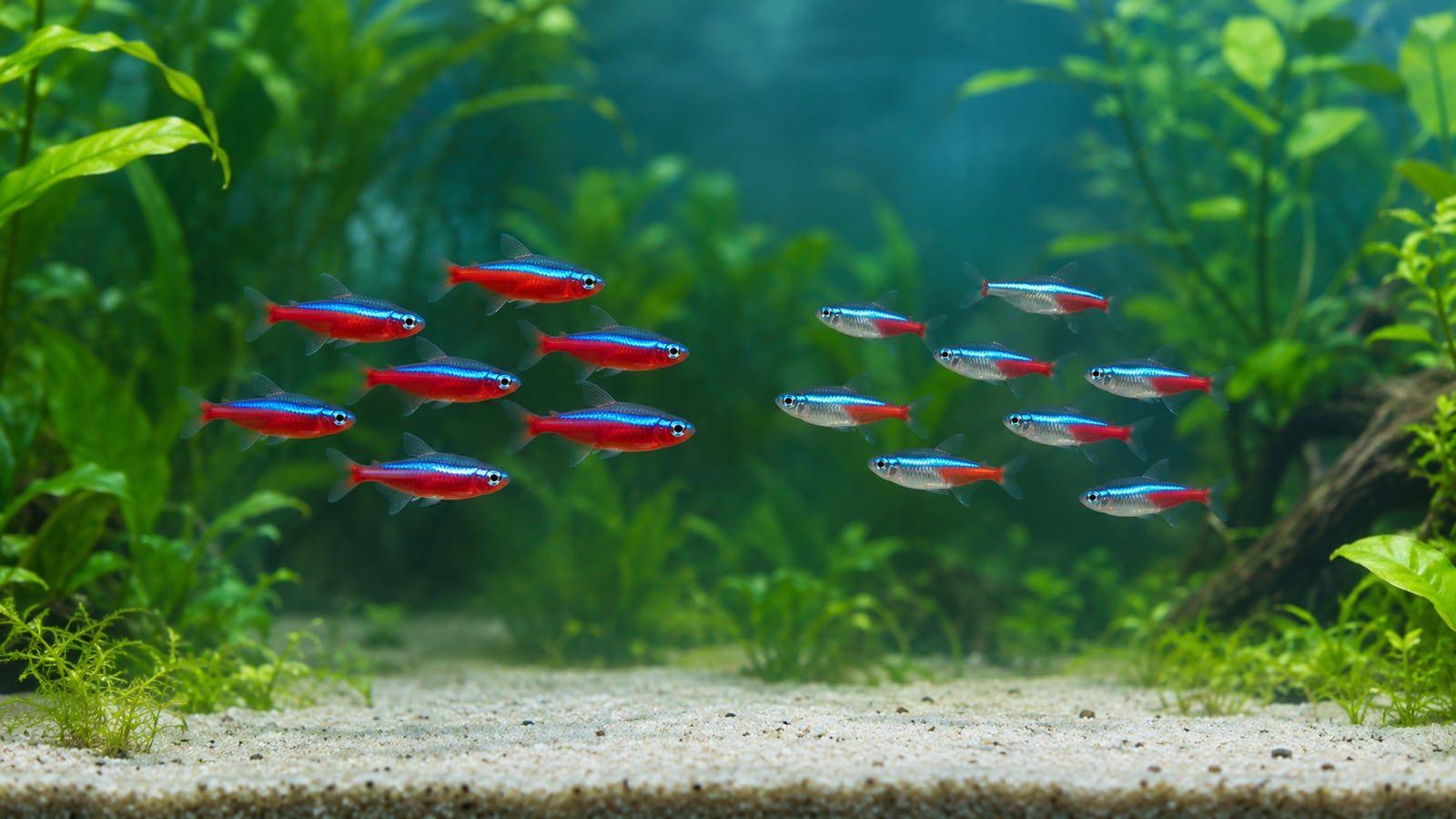
Cardinal Tetra vs Neon Tetra: How to Tell and Which to Buy
Cardinal tetra vs neon tetra: buy neons for a tank at 74–76°F, cardinals for 78°F or warmer. A cardinal's red stripe runs head to tail, a neon's only halfway.
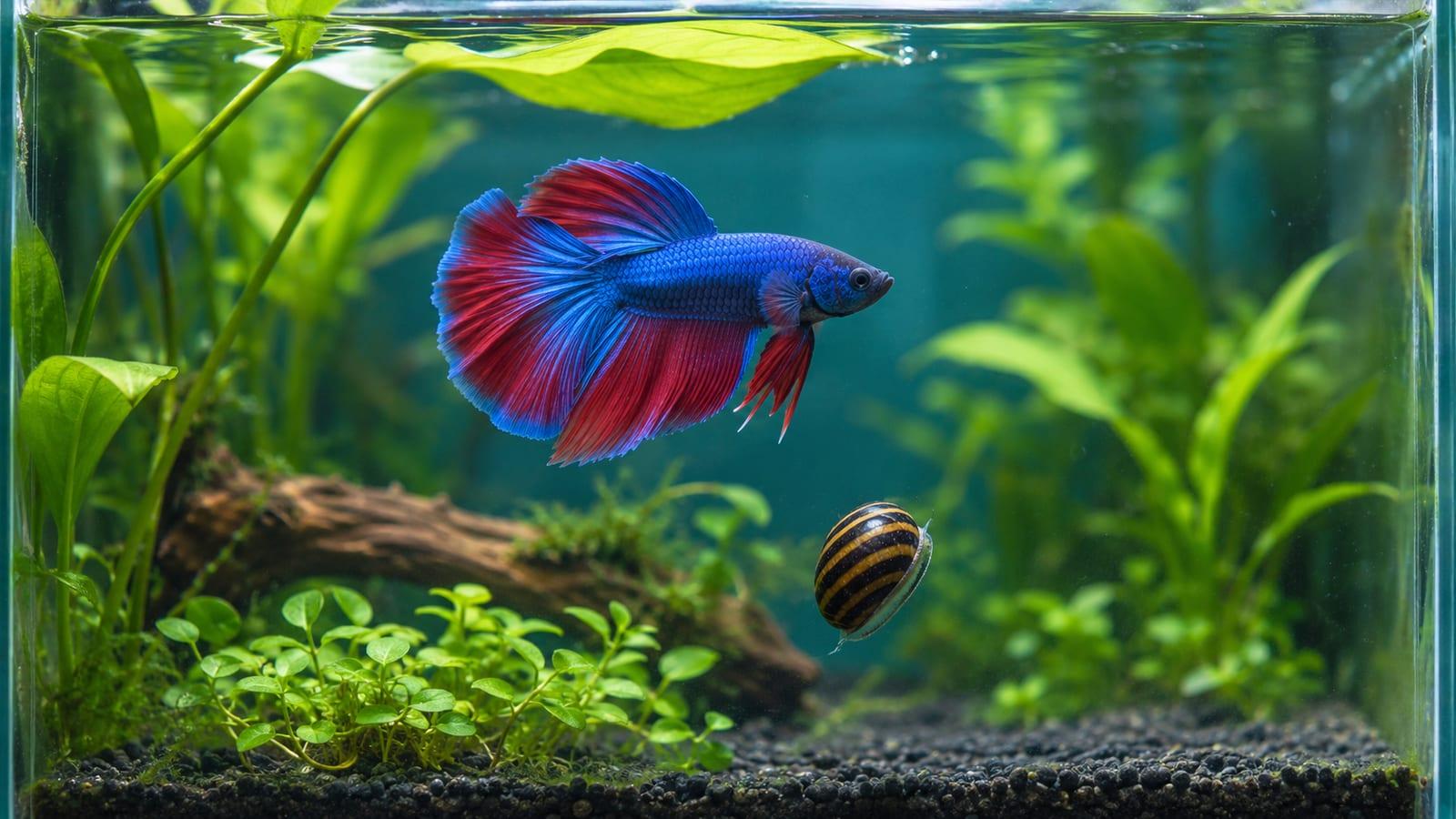
Betta Tank Mates for a 5 Gallon: Snails Yes, Fish No
Betta tank mates for a 5 gallon tank: a nerite snail or two, shrimp if your betta allows it, and no fish. Why schools do not fit and what 10 gallons adds.
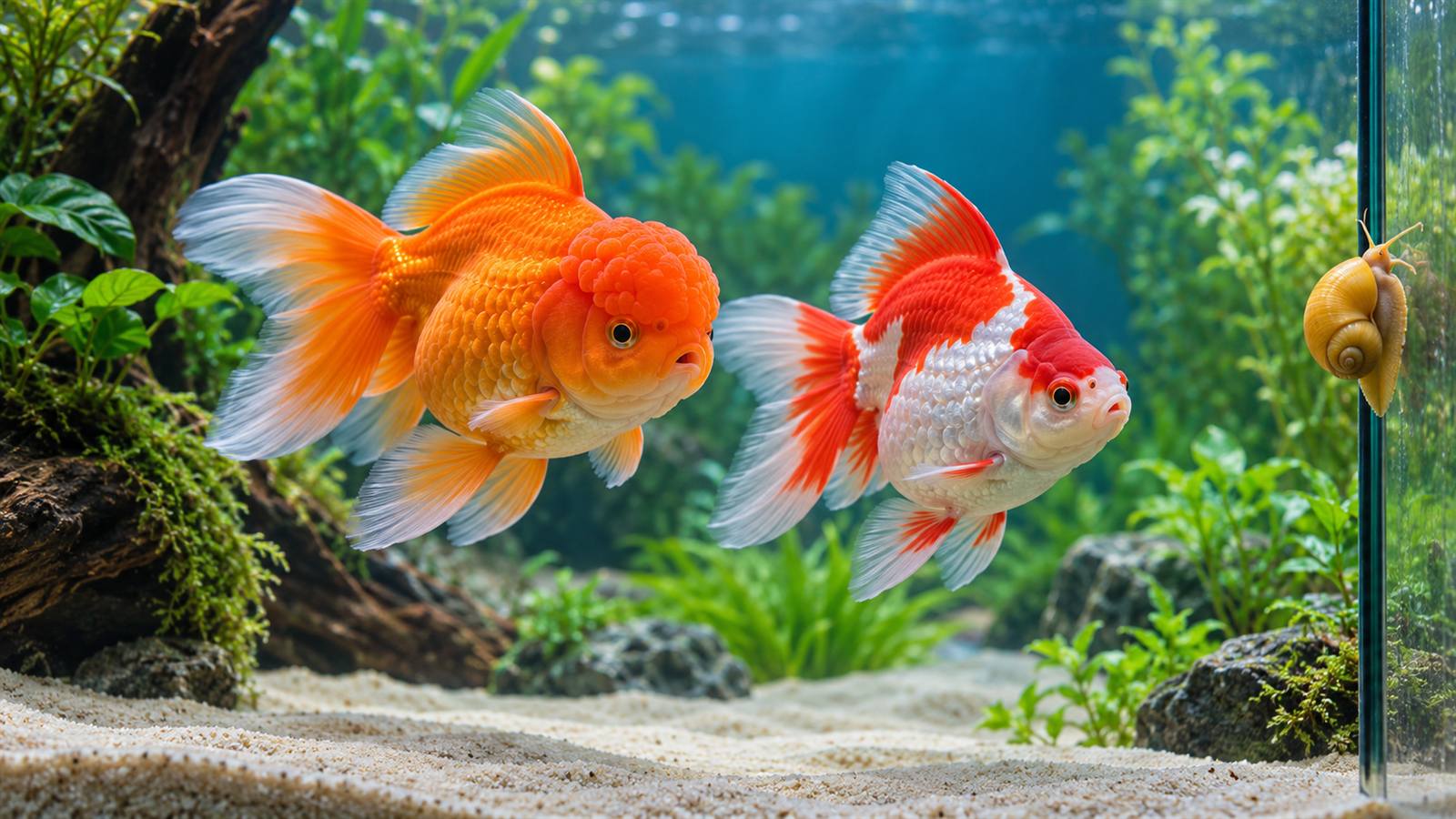
What Fish Can Live With Goldfish? A Short, Honest List
What fish can live with goldfish? Another goldfish first, then a few cool-water fish and snails, with temperatures, sizes and the ones to avoid.