Never use tap water or soap, never replace all the media at once, and replace a cartridge only when it falls apart, not monthly as the box says. Carbon is the only part you change on a clock. Based on filter makers' manuals, vet-reviewed care sheets and keeper reports, not our own testing.
The numbers
| Filter | How often | How to clean it | Replace |
|---|---|---|---|
| Sponge filter | About monthly, or when the bubbles slow | Squeeze in a bucket of tank water until it flows; stop | When it tears or crumbles; with two, alternate |
| Hang-on-back, open media | About monthly | Intake sponge first, then squeeze the foam and swish the rings | One part at a time; carbon monthly if used |
| Hang-on-back, cartridge | When flow drops, about monthly | Rinse the cartridge in tank water; leave the Bio-Grid or Bio-Wheel alone | Only when it falls apart; keep the old one in beside the new one |
| Canister | Check monthly; clean when flow drops, every 1–3 months (a large one up to 6) | Swish media in tank water; never all baskets at once | Foam when it falls apart; bio media rarely |
| Internal | About monthly (Fluval's manual says weekly) | Squeeze the foam in tank water; brush the impeller | One foam at a time |
| Impeller and intake | Monthly check | Brush out hair and slime | When worn |
| Carbon and chemical media | About monthly | Cannot be cleaned | Monthly, or leave it out |
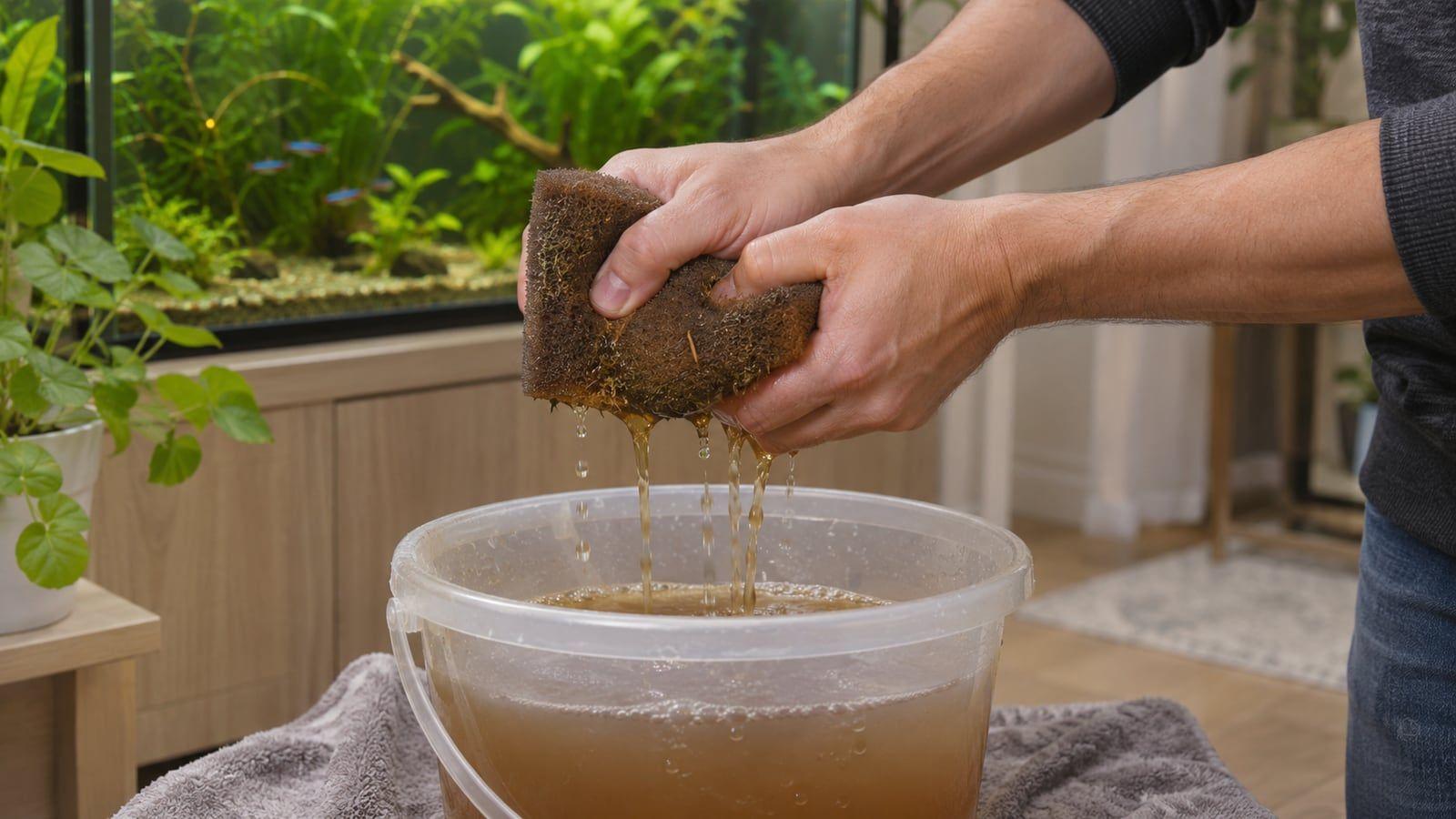
To clean a fish tank filter, squeeze or swish the media in a bucket of old tank water, never under the tap. Do it about once a month or when flow slows, and never replace all the media at once.
The filter media is where the bacteria that keep fish alive live, so cleaning a filter means clearing the clog while keeping the colony. The trap is the box: many cartridges say change monthly, while a fish vet writing for PetMD says not to replace media "unless it is falling apart". This page is built from filter makers' manuals, vet-written and animal-welfare care sheets, drinking-water research and keeper reports. We have not tested these filters, and the table above is that evidence turned into a routine.
How often to clean a fish tank filter
About once a month, or sooner if the flow slows. RSPCA Australia's care sheet says to rinse it "when it starts to get clogged up or on a monthly basis". Makers range from weekly (Fluval's internal filters) to "check media monthly" (Fluval's canister); Aquarium Co-Op, a fish retailer, says a large canister can go three to six months. Monthly sits in the middle and is what the rest of this site uses.
Signs it is due, whatever the calendar says:
- The outflow is weaker than it was. Real flow falls as the media fills with debris.
- Particles drift around the tank that the filter used to catch (Aquarium Co-Op).
- A filter with a maintenance indicator, such as Seachem's Tidal, shows it rising.
Do it on water change day, using the bucket of water you just siphoned out. But do not vacuum all the gravel and scrub the decorations on the same day. Each job removes some bacteria; together they can remove too many. How to clean a fish tank spreads the jobs across the month.
When not to touch it: in a new tank that is still cycling, or on any day ammonia or nitrite reads above zero. Then the advice is to leave the filter alone until the readings are back to zero.
How to clean a fish tank filter, step by step
- Fill a clean bucket, one that has never held soap, with water siphoned from the tank during the water change.
- Unplug the filter. Take the media out and put it straight into the bucket so it never dries.
- Sponges and foam: squeeze them in the bucket until water passes through freely, and stop there. A sponge is meant to stay brown.
- Ceramic rings, bio balls and similar bio media: swish them gently in the water. Aquarium Co-Op says "gently agitated (not scrubbed)", and Fluval's canister manual says to rinse biological media "with aquarium water".
- Floss that will not rinse clear gets replaced. Carbon gets replaced too: "Chemical media cannot be cleaned" (Fluval).
- Rinse the empty housing and the intake tube. Pull out the impeller and clean it and its well with a small brush or a cotton bud, as Fluval's manual describes. Hair and slime wrapped around it slow the flow, and rinsing the media will not fix that.
- Put everything back. Some filters must be primed with water before they will pump; PetMD's vet says to "refer to manufacturer instructions".
- Plug it in, check the flow, and top the tank up with dechlorinated water at tank temperature.
Fluval's canister manual and Eheim's both rinse the impeller under running water, which is harmless for a plastic part. It is still simpler to do everything in the bucket, so tap water never touches the media by habit.
No soap or detergent, ever. Fluval's manuals print that warning in capitals. And leave the brown sludge alone: it is biofilm, the film the bacteria live in.
Cleaning a sponge, hang-on-back, canister or internal filter
The table above has the frequency and the replacement rule for each. The differences in method:
Sponge filter. Lift it out inside a bag or straight into the bucket, so the debris stays in rather than clouding the tank (Aquarium Co-Op), then squeeze and stop. With two sponge filters, clean one this month and the other next month (Co-Op); Practical Fishkeeping says to clean two sponges on alternate weeks. In a shrimp tank, check the bucket for baby shrimp and snails before you tip it out.
Hang-on-back. Rinse the intake sponge first if there is one: it catches the coarse debris. On the AquaClear, Fluval says to rinse it monthly. Then squeeze the foam and swish the rings. On a cartridge model, see the next section. On a Marineland Penguin, the Bio-Wheel is not cleaned at all; Marineland says not to try cleaning its pleats. The 20 gallon filter guide covers how the Bio-Wheel and staggered media work.
Canister. You cannot see the media, so it is easy to forget (Co-Op). Fluval's canister manual says to "Check media monthly". Aquarium Co-Op's rule of thumb is every one to three months, and it says a larger canister may last three to six; keepers mostly clean when the flow drops. Work one basket at a time in the bucket, and never clean or replace every basket in one session.
Internal. Fluval's manual for its U-series internal filters is among the strictest sources found: rinse the foam weekly "in water removed from the aquarium", clean the impeller monthly, and "NEVER use tap water". Weekly is what that maker asks; monthly, or when the flow slows, is in line with every other source here.
Rinse or replace? When to change a filter cartridge
If your filter takes a cartridge, the box sets a clock on it. Tetra says to change its Bio-Bag cartridges monthly; Marineland's packaging says the same for its cartridges. Chewy's cleaning guide, How Do You Clean an Aquarium Filter Without Killing Beneficial Bacteria?, tells hang-on-back owners to "Remove and replace cartridge" once or twice a month. Its reviewer is not a vet.
The problem is that the cartridge is where the bacteria live. The Merck Veterinary Manual describes biological filters as giving nitrifying bacteria "massive surface area" to live on, and a 2025 study that followed three new home aquariums found nitrifying bacteria on the filter sponge and beads within weeks (McKnight et al.). Throw the cartridge out and much of the colony goes with it. A PetMD vet lists a filter that is "brand new, recently replaced" in the tank history that points to new tank syndrome, the ammonia and nitrite crisis of an uncycled tank. Keepers on FishLore report the same pattern: a cartridge change, then an ammonia spike. Others reply that one cartridge holds only part of the colony, so a swap causes at most a small spike; nobody has measured it.
The vet line, from Jessie Sanders, DVM, writing for PetMD: "Do not replace filter media unless it is falling apart." Chewy's other guide, How Often to Replace Aquarium Filter Media, which a vet reviewed, agrees that reusable sponges and biological media "can last for years with proper care".
What to do instead:
- Rinse the cartridge in old tank water when it clogs, and put it back.
- Replace it when the fabric tears or it will no longer rinse clear.
- When you do replace it, keep the old one in the filter beside the new one for a few weeks if there is room, or swap in a sponge cut to fit. The same goes for the cartridge in a kit tank's filter.
Some designs already protect you. Tetra pairs its cartridges with a permanent Bio-Grid, Marineland with the Bio-Wheel, and the AquaClear stacks foam, carbon and bio media so you can change one part at a time. The 10 gallon filter guide compares cartridge filters with open-media ones.
The one thing you do replace on a clock is carbon and other chemical media, about monthly (Fluval: "Carbon loses its activity without outward sign. Replace monthly"), if you use it at all.
Makers also print schedules for permanent media: Fluval says to replace BioMax every three months, and the AquaClear manual the foam every two. Read those as what the box says, not as what the bacteria need. If you follow them, follow the other half too: Fluval says to "Replenish only half at one time", and Practical Fishkeeping says a third at a time, four weeks apart.
Tank water, not tap: cleaning without killing the bacteria
Chlorine and chloramine are added to drinking water to kill bacteria, and US rules allow up to 4 mg/L of either. The bacteria in your filter are bacteria. That is why RSPCA Australia, Hikari, Practical Fishkeeping, both Chewy guides and Fluval's internal-filter manual all warn against rinsing media in untreated tap water. RSPCA Australia: "Do not use tap water to clean the filter," because "the chlorine (or chloramines) may also kill the beneficial bacteria."
Not every maker agrees. Eheim's Classic manual says to rinse filter mats "gently under running water", and Fluval's canister manual allows "de-chlorinated tap water". Practical Fishkeeping's advice on maker instructions is to "completely ignore the instructions!" We side with the tank water. It costs nothing on water-change day, and it settles the question.
How bad is a quick rinse under the tap? Nobody has measured it. Chlorine and chloramine do kill these bacteria; the open question is how fast. In a 1990 drinking-water study, 99% of a lab culture of ammonia-eating bacteria took 33 minutes to die at 1 mg/L of chloramine, and the same bacteria were about 13 times more sensitive to free chlorine, which many supplies use instead (Wolfe et al.). That was a culture in water, not the mixed colony on a filter sponge. One hobbyist test found sponges rinsed in chlorinated water kept working; it was a single uncontrolled test, and it did not test chloramine. So a short accidental rinse may only knock the colony back, while scrubbing the media under running water until it looks new strips far more. Either way, treat it as a setback: test ammonia and nitrite daily for a week.
Second choice: dechlorinated tap water at tank temperature, which Fluval's canister manual (for foam), Aquarium Co-Op and Chewy's cleaning guide all accept. Never hot water: Hikari says hot tap water can damage the sponge and its bacteria, and Co-Op warns the same.
Mistakes that crash the cycle
Each of these removes too much of the colony at once, and ammonia or nitrite can show up a few days later.
- Everything on one day. Cleaning the filter, vacuuming all the gravel and scrubbing the decorations in one session.
- Replacing all the media at once, or the only cartridge. Fluval's internal-filter manual says "NEVER replace all filter media at once", and the vet-reviewed Chewy guide says to replace "one type of filter media at a time".
- Tap water, hot water or soap.
- Scrubbing the media until it looks new. Squeeze to clear the clog, and stop.
- Letting the media dry out, or leaving the filter off too long. PetMD's vet lists a filter that has been "dry or without oxygen for too long" in the tank history that points to new tank syndrome. If the power went off, rinse the media before restarting a filter that stopped.
- Not testing afterwards. Test ammonia and nitrite for a week after any filter clean. If either shows up, see how to lower nitrites.
The short version
Old tank water, about once a month, squeeze until it flows and stop. Rinse cartridges instead of binning them, replace carbon on a clock and everything else only when it falls apart, and never all at once.
Sources
- Sanders, DVM. How To Clean a Fish Tank. PetMD, 7 May 2026.
- Sanders, DVM. New Tank Syndrome in Fish. PetMD, 1 May 2026.
- RSPCA Australia. How should I care for my tropical fish? RSPCA Knowledgebase, 2024.
- Francis-Floyd, Yanong and Petty. Aquatic Life Support System Components. Merck Veterinary Manual.
- McKnight et al. Microbial community succession of home aquarium biofilters associated with early establishment of comammox Nitrospira. ISME Communications 5(1), 2025.
- Wolfe, Lieu, Izaguirre and Means (1990). Ammonia-oxidizing bacteria in a chloraminated distribution system: seasonal occurrence, distribution, and disinfection resistance. Applied and Environmental Microbiology 56(2): 451–462. Abstract read via Europe PMC.
- US Code of Federal Regulations. 40 CFR 141.65, maximum residual disinfectant levels.
- Fluval. U Series Underwater Filter instruction manual (UK edition, 2021; copy hosted by Fishkeeper UK).
- Fluval. FX5 instruction manual (copy hosted by a retailer).
- Fluval. AC20/30/50/70 Power Filter Instruction Manual.
- EHEIM. classic 2213 operating instructions.
- Tetra. Whisper IQ Power Filter and its manual.
- Marineland. Penguin PRO Power Filter and the Penguin PRO 125/175/275/375 user manual.
- Seachem. Tidal compare and the Tidal 55-75-110 owner's manual.
- Hikari. Bacto-Surge Biological Action Sponge Filters.
- Clarke. How should I clean the sponge in my filter? Practical Fishkeeping, 2009; and How often should I clean my aquarium filter? Practical Fishkeeping, undated.
- Aquarium Co-op. How to Clean Aquarium Filters and How do I clean an aquarium filter without killing bacteria? A retailer's guides, undated.
- Chewy (2026). How Do You Clean an Aquarium Filter Without Killing Beneficial Bacteria? Hilary Jaffe, reviewed by Joseph Hiduke (not a vet); updated 28 October 2026. A retailer's guide, cited by title.
- Chewy (2026). How Often to Replace Aquarium Filter Media. Hilary Jaffe, reviewed by Ivan Alfonso, DVM; updated 5 October 2026. A retailer's guide, cited by title.
- aquariumscience.org. 6.9 Tap Water Rinsing. One hobbyist's uncontrolled test.
- Keeper reports: FishLore, Need help, changed filter cartridge and spike ammonia and Does changing filter media really kill BB?; Monster Fish Keepers, what happened? what did i do wrong? (2009).
Questions people ask
Mentioned in this guide
Related guides
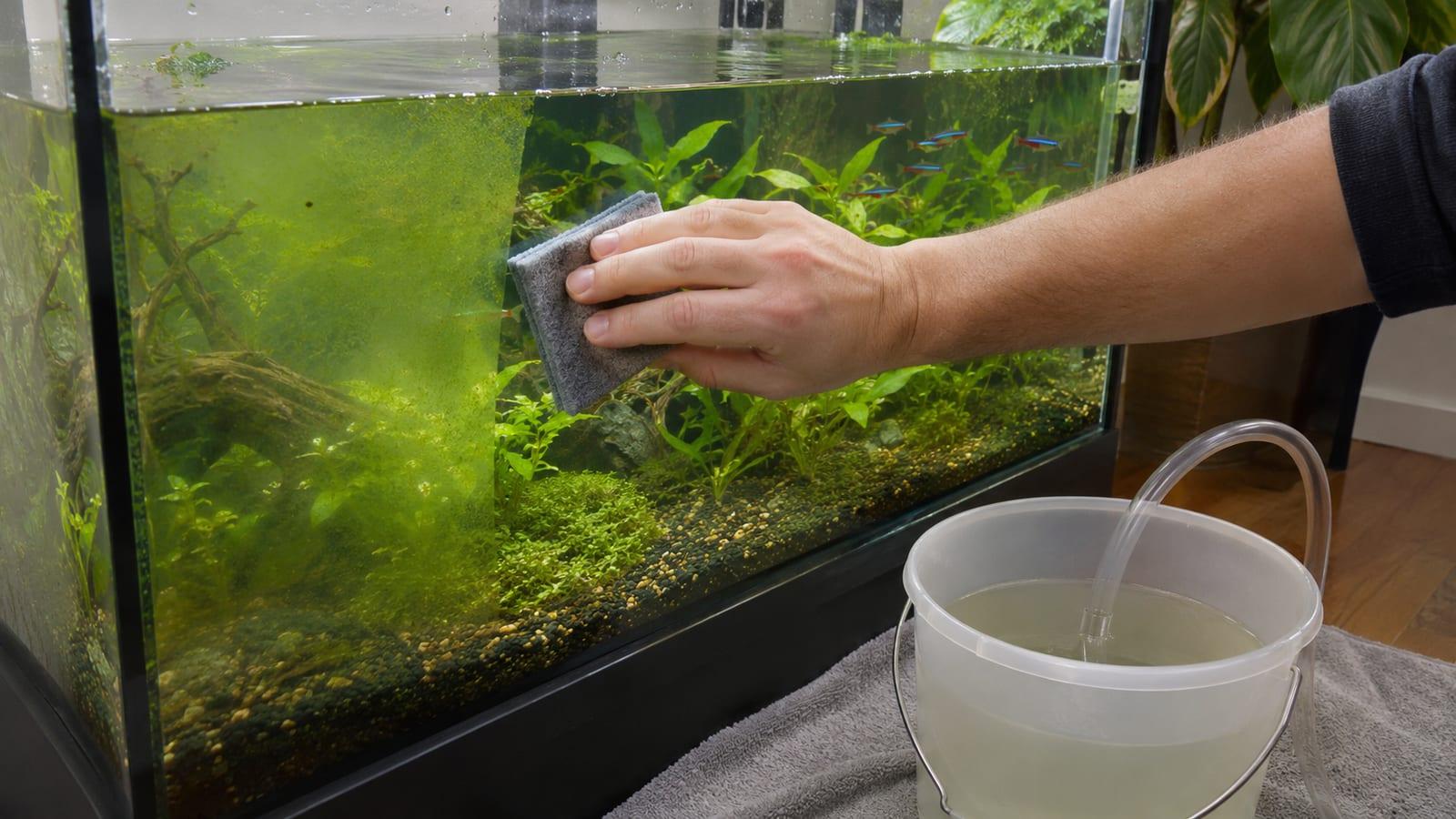
How to Clean a Fish Tank, and How Often to Clean Each Part
How often to clean a fish tank, job by job: water and front glass weekly, the filter monthly, decorations when dirty, and the full clean you should skip.
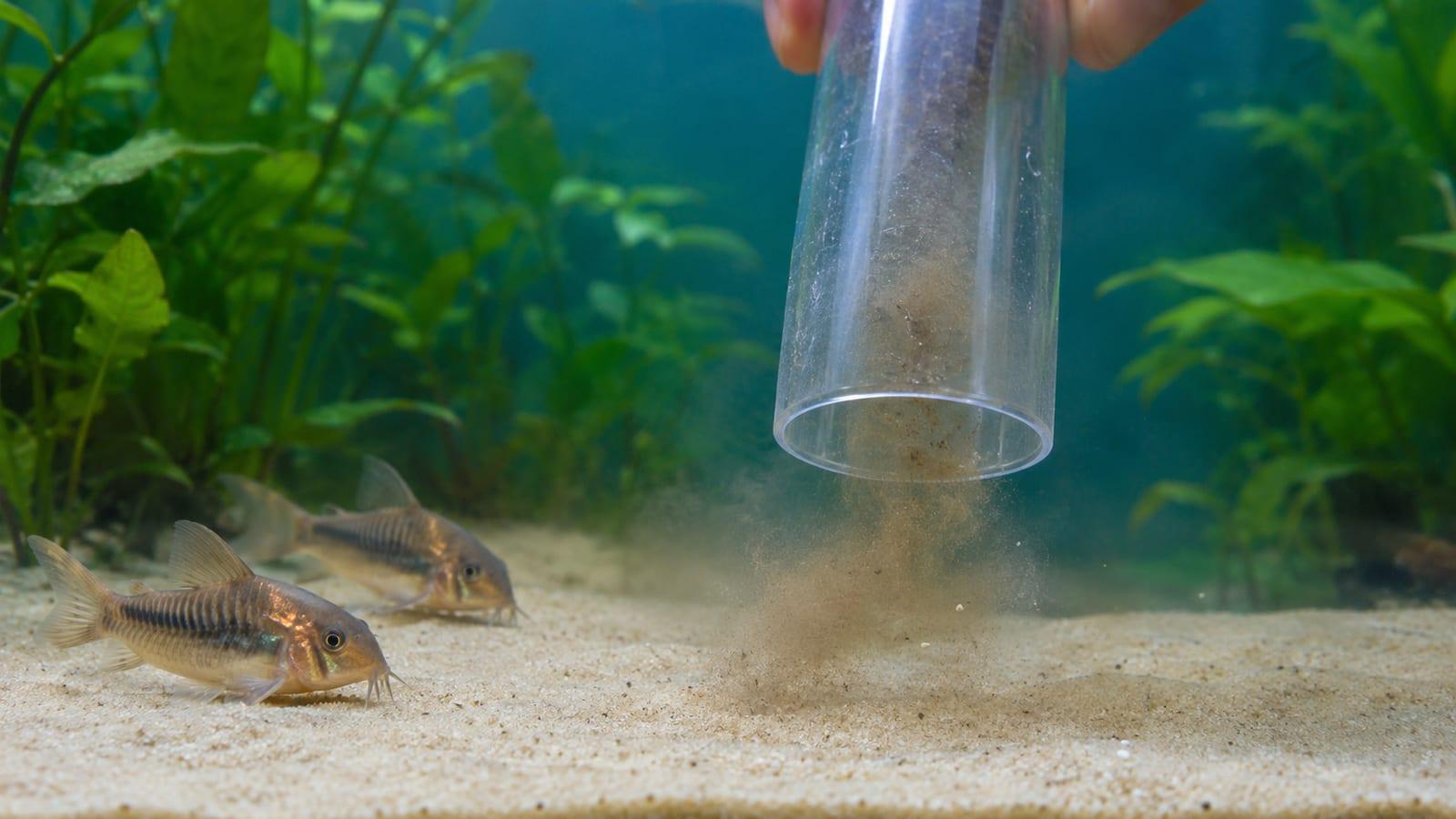
How to Clean Aquarium Sand Without Sucking It Up
How to clean aquarium sand: rinse new sand in small batches, then hover the gravel vacuum above the bed instead of digging. Plus gas bubbles and corydoras.
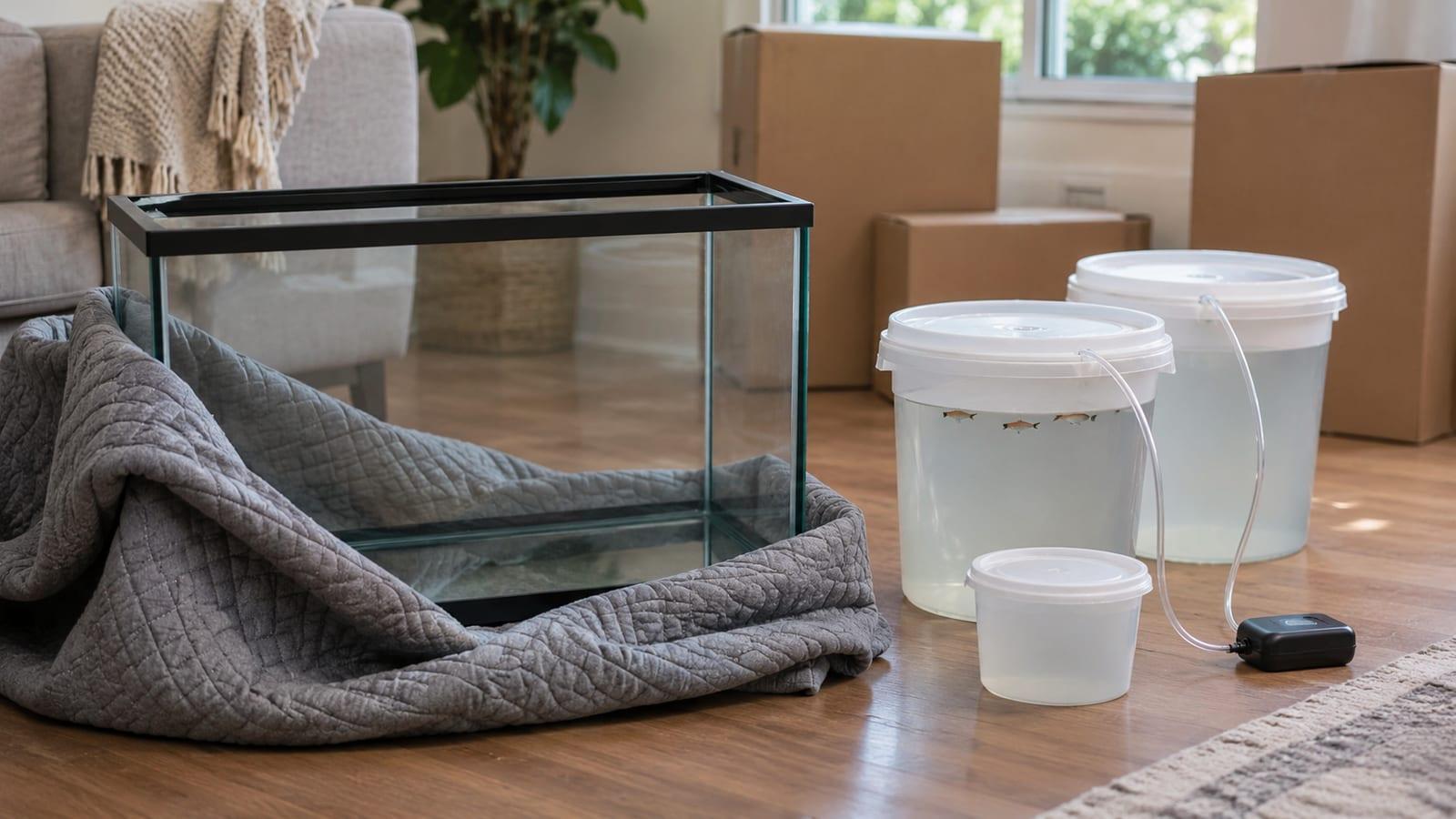
How to Move a Fish Tank Without Losing the Fish or the Cycle
How to move a fish tank across the room or to a new house: empty it first, fish in aerated tank water, filter media kept wet, then a week of testing.